A single sharp pinch of joint pain can stop an active morning walk in its tracks. When joint decay sets in, patients often face a major choice between temporary relief and natural tissue repair.
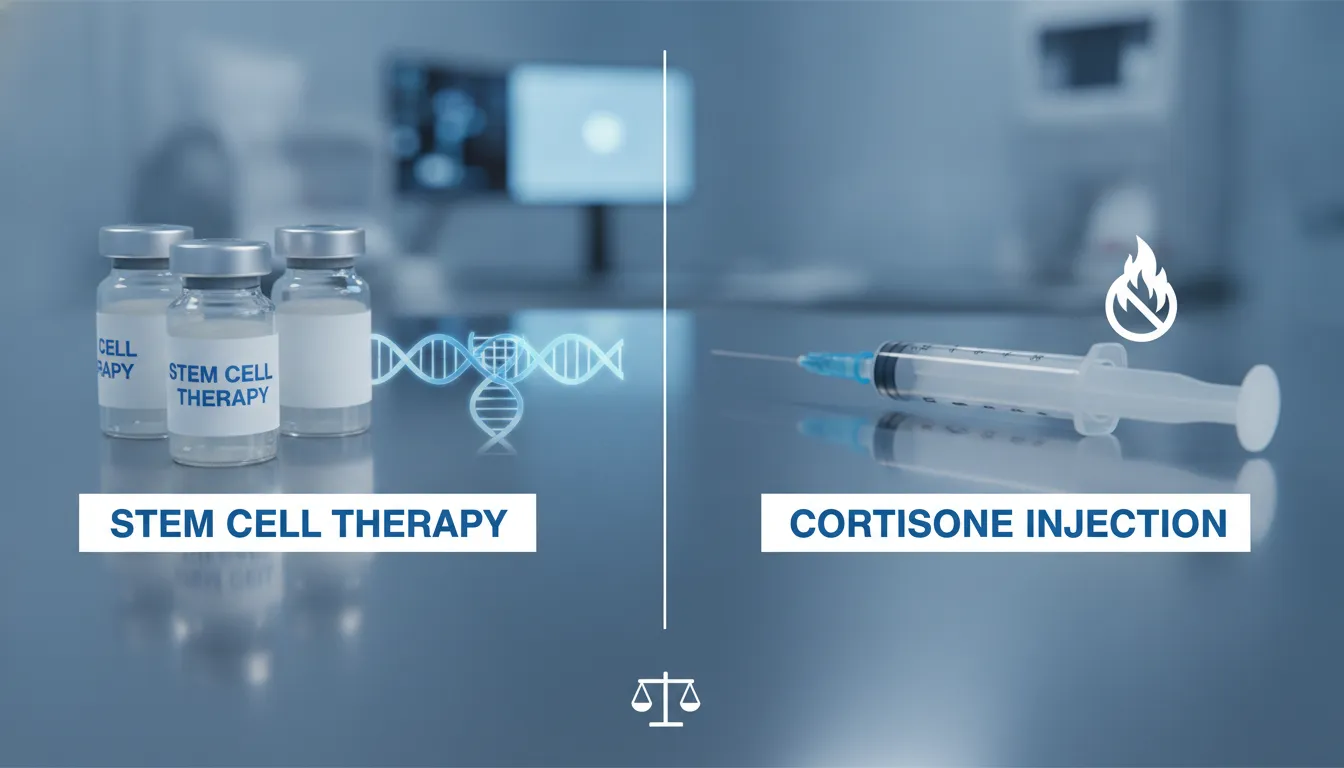
Choosing stem cell therapy vs cortisone shots comes down to whether a patient needs quick, short-term pain relief or a long-term way to support joint tissue. Common cortisone shots use strong drugs to quickly reduce joint inflammation, which often brings welcome pain relief that lasts for only a few weeks. But frequent steroid injections do not address the real joint wear and can even cause further damage to the local cartilage over time. In contrast, non-surgical stem cell therapy uses tailored, living cells to support natural joint healing and slow down the rate of ongoing decay. While cortisone works fast to hide painful symptoms, stem cell treatment aims to help the damaged joint repair itself for long-term health.
To find the right treatment for your aching joint pain, you must understand how these two popular options compare over time. To start, we will explore How Cortisone Shots Work: Temporary Relief vs Long-Term Risk, and the path begins with.
How Cortisone Shots Work: Temporary Relief vs Long-Term Risk
Many people with joint pain turn to cortisone shots first. These shots are a common choice for quick relief from severe swelling. But before you get a shot, you should know how they work and what risks they bring.
How corticosteroids ease joint pain
A cortisone shot uses a steroid drug injected into your joint space. The steroid works by reducing inflammation in the joint, which can help ease your pain for a short time. When the swelling goes down, you feel less stiffness and can move your joint more easily. Most patients feel this relief within a few days.
This fast relief is why many doctors suggest these shots for acute flare-ups. If you have a highly swollen knee or hip, a shot can quiet the pain quickly. This allows you to stand, walk, or do physical therapy. But it is key to know that this relief is only a quick fix.
The limits of masking symptoms
While a shot makes your joint feel better, it does not heal the real problem. Cortisone shots provide fast-acting relief but do not address the structural degeneration of the cartilage. The deep wear and tear in your joint keeps getting worse even when you do not feel it. Because the pain is gone, you might overuse the joint and cause more harm.
This is why many patients seek other options. If you want to help your joint repair itself, you should compare stem cell therapy vs cortisone. Hiding pain with a drug is not the same as helping your tissues heal. A lasting plan should focus on joint repair rather than just hiding symptoms.
Cartilage loss from repeated injections
Getting a single shot now and then may not cause major harm. But using them too often can be unsafe. Research shows that corticosteroid injections should be used with care due to the risk of cartilage damage with repeated use. This means that the very drug you use to ease your joint pain could make your joint break down faster over time.
For this reason, most doctors advise limiting how many shots you get in a single joint. Many clinics set a limit of three to four shots per year. If you find yourself needing shots more often, it is time to look at other choices. You need a treatment that protects your long-term joint health instead of wearing it down.
How Stem Cell Therapy Works: A Regenerative Approach
Many patients seeking joint relief look for non-surgical ways to heal. When comparing stem cell therapy vs cortisone shots, the main difference lies in how they affect the joint. Cortisone reduces swelling for a short time, but it does not heal the joint.
In contrast, stem cell therapy is designed to address the root cause of pain. It supports the natural healing processes of your body to help repair damaged tissue. This non-surgical method aims to rebuild joint health from within.
The Role of Umbilical Cord MSCs
At the center of this method are mesenchymal stem cells, or MSCs. These cells often come from umbilical cord tissue. This tissue contains young, active cells that can support tissue repair.
Unlike older cells from a patient’s own bone marrow, umbilical cord cells are highly active. They act as a local signaling system in the joint. They tell your body to send healing resources to the area of damage.
These cells do not turn into new bone or cartilage directly. Instead, they release signaling factors that help your own cells do the work. This makes them excellent alternatives to corticosteroid injections, which only mask symptoms.
By supporting natural cell growth, this treatment offers a way to slow down joint wear. It is a natural option for people who want to avoid major surgery.
Immunomodulation and Joint Environment
To heal a joint, you must first control the swelling. Active joint degeneration creates a harsh, acidic space filled with inflammatory proteins. MSCs have strong immunomodulatory traits that help manage this bad space. Studies show that MSCs from umbilical cord tissue help modulate the joint environment by calming active immune cells.
This calming action changes the joint from a place of active breakdown to a place of repair. Instead of fighting chronic inflammation, your body can focus on rebuilding. This biological process may help reduce pain and joint stiffness over several months. Because MSCs adapt to the signals around them, they provide custom support where your joint needs it most.
Addressing the Root Cause vs Masking Pain
It is helpful to compare this process to standard cortisone shots. Cortisone is a man-made drug designed to stop pain signals quickly. It acts like a short-term patch.
But it does not fix the wear and tear of cartilage. In fact, many doctors now advise caution with too many cortisone shots because they may harm joint tissue over time.
Regenerative cell therapy is designed to move beyond masking pain by supporting the regeneration of healthy tissue. This long-term focus helps patients find lasting relief. It avoids the ongoing cycle of short-term shots. By helping the body heal itself, this treatment targets the real source of your joint pain.
Stem Cell Therapy vs Cortisone Shots: Key Differences at a Glance
Patients with joint pain often face a tough choice between traditional treatments and modern regenerative medicine. When you compare stem cell therapy vs cortisone shots, the core difference lies in how each option works inside the body. Traditional steroid shots have been used for decades to manage joint pain from wear and tear. But these shots often provide only temporary relief for the joint.
Different mechanisms of action
Cortisone is a synthetic drug injected directly into the joint. According to the Mayo Clinic, corticosteroids work by reducing inflammation to help soothe joint pain for a short time. Swelling goes down quickly, but the underlying damage to the joint remains. This treatment acts like a temporary patch for your symptoms.
Many patients choose steroid shots because they want quick relief from severe swelling. For example, during a sudden flare-up, a steroid shot can help you move without sharp pain within a few days. However, this quick fix does not repair the worn parts of your joint. Once the medicine wears off, the pain and stiffness often return because the underlying bone and tissue damage is still there.
In contrast, stem cell therapy is designed to promote the natural healing processes of your body. Instead of just masking the pain, this cell-based approach supports tissue repair to address the root cause of joint degeneration. It uses biological material to help the joint heal from within.
This modern therapy takes a very different path to help your body heal. Instead of using artificial drugs, doctors use natural cells to target the source of your joint pain. These cells are active biological agents that can respond to signals in your joint. Once injected, they work to create a healthy joint environment and slow down the wear and tear.
Comparison of key features
| Feature | Cortisone Shots | Stem Cell Therapy |
|---|---|---|
| Mechanism of action | Reduces joint inflammation | Supports natural tissue repair |
| Duration of relief | A few weeks to months | Many months to several years |
| Effect on cartilage | May damage tissue if repeated | Helps protect and repair tissue |
| Ideal patient | People with acute flare-ups | People with chronic degeneration |
| Insurance coverage | Covered by most plans | Typically paid out-of-pocket |
| Primary goal | Manage swelling and pain | Slow wear and support healing |
Relief duration and long-term goals
The choice between these two options depends on your goals. Some people need quick, short-term pain relief, while others want long-term tissue support. Cortisone shots can stop swelling fast. But they do not fix the physical wear and tear of your cartilage.
If you need to get through a major life event or a sports season, a steroid shot may seem like the easiest choice. But if you want to protect your joints for years, a cell-based approach might be better. Repeated steroid shots can weaken the joint over time. In contrast, cell-based therapy supports the body as it slowly rebuilds healthy tissue and improves function.
In fact, doctors must use steroid shots with caution. Studies on PubMed show that repeated steroid injections may actually cause progressive loss of joint cartilage. This can make joint health worse over time.
Stem cell therapy is different. It aims to build a healthier joint environment over several months. This helps patients manage pain naturally and may reduce the need for invasive joint surgery.
What Does the Research Say About Safety and Effectiveness?
When you deal with joint pain, you face a choice between quick relief and long-term care. You often weigh standard care against new cell options. Research shows clear trends for both choices. Knowing the clinical data helps you make a choice based on science rather than trends.
Efficacy outcomes in clinical trials
A major clinical trial studied how well different joint injections manage pain over one year. Scientists studied people with knee osteoarthritis who received either cell options or a standard steroid shot. This trial is one of the largest studies of its kind. The study compared bone marrow cells, fat cells, and umbilical cord tissue cells. The findings showed that none of these three cell options were better than the steroid shot at the one-year mark. In fact, all options reduced knee pain by about the same amount. You can read the full study details in PMC10719084. Because of these similar short-term results, patients must look at how each treatment acts on the joint. While steroids block pain signals, cell therapies aim to support the body’s natural repair pathways. This key difference leads many to compare stem cell therapy vs cortisone shots before they decide on a plan.
Long-term cartilage risk and safety
Safety is another key factor when you compare these options. Cortisone has a long and clear record of use. But research shows that repeated steroid shots carry long-term risks. Standard steroids can cause skin thinning, infections, and sudden spikes in blood sugar. More importantly, repeated steroid shots may harm the joint over time. Research shows that repeated use of these shots is linked to progressive cartilage loss. This means the shot that stops pain today might speed up joint decay tomorrow. This cartilage risk is documented in PubMed 37919438. In contrast, stem cell options show a different safety profile. These cellular products are generally well-tolerated because they use natural biological tissue. However, they are less standardized than standard drugs. Patients must seek clinics that use FDA-compliant, minimally manipulated tissue.
Surgical avoidance and joint protection
Beyond safety, the ultimate goal of cellular care is to preserve joint structure. Standard steroid shots only manage symptoms and do not stop joint decay. Over time, patients who rely solely on steroids may still need total joint replacement. Cell-based procedures offer a non-surgical alternative. These procedures aim to support the natural healing process and slow joint degeneration. By helping the body repair itself, cell options may help patients avoid or delay major joint surgeries. While surgical joint replacement carries high costs and long recovery times, cellular injections are less invasive. They are performed in an office setting and require little downtime. This allows patients to return to their daily routines much faster than they would after surgery.
Which Conditions Respond Better to Each Treatment?
Not all joint pain is the same. The right choice depends on your exact injury and past health. Your main goal also plays a big role in your choice. For instance, some people want quick pain relief, while others seek long-term tissue support. While corticosteroid shots are often used to treat knee pain from osteoarthritis, they usually give only short-term relief.
Cortisone for acute joint pain
Cortisone shots are excellent for fast, strong anti-inflammatory effects. They work best when severe inflammation is the main driver of your pain. This is common during an acute flare-up of arthritis. Cortisone also helps with local inflammation in the fluid-filled sacs of the joints, a condition known as bursitis. People with tendonitis often find fast relief from these shots as well. But these shots do not repair damaged tissue. They simply quiet the pain so you can start to move again.
The most common uses for cortisone include:
- Acute arthritis flare-ups that limit daily movement
- Bursitis, or inflammation of the joint sacs
- Tendonitis, which causes pain in the joint tendons
- Short-term relief to help you start joint rehab
Stem cells for chronic joint degeneration
For long-term joint issues, stem cell therapy for joint pain offers a different path. This regenerative approach is designed to support tissue repair and reduce pain over a longer time. Instead of masking symptoms, it aims to address the root cause of chronic joint degeneration. This makes it ideal for wear-and-tear issues in the knee, hip, or shoulder. It is also highly suited for cartilage damage, such as tears in the knee meniscus. Patients with rotator cuff tears in the shoulder often choose this treatment to avoid major joint surgery.
This biological therapy is often recommended for:
- Chronic wear-and-tear in major joints
- Cartilage damage and meniscus tears
- Rotator cuff tears in the shoulder
- Patients seeking to avoid joint surgery
A balanced view of both options
Choosing between these treatments depends on your own health goals. Cortisone is a strong tool when you need fast, short-term relief from an intense flare-up. But using it too often can lead to more cartilage loss. On the other hand, stem cell therapy aims at long-term joint health and tissue support. It takes more time to show results, but it works to help the body heal itself. Talking to a doctor is the best way to find which option fits your joint condition.
When to Choose Stem Cell Therapy Over Cortisone
Choosing between joint treatments depends on your personal health goals. If you need fast relief, a cortisone shot may help. But if you want lasting healing, other paths are better.
The choice between stem cell therapy vs cortisone shots depends on whether you want short-term pain relief or long-term tissue support. It is key to look at how each option affects your joints over time.
Your goals for joint recovery
Cortisone shots provide fast relief but do not address the structural degeneration of the cartilage. They work by lowering inflammation in the joint. But this relief is short and does not fix the root cause.
Stem cell therapy is different. The main goal of stem cell therapy is to move away from purely managing symptoms. Instead, it works to address the underlying degeneration in the joint. This approach helps your body build healthy cells where you need them most.
Repeated use of cortisone can also cause harm. Research shows that repeated cortisone shots may lead to progressive cartilage loss in some patients. This can make joint pain worse in the long run.
If you want to avoid these risks, you may want to look for alternatives to corticosteroid injections. Regenerative options help support your joint using your body’s natural healing power.
Avoiding joint surgery
If you are facing the choice of joint surgery, you should know your options. Stem cell procedures are non-surgical treatments. They aim to reduce the need for major joint replacement surgeries.
These methods do not need large cuts. This makes them a good choice for active adults who want to avoid long recovery times. You can often return to your daily life much faster than you would after surgery.
Every joint is different. This is why patients need personalized protocols tailored to their specific injury. You should not get a one-size-fits-all treatment because it may not work for you.
To find out if you are a candidate, you should speak with a specialist. You can schedule a consultation with Miami Stem Cell to discuss your options. Our team will help you find the best path for your pain so you can move with more ease.
Frequently Asked Questions
What is the difference between stem cell therapy and cortisone shots?
Cortisone shots use synthetic drugs to reduce inflammation in a painful joint. This treatment provides quick but temporary relief. In contrast, stem cell therapy uses natural biological tissue to promote repair. Instead of just masking symptoms, this approach supports long-term joint health. Patients must decide if they need fast pain relief or a focus on joint repair.
Can repeated cortisone shots cause long-term joint damage?
Yes. While a cortisone shot can ease joint pain for weeks or months, repeating the treatment carries risks. According to the Mayo Clinic, repeated steroid shots may lead to joint infections, skin thinning, or blood sugar spikes. A study on PubMed shows that frequent steroid use can speed up cartilage loss inside the joint. Doctors recommend using these injections with caution.
Does stem cell therapy work better than cortisone shots for knee pain?
The best choice depends on individual treatment goals. Cortisone provides rapid, short-term relief from swelling and acute pain. However, a clinical trial on PMC found no major difference in joint pain after one year. While cortisone works faster, stem cell therapy is designed to support the body’s natural repair process for more sustainable joint health.
When is stem cell therapy preferred over cortisone shots?
Stem cell therapy is often preferred when a patient wants to address the root cause of joint damage instead of just masking the symptoms. It may be a good option for those who want to avoid joint surgery or have already had too many cortisone shots. Since regenerative treatments focus on long-term tissue support, they are chosen by patients looking for a sustainable path to joint recovery.
Ready to Explore Your Non-Surgical Pain Relief Options?
Ignoring chronic joint pain can cause more cartilage damage over time and make simple daily tasks much harder for you as you grow older. By starting a personalized care plan with us today, you may protect your joints and avoid major bone or joint surgery down the road. Our experts at Miami Stem Cell are here to guide you toward a safe and non-surgical path with our custom pain management plans.
Ready to start your recovery? Do not let joint pain rule your life when a simple phone call can put you on a clean path to healing. Call (305) 598-7777 today to schedule a free consultation with our expert medical team in Miami.