
Golfer’s Elbow Treatment Without Surgery
Persistent inner elbow pain can turn a golf swing, firm handshake, grocery bag, or computer mouse into a daily reminder that something is wrong. Surgery is rarely the first step. A careful evaluation and staged plan can help identify what is stressing the tendon and which conservative option fits your symptoms.
Golfer’s elbow treatment without surgery focuses on supporting the medial common flexor tendon through rest and medical care. Most cases of this condition respond to non-surgical care rather than invasive steps (National Institutes of Health). You can start with simple steps like rest, ice, and physical therapy to reduce joint strain and pain. Modern options like Platelet-Rich Plasma (PRP) may be considered if simple steps do not work. These protocols are designed to support your body’s natural healing, but individual responses and evidence vary. By choosing a non-surgical path, you may avoid the risks of an operation while working toward better strength and function.
Many patients ask which non-invasive options are best for their injury and how to begin healing. Understanding your choices is the first step toward getting back to the activities you love. Our guide on Golfer’s elbow treatment without surgery: where to start explains the initial steps for fast healing. The path begins with
Golfer’s elbow treatment without surgery: where to start
Most people find relief from inner elbow pain with easy steps at home. This issue, known as medial epicondylitis, often starts as a dull ache. It happens when you put too much stress on the tendons in your wrist and forearm. Finding a golfer’s elbow treatment without surgery starts with a clear look at your signs and how they began.
Most cases of this injury are self-limited and respond well to careful care. You may not need a major fix to get back to your daily life. Experts suggest that most golfer’s elbow cases improve with basic steps like rest and habit changes. Knowing what to watch for can help you take the right first steps toward healing.
Recognize the signs of golfer’s elbow
Pain from golfer’s elbow usually grows slowly over time. You might feel a sharp pain or a deep ache along the bony bump on the inside of your joint. This pain may spread down your arm when you grip an object or twist your wrist. Some people also feel stiff or weak in their hands and wrists.
Common signs of this issue include:
- Pain that gets worse when you swing a club or tool.
- Soreness on the inner side of the joint.
- A weak grip when trying to hold heavy bags.
- Numbness or a tingling feeling in the small fingers.
These signs show that your tendons are under too much strain. If you catch these signs early, you can often stop the injury from getting worse. Many patients find success with non-surgical elbow pain therapy to reduce these signs before they become long-term problems.
Find the root cause of elbow pain
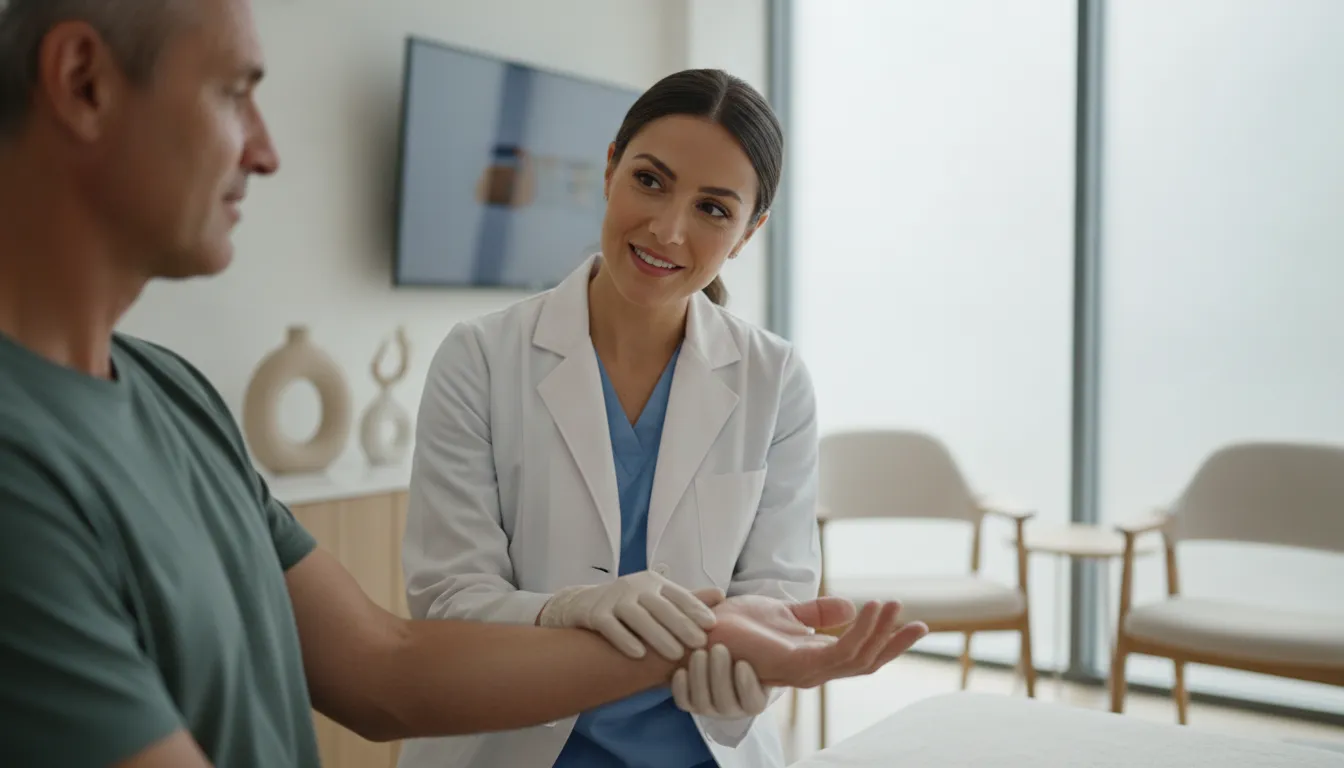
Your doctor will start by looking at your health history and doing a physical check. They will press on the inner elbow and ask you to move your wrist in different ways. This helps them see which tendons are hurt. They may also ask about your sports or work habits to find the source of the stress. Finding the root cause is the best way to start your recovery.
Sometimes, a doctor will use tests to rule out other issues. An X-ray can show if your pain comes from a bone break or arthritis. While these tests do not show the tendon injury itself, they help make the findings more certain. Proper form in sports is also a big part of avoiding future pain. Learning how to move correctly can keep the stress off your joints.
When to seek prompt medical care
Many people wait too long to get help for joint pain. You should see a doctor if your elbow is hot, swollen, or if you cannot bend your arm. Severe pain that keeps you awake at night is another sign that you need an expert check. In most cases, surgery for golfer’s elbow is only a choice after other ways fail for six to twelve months.
If home care like ice and rest does not help within a few weeks, it is time to seek a deeper plan. Long-term pain can lead to scar tissue that makes healing much harder. Starting a plan with a doctor early can help you avoid long-lasting damage. This keeps you on the path to getting back to the things you love without the need for a knife.
How should you start with load management and home care?
Begin by reducing the specific gripping, lifting, or wrist-flexion activity that provokes pain, then use short-term symptom relief while the tendon settles. The goal is not complete inactivity. It is controlled load reduction followed by gradual rebuilding.
Most cases of golfer’s elbow are self-limited and respond well to non-surgical elbow pain therapy. With guidance from a qualified clinician, you can often start with simple home steps to manage pain and support recovery. These basic measures focus on giving your arm a break from aggravating loads.
Give the tendon time to rest
The first step in golfer’s elbow treatment without surgery is to stop the tasks that cause pain. This means you should avoid wrist moves and heavy lifting for a few weeks. If your job or sport causes your symptoms to flare up, you may need to change how you move to lower the stress on your arm. Resting the joint stops more damage and lets the early swelling go down.
Manage pain and swelling
You can use cold therapy to dull the ache and reduce heat in the joint. Putting ice packs on your elbow for 15 to 20 minutes at a time can provide relief. You should do this three to four times a day for some days to see the best results. Over-the-counter drugs may also help, but you should only use them for a short time to manage sharp pain.
Support the joint with bracing
A brace can be a helpful tool for daily support. Wearing a brace on your forearm may help reduce the strain on your affected muscles and tendons. This type of brace spreads the force across the arm instead of letting it all pull on the hurt spot. It is a simple way to keep using your arm for light tasks while you mend.
- Modify your activity: Stop the moves that cause pain to let the tissue start to mend.
- Apply ice therapy: Use ice packs for up to 20 minutes several times a day to lower swelling and pain.
- Use a brace: Wear a forearm strap to take the pressure off your tendon during daily use.
- Begin light stretches: Once the sharp pain is gone, you can start gentle wrist stretches to keep the joint moving.
- Watch your progress: If your pain does not get better after a few weeks, you may need to see a specialist for more care.
How does physical therapy support tendon recovery?
Physical therapy uses progressive loading, mobility work, and movement correction to help the flexor-pronator tendon tolerate everyday and sports-related demands again. A clinician can adjust the program based on pain response rather than relying on a fixed timeline.
Physical therapy is a main part of non-surgical elbow pain therapy. It helps the body fix the damage in your tendons. This care does more than just stop the pain for a short time. It builds up the strength of the tissue so you can return to your daily tasks. Most people find that their symptoms get better with these methods.
The role of progressive loading
The goal of therapy is to help the tendon handle stress again. Experts use a method called progressive loading to reach this goal. This means you do specific moves that slowly add more weight or force to the joint. Studies show that progressive loading of the tendon with strength training is very helpful for recovery.
Doing too much too soon can make the pain worse. A therapist helps you find the right balance. They start with easy moves to keep the joint mobile. As you heal, they add more weight. This slow build-up helps the tendon fibers line up the right way. It makes the tissue tough and ready for work.
Building mobility and better form
Pain often leads to stiff joints and weak muscles. Therapy includes moves to help you move your arm and wrist more freely. These targeted strengthening exercises help support the inner elbow area. Good range of motion is key to a full recovery. It also helps you avoid new injuries in the future.
Therapists also look at how you move during sports or work. Small changes in your form can take a lot of pressure off your arm. They may check your golf swing or how you use tools at your job. Fixing these habits is a vital step in your pain management plan. It ensures that the stress does not come back to the same spot.
Why random exercise can backfire
It is tempting to try moves you find online. But doing random painful exercises can cause more harm. Without a clear plan, you might put too much strain on the weak spot. This can lead to more swelling and a longer wait to get well. A pro plan keeps you on the right path.
Your therapist will match the plan to your specific needs. They track your progress and change the moves as you get stronger. This careful care is what makes stem cell treatments for elbow pain even more effective. When you combine high-tech care with good therapy, your body has the best chance to heal.
Which medications, injections, and regenerative options may help?
Finding the right golfer’s elbow treatment without surgery often depends on the stage of your injury. Many people start with basic care to manage pain and swelling. While some tools offer fast relief, others aim to help the body repair itself over time. It is vital to know how these options differ before you choose a path.
Traditional pain management
Common care for elbow pain often starts with rest, ice, and over-the-counter drugs. Anti-inflammatory medications like ibuprofen or naproxen may help lower pain in the short term. These drugs do not fix the tendon, but they can make daily tasks easier while you rest. For many, these steps are the first part of a full pain management plan.
If simple drugs do not work, some doctors suggest steroid shots. These shots can lower swelling very fast. But experts note that corticosteroid injections have not been shown to be effective for long-term healing. Using them too often might even weaken the tendon over time. This is why many patients now look for ways to support tissue health instead of just masking the pain.
Platelet-Rich Plasma (PRP) therapy
PRP is a newer option that uses your own blood to help you heal. A doctor takes a small sample of your blood and spins it to concentrate the platelets. These platelets hold growth factors that can help fix damaged tissue. PRP injections for tissue healing are becoming a top choice for those with chronic tendon issues who want to avoid the operating room.
Research shows that PRP therapy may be an effective way to treat elbow pain when other methods fail. Unlike steroids, PRP does not just stop pain. It is designed to support the natural repair process of the medial epicondyle tendon. This makes it a key tool for athletes and active adults who need a strong, lasting recovery.
Regenerative medicine and cell therapy
For more severe cases, advanced cell therapies may offer a deeper level of care. These protocols use specialized cells to target the root cause of the injury. At Miami Stem Cell, our team provides stem cell treatments for elbow pain to help patients regain their strength. These methods are non-surgical and aim to help the body grow new, healthy tissue.
| Treatment Type | Primary Goal | Time to Relief | Long-Term Impact |
|---|---|---|---|
| OTC Medications | Manage pain | Hours | Temporary relief only |
| Steroid Shots | Lower swelling | Days | May weaken tendons |
| PRP Therapy | Support repair | Weeks | Aims for tissue health |
| Cell Therapy | Tissue growth | Months | Addresses root cause |
Choosing between these options requires a full look at your health and goals. While drugs and shots act fast, regenerative paths focus on the future of your joint health. Our experts can help you find non-surgical elbow pain therapy that fits your needs. Scheduling a consult is the best way to see which protocol is right for your golfer’s elbow.
When does constant inner elbow pain need an exam?
Seek an evaluation when pain persists despite activity changes, interferes with work or sleep, or comes with weakness, numbness, swelling, trauma, or loss of motion. These findings can point to problems beyond a straightforward tendon overuse injury.
Most cases of inner elbow pain go away with rest and simple home care. But if your aches do not improve after a few weeks of non-surgical elbow pain therapy, it is time to see a doctor. Getting a quick check helps you find the best golfer’s elbow treatment without surgery for your exact needs.
Signs you need a doctor visit
You should see a doctor if your elbow pain is sharp or limits how you move. Some people also feel a numb or tingly sense that goes down the arm to the fingers. These signs may mean you have nerve stress or more harm to the tendon. The National Institutes of Health notes that this pain often starts slowly and gets worse during work or sports.
Experts suggest checking for swelling or a weak grip. If you cannot hold a coffee cup or turn a door knob without pain, you need an expert look. A doctor can use tools like an ultrasound to see how much the tendon is hurt. This step is key to plan a path that avoids long term harm or the need for a big operation later.
The path to non surgical healing
The first goal of care is to lower pain and reduce stress on the joint. Many people find help through PRP injections for tissue healing, which use your own cells to help the body repair. These ways work well when you also use physical therapy and change your daily habits. Most patients do well with these steps and can avoid more deep options.
Medical data shows that surgical treatment for golfer’s elbow is usually only a last resort. Doctors often wait six to twelve months before they even talk about surgery. During this time, the focus stays on making the tendon strong through steady loading. This slow work helps the tissue get ready to handle the stress of your top tasks again.
Returning to work and play
Going back to golf or work too fast is a common error that can make the hurt worse. You should wait until your grip is back to normal and the pain is gone. A slow return plan helps you test the elbow without hurting the tendon again. You might start with short drills or light tasks before you move back to full play.
Your team may also suggest a brace to help keep the elbow safe. This simple strap reduces the pull on the hurt area while you heal. Following a clear path for healing ensures you stay active for many years. If you are ready to see your options, our team can help you find the right way to start your healing journey.
How can you return to golf and daily activity safely?
A safe return is gradual and based on function: comfortable daily activity first, then light practice, partial swings, and finally full play. If pain rises during activity or remains worse the next day, reduce the load and review the plan.
Getting back to your favorite sports and daily tasks is the goal of any non-surgical elbow pain therapy. But moving too fast can cause more harm. If you return to your activity too soon, you can worsen your condition and delay your total healing time.
Listen to your body
Most people will get better with rest, ice, and simple care. But you must wait for the pain to fade before you start to use your arm for heavy work or sports. Pain is a sign that the tendon needs more time to heal. You may need to change how you work or play to avoid more strain on your elbow. This helps stop the pain from coming back after your stem cell treatments for elbow pain.
Step by step strength training
Once your pain is low, you can start to build back your strength. Specific strength training exercises can help your tendon get used to stress again. This progressive loading of the tendon has been shown to be a very helpful part of care. You should start with light movements and slowly add more weight as your arm feels better. A physical therapist can show you the right way to do these moves.
Back to the golf course
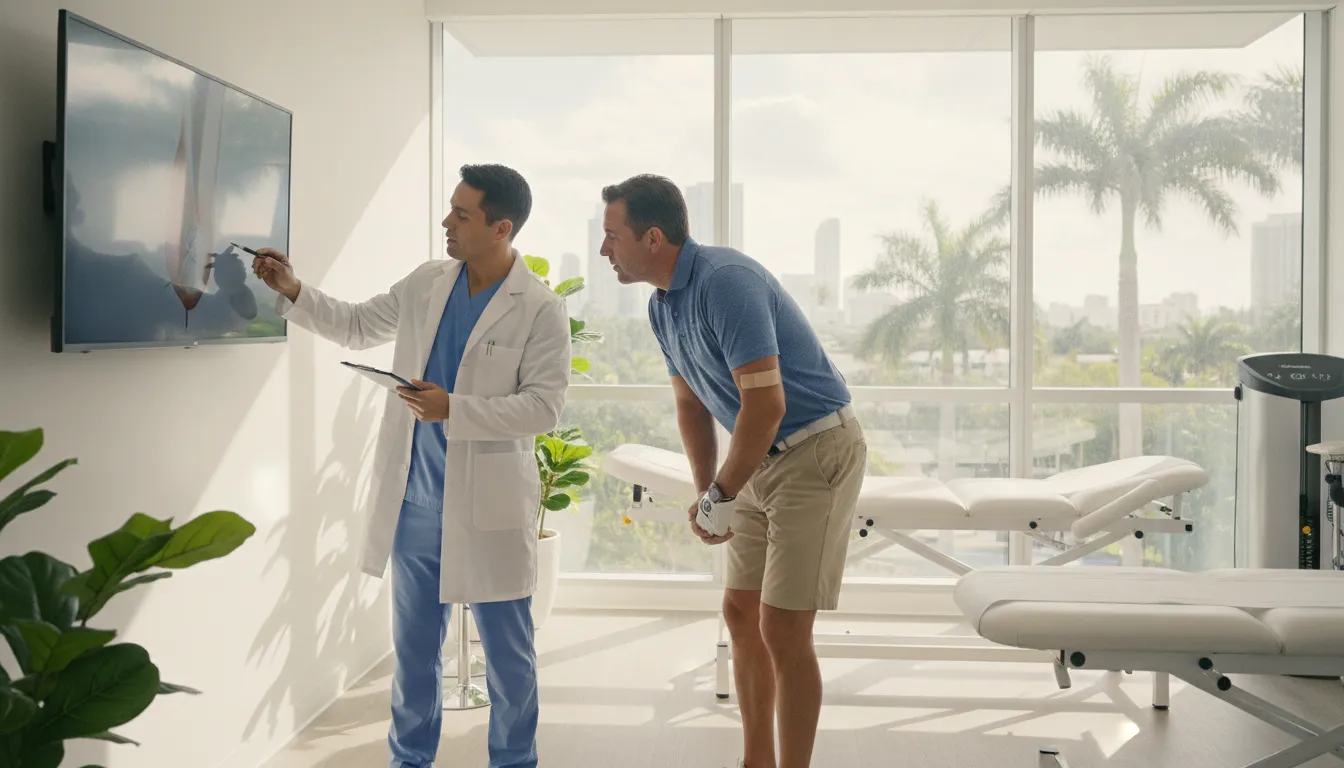
Before you play a full game of golf, check your swing with a pro. This helps you make sure your form is right and does not put too much stress on your inner elbow. You might also try a forearm brace to help reduce strain while you play. Take it slow and stop if you feel any new aching or sharp pain in your arm. If you have questions about your recovery path, you can call us at (305) 598-7777 to talk with our team.
Frequently Asked Questions
What non-surgical treatments are available for golfer’s elbow?
Many people find relief through simple care. Common options include rest, ice, and activity changes to reduce strain on the tendon. Physical therapy and easy exercises help strengthen the area. Anti-inflammatory drugs and special braces also provide support. According to the Mayo Clinic, these steps often help the body heal without the need for surgery.
Does wearing a brace help with golfer’s elbow?
A counterforce brace can be very helpful for managing pain. You wear this strap around your forearm just below the elbow. It works by spreading the force away from the damaged tendon. This reduces the stress on the area while you move your arm. Using a brace during daily tasks allows the tissue to rest and mend. It is a simple tool that helps many patients stay active while they recover.
How long should I treat golfer’s elbow before considering surgery?
Most doctors suggest trying non-surgical methods for at least six to twelve months. During this time, you should focus on rest, physical therapy, and other simple care. If your pain does not get better after a full year of steady treatment, you may need to look at other choices. It is vital to find the root cause of the pain first. Many patients avoid surgery by using advanced therapies that support natural tissue repair.
Can regenerative medicine help golfer’s elbow?
Regenerative therapies like PRP may be a good choice for chronic elbow pain. These treatments use your own blood cells or other natural parts to help mend damaged tendons. Research shows that PRP shots can act as a strong alternative to surgery for some cases. These plans are designed to help the body fix the root injury rather than just masking the pain with drugs.
Ready to find relief for your golfer’s elbow?
Living with golfer’s elbow can make simple daily tasks feel very hard and keep you from doing the things you love most. If you do not treat the pain now, the damage to your joint may get worse as time goes on. This delay can make it much harder for your body to heal in the future. Acting today helps you start the healing process now so you can get back to your sport or work much faster than if you wait. A plan that avoids surgery means you have less downtime and find a safer way to get lasting relief for your arm. Our team helps you get back to a life where pain does not hold you back from your goals. We use non-surgical elbow pain therapy to heal the root cause. This helps you move well again without a long recovery.
Ready to take the next step? Call Miami Stem Cell at (305) 598-7777 to schedule a consultation.
Regenerative and cell-based treatments discussed here are not FDA-approved for golfer’s elbow. They may be investigational, results vary, and an individual consultation should cover potential risks, benefits, alternatives, and regulatory status.