Regenerative therapy for shoulder labral tear is a set of injection options, most often platelet-rich plasma or cell-based products, offered when a torn cartilage rim still hurts after rest and physical therapy. It is not a proven way to close every tear, and it is not a substitute for surgery when the shoulder keeps slipping out.
A labral tear can cause a deep ache, clicking, or a loose feeling inside the ball-and-socket joint. Some stable tears settle with rehab. Unstable shoulders, and tears that stay painful, often still need an orthopedic opinion. This article explains how clinicians sort those cases and what regenerative care can and cannot claim.
Book a shoulder consultation in Miami
What a Shoulder Labral Tear Is
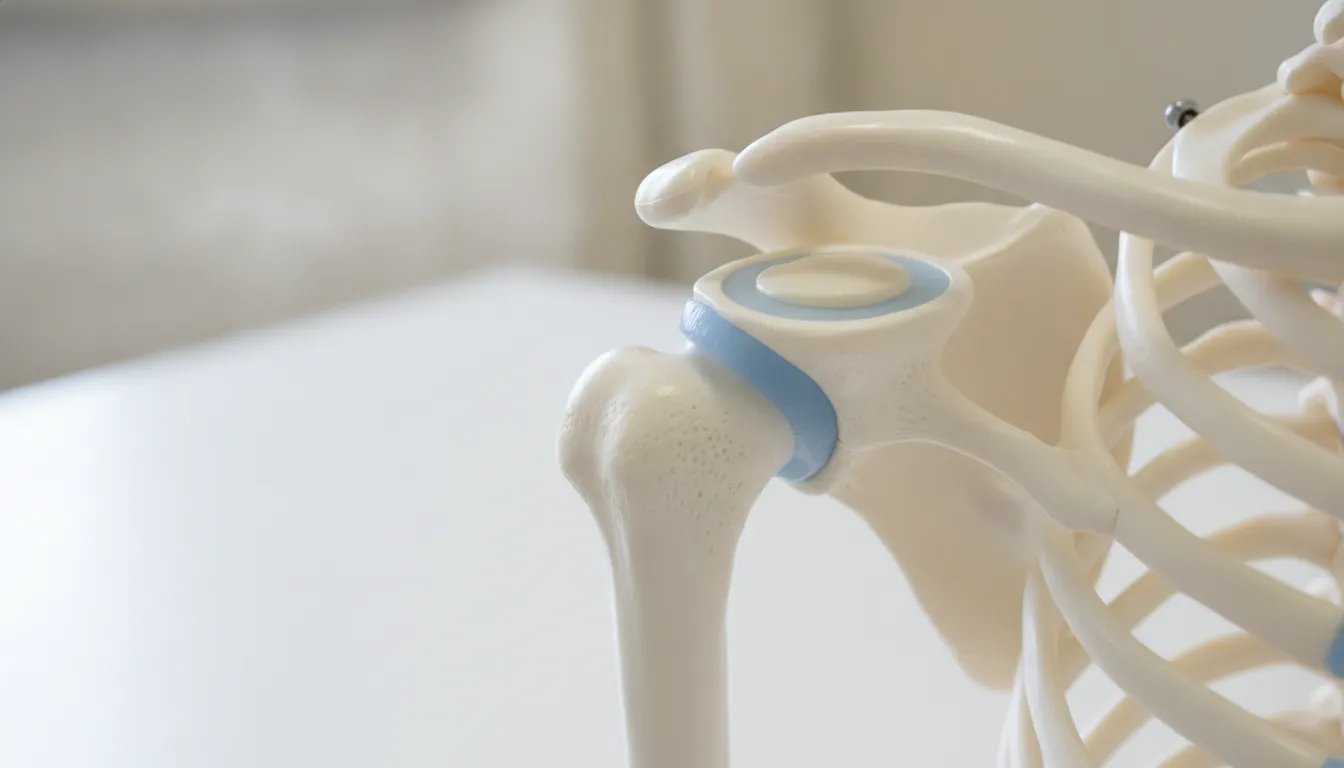
The shoulder is a ball-and-socket joint. The ball is the head of the upper arm bone. The socket, called the glenoid, sits on the shoulder blade and is shallow. The labrum is a rim of cartilage around that socket. The American Academy of Orthopaedic Surgeons explains that the rim deepens the socket by up to 50 percent and gives ligaments, and one biceps tendon, a place to attach.
If the rim tears, motion can hurt deep in the joint. Some people feel catching, popping, or a sense that the shoulder is not seated. A fall on an outstretched arm, a direct blow, a sudden pull, or a dislocation can tear it. Overhead athletes can tear the top of the rim from repeated stress on the biceps tendon. Age-related wear can do it too.
SLAP tears and Bankart tears
Location changes the problem you are solving.
- SLAP tear. Superior labrum, anterior to posterior. The tear is at the top of the socket and may involve the biceps tendon. Overhead throwing and lifting are common stories. Pain is often deep and worse with the arm up.
- Bankart tear. The front-lower rim tears, usually after the ball slips out the front of the socket. Instability, not just ache, is the main issue.
- Posterior tear. The back of the rim is injured by trauma or by gradual wear. It is a different pattern from a front dislocation.
None of these is an AC joint separation. A separation is a sprain where the collarbone meets the top of the shoulder blade, often with a bump. A labral tear is inside the socket and does not create that step-off. Miami Stem Cell’s page on non-surgical shoulder labral tear treatment walks through clinic options for this injury. This article stays on how to judge regenerative therapy against rehab and surgery.
How Clinicians Decide the Tear Matters
A tear on a scan is not, by itself, a treatment plan. Many adults have labral changes that are not the source of their pain. The exam has to match the story.
History and exam
Clinicians ask when it started, whether the shoulder has dislocated, and which motions hurt. Reaching overhead, throwing, or lifting away from the body often bothers a SLAP tear. A Bankart pattern shows up as repeated slipping or a fear that the joint will give way. Strength and rotator cuff tests matter because cuff pain can feel similar. The clinic’s guide to a rotator cuff injury test covers that separate exam.
Imaging
Plain X-rays look for dislocation, fracture, and arthritis. They do not show the labrum well. MRI, often with contrast dye (an MR arthrogram), is the usual way to see the rim. A scan can still miss a tear or show one that is not causing symptoms. Decisions use the exam and the images together.
Red flags that should not wait on an injection include a shoulder that is currently dislocated, a new major loss of strength, numbness, or pain after a high-energy injury. Those need urgent orthopedic care, not a regenerative visit first.
What Regenerative Therapy for Shoulder Labral Tear Can and Cannot Do
Regenerative therapy for shoulder labral tear usually means an injection meant to change the joint environment. Examples clinicians may discuss include platelet-rich plasma (PRP) made from your blood, umbilical-cord-derived cell products, or exosome therapies. These options are not interchangeable, and availability, evidence, and eligibility vary by product and clinic. The American Academy of Orthopaedic Surgeons notes that evidence for these orthobiologics is still limited, even where early studies look promising for some tendon and cartilage problems. Read their orthobiologics FAQ before you treat a brochure as proof.
What these injections are not: they are not approved as a way to stitch a labral tear back to bone. A Bankart lesion that lets the shoulder dislocate is a mechanical problem. Platelets do not reattach a rim that has pulled off the socket. A review of PRP use around the shoulder found interest in tendinopathy and rotator cuff disease, and it also found mixed study quality. That review is platelet-rich plasma and the shoulder. It is not a guarantee for labral tears.
Reasonable expectations
- May help. A stable tear with ongoing ache, after a real course of therapy, when the goal is pain and function rather than closing the tear on a scan.
- Should not be sold as. A cure, a way to avoid surgery for repeated dislocations, or a treatment that regrows a new labrum.
- Still needs a diagnosis. Injection without an exam and appropriate imaging treats a guess.
If you are comparing product types, the clinic’s explainer on stem cell therapy versus PRP separates those two ideas. PRP is a blood-product injection. Cell-based products are a different procedure with different evidence and different rules.
How the Options Compare
Most people start with non-surgical care unless the shoulder is unstable. Surgery is for mechanical problems that rehab does not hold. Regenerative injections sit in a middle ground: optional, not first, and not a promise.
| Path | Best fit | Goal | Limit |
|---|---|---|---|
| Rest and physical therapy. | Stable shoulder. First painful episode. No repeat dislocation. | Calm irritation and restore control of the ball. | Does not reattach a rim that has pulled off bone. |
| Activity change. | Overhead work that keeps provoking SLAP-type pain. | Lower load on the biceps anchor while strength returns. | Pain can return when the same load returns. |
| Image-guided injection, including PRP. | Ongoing pain after rehab, with a stable shoulder. | May reduce pain for some people. | Not a fix for recurrent dislocation. Results vary. |
| Surgical repair. | Repeat dislocation, a displaced Bankart tear, or blocked function. | Reattach or stabilize the torn rim. | Longer recovery. Not every tear needs an operation. |
Cortisone is sometimes used to quiet a flare. It does not repair cartilage, and repeated steroid shots are not a long-term plan for a labral tear. A broader look at non-operative shoulder care is on the non-surgical shoulder treatment page. Shoulder injection logistics, separate from labral decision-making, are covered under stem cell injections for the shoulder.
Who Is a Poor Candidate
Regenerative therapy for shoulder labral tear is a weak plan when the joint is structurally unsafe or the diagnosis is wrong.
- Recurrent dislocation. If the ball keeps leaving the socket, the rim and the ligaments are not doing their job. That is a surgical conversation.
- A large displaced tear in a young overhead athlete who must return to the same sport. Some of these shoulders do settle. Many do not. An orthopedic surgeon should be in the decision, not only an injection clinic.
- Locked shoulder, major weakness, or nerve symptoms. Those need a different workup.
- Pain that is actually the rotator cuff, the biceps tendon, the neck, or the AC joint. An injection into the wrong structure wastes time.
- Expectation of a guaranteed heal on the next MRI. Symptom change and scan change are not the same thing. No honest clinic can promise the picture will normalize.
Age, arthritis, and medical history also matter. Significant glenohumeral arthritis is a different disease from an isolated labral tear. Blood thinners, infection risk, and pregnancy plans can change whether an injection is even appropriate. Those are exam questions, not blog questions.
A Practical Way to Choose the Next Step
Use the sequence below before you commit to an injection or an operation. Skipping the early steps is how people end up treating the wrong problem.
- Confirm the source. Match the story, the exam, and, when needed, an MR arthrogram. Ask which type of tear it is: SLAP, Bankart, or posterior.
- Ask about stability. One question decides a lot: has this shoulder dislocated, or does it feel like it will? Yes pushes you toward a surgeon. No keeps rehab in play.
- Complete a real course of therapy. That means scapular control and rotator cuff strength, not a few days of rest. Give it weeks unless the shoulder is unstable.
- Reassess function. If daily tasks and sleep are acceptable, more treatment may not be needed. If pain remains and the joint is stable, an image-guided regenerative option can be discussed as an adjunct, with the evidence limits stated out loud.
- Get a surgical opinion when function is still blocked. Repair, biceps tenodesis for some SLAP patterns, or another procedure is a surgeon’s call. Bring the images.
Price questions come after the fit is clear. Shoulder PRP cost is a separate topic on the PRP shoulder injection cost page. Do not pick a product because it is the one being advertised this month.
What Recovery Actually Looks Like
Rehab after a stable labral tear is graded. Early on, the aim is pain control and gentle motion that does not yank the injured rim. Then rotator cuff and shoulder-blade strength return, then sport-specific work if you need it. Timelines of a few weeks for simple daily comfort, and a few months before overhead sport, are common. They are not promises.
After an injection, most people go home the same day. Soreness for several days is normal. Heavy lifting and throwing usually wait until the clinician clears them. The injection does not replace the strength work. If the shoulder was unstable before the shot, it is still unstable after the shot.
Surgery, when it is the right call, has a longer protection phase because the repair has to heal to bone. That is a reason to be accurate up front. Choosing an injection to avoid a needed repair can delay the repair. Choosing surgery for a stable, improving tear can add recovery you did not need.
Talk with Miami Stem Cell about your shoulder
Questions to Ask Before an Injection
Bring the MRI report, a list of dislocations, and what therapy you already finished. A careful visit can answer five questions without a sales script.
- Which tear pattern is this, and is the shoulder stable on exam?
- What product is being injected, and where does it go, into the joint or into a tendon?
- What symptom change is realistic at six to twelve weeks, and what would count as no change?
- What activity should stop for the first days, and when does strengthening restart?
- When would you send me to a surgeon instead of repeating the injection?
If those answers are vague, wait. Regenerative therapy for shoulder labral tear is reasonable only when the fit is clear and the limit is said out loud. Same-day comfort is not the same as a healed rim.
Frequently Asked Questions
Can regenerative therapy heal a shoulder labral tear?
It may reduce pain for some people with a stable tear, but it has not been shown to reliably close or reattach a labral tear. Repeated dislocations still need a surgical evaluation. Ask what result is being promised, and what happens if symptoms do not change.
Is PRP the same as stem cell therapy for a labral tear?
No. PRP is concentrated platelets from your own blood. Cell-based injections use a different source and a different procedure. Evidence for both is limited in labral tears. Neither one is a suture.
Do I need surgery for a SLAP tear?
Not always. Many SLAP tears are first treated with therapy and activity changes. Surgery is considered when pain or loss of function continues, or when the shoulder is unstable. The tear type and your sport both matter.
How is a labral tear different from a rotator cuff tear?
The labrum is the cartilage rim of the socket. The rotator cuff is muscle and tendon over the ball. They can hurt in similar ways and they can exist together. The exam and the MRI are what separate them, and the treatment is not identical.
When should I skip injections and see a surgeon?
See a surgeon if the shoulder has dislocated more than once, or if it feels like it will give way. Also go if strength has dropped, or if pain still blocks sleep and work after a proper course of therapy. An injection clinic should tell you the same thing.