

That sharp heel pain during your first morning steps can persist even after weeks of rest, stretching, or orthotics. For some patients, chronic plantar fasciitis reflects ongoing degeneration and repeated microtears rather than inflammation alone. Regenerative treatment for plantar fasciitis focuses on supporting tissue repair after a careful diagnosis, rather than simply masking symptoms.
Ready to explore non-surgical options for persistent heel pain? Schedule a consultation with Miami Stem Cell.
Regenerative treatment for plantar fasciitis may use platelet-rich plasma (PRP), mesenchymal stem cells (MSCs), or exosomes to support the body’s repair response in damaged plantar fascia. These options are considered after evaluation and are not guaranteed to relieve pain. PRP has the strongest plantar-fasciitis-specific evidence among these approaches.
Why plantar fasciitis can become chronic
Plantar fasciitis is a leading cause of adult heel pain. A systematic review and meta-analysis notes that it affects about one in ten people during their lifetime. Symptoms are often most noticeable with the first steps after rest, then may return after prolonged standing or activity.
How the foot is built
The plantar fascia is a dense band of connective tissue that runs from the heel bone toward the toes and supports the foot’s arch. It also helps transmit force during the gait cycle. Repetitive loading from running, prolonged standing, tight calf muscles, or altered foot mechanics can exceed the tissue’s capacity to recover.
Small collagen-fiber injuries can accumulate when the fascia is repeatedly overloaded. Continuing the same activity without correcting contributing mechanics can keep the tissue in a cycle of irritation and incomplete remodeling.
Why the pain stays
One reason symptoms can persist is that the plantar fascia has a relatively limited blood supply. Chronic overload can outpace tissue remodeling and turn an acute inflammatory problem into degenerative plantar fasciosis.
As collagen organization changes, the fascia may thicken and become less tolerant of normal loading. That distinction matters because a treatment aimed only at suppressing inflammation may not address the underlying mechanical and degenerative factors.
Usual care often focuses on dulling the pain. Some patients get steroid shots to feel better fast. But other ways to treat pain may lead to better results over time.
Repeated steroid injections can increase concern about plantar fascia weakening or rupture. This is one reason some patients ask about non-surgical foot and ankle pain care. A clinician should weigh potential benefits, risks, prior treatment response, and the strength of evidence for each option.
Finding the root cause
A careful evaluation is important because not all heel pain originates in the plantar fascia. Nerve entrapment, a calcaneal stress injury, fat-pad irritation, or another condition can produce similar symptoms.
The diagnosis should guide the treatment plan. Addressing loading patterns, mobility limitations, footwear, and other contributing factors remains important even when an injection-based option is considered.
This might include treating plantar fasciitis without surgery to avoid a long rest time. Choosing a path that focuses on tissue repair may help you get back to your daily life.
How common plantar fasciitis treatments compare
Heel pain is a very common issue that can make it hard to walk or stand. Studies show that plantar fasciitis is the main cause of heel pain in adults. In fact, about one in ten people in the United States will deal with this foot problem in their lives. Knowing your choices for care can help you find the best path to relief.
First steps and home care
Many people start with simple steps to ease the ache in their feet. Rest and ice can help lower pain for a short time after a long day. You might also try new shoes or arch supports to take pressure off the foot. Stretching the calf and foot is another key way to help the tissue heal. These methods are very safe but they can take many months to show real results. Most doctors suggest trying these first before moving to more complex care.
Standard medical options
If home care fails, some people turn to medicine or shots from a clinic. Pills can dull the pain but they do not fix the source of the problem. Steroid shots are a common choice to stop pain fast and reduce swelling. But these shots may weaken the tissue if you get them too often. This can lead to more pain or even tissue tears later on. You may want to look for ways to find treating plantar fasciitis without surgery to avoid these long-term risks.
Regenerative medicine paths
New ways now focus on helping the body fix itself at the root. A regenerative treatment for plantar fasciitis aims to repair the damaged band of tissue. This approach often uses growth factors or cells to support natural healing. Research shows that these methods can work better and last longer than standard shots. You might need more than one visit to get the best result from these tools. This type of care helps you get back to your daily life without drugs or deep surgery.
| Treatment Type | Main Goal | Healing Time | Likely Results |
|---|---|---|---|
| Rest and Stretching. | Ease strain on tissue. | Several months. | Varies by person. |
| Steroid Shots. | Lower pain fast. | A few days. | Short-term relief. |
| Regenerative Therapy. | Support tissue repair. | Weeks to months. | Results vary. |
| Shock Wave Therapy. | Stimulate the tissue. | A few weeks. | Results vary. |
| Foot Surgery. | Release affected tissue. | Recovery varies. | Reserved for select cases. |
Choosing the right plan depends on your pain level and health goals. A talk with a doctor is the best way to see which tool fits your needs. You can learn more about how these ways work by looking at our guide on regenerative treatment for plantar fasciitis. Our team can help you find a path that avoids surgery and focuses on real tissue repair. Every patient is different, so we focus on a plan made just for you.
What is PRP for plantar fasciitis?
Platelet-rich plasma (PRP) is a modern regenerative treatment for plantar fasciitis. This method uses a high count of platelets from your own blood to help fix damaged foot tissue. The plantar fascia is a thick band of tissue that connects your heel bone to your toes. When this tissue gets small tears or becomes worn down, it causes sharp heel pain. Unlike standard shots that only hide pain, PRP aims to help the body heal the root cause of the problem.
How the PRP process works
The process starts with a blood draw. The sample is processed in a centrifuge to concentrate platelets and their associated growth factors. The resulting autologous PRP preparation is then injected into the targeted area of plantar fascia under a clinician’s protocol.
PRP preparations and injection protocols vary, so results cannot be guaranteed. Patients should ask how the clinic confirms the diagnosis, guides placement, plans rehabilitation, and measures progress after treatment.
Doctors often use ultrasound to see exactly where to place the fluid. This tool uses sound waves to show a live image of the foot tissue on a screen. By using this guide, the doctor can make sure the healing mix reaches the most damaged spots in the plantar fascia. This focus helps the treatment work better than a blind shot.
Why choose regenerative healing
PRP has more plantar-fasciitis-specific clinical evidence than MSC or exosome-based options. A systematic review of randomized trials found that PRP produced greater pain reduction than corticosteroid injections at 3 and 6 months, although study protocols and PRP preparations varied. That finding supports a discussion with a qualified clinician; it does not mean PRP is right for every patient or guarantees an outcome.
An injection-based regenerative option may be considered for selected patients who want to explore non-surgical care after appropriate conservative treatment. Candidacy depends on the diagnosis, medical history, prior treatment response, and the specific biologic being considered. A patient may be considered for further evaluation if:
- You have chronic heel pain that lasts more than six months.
- Standard treatments like rest and ice did not help.
- You want to avoid the risks of surgery or steroid drugs.
- You need to return to a busy or active life.
This method is now a top pick for active people and those with chronic foot pain who have not found relief elsewhere.
Recovery and expected results
The path to healing is different for each person. Most people feel some mild pain or swelling in the heel for a few days after the shot. This is a normal sign that the body is starting to mend the tissue. You may need to rest the foot and avoid hard tasks for a few weeks to let the process work.
Some patients see good results after just one visit. Others might need two or three sessions to get the best results. It takes time for the body to build new, healthy tissue. Many people start to notice less pain after three to six weeks. A full plan is made during your first talk with a doctor to meet your own needs. If you have heel pain, you can talk to a specialist to see if this method is right for you.
Steroid injections versus regenerative options
Short term relief and long term health
Steroid shots are often the first choice for doctors to treat heel pain. These shots can reduce swelling fast. Most people feel better soon after the needle. But this relief often does not last long. Steroids hide the pain by blocking the body’s natural response to injury. While you may feel fine for a few weeks, the cause of the pain is still there. Many patients find their symptoms return once the medicine wears off.
In contrast, regenerative treatment for plantar fasciitis aims to help the body repair itself. Instead of just stopping pain, these methods use natural tools to fix damaged tissue. Research shows that platelet rich plasma (PRP) therapy can lead to better pain scores over time than steroid shots. This approach focuses on health that lasts, not just a quick fix.
The risk of repeated steroid use
Getting too many steroid shots can cause problems for your feet. Using these drugs many times may weaken the thick band of tissue on the bottom of your foot. It can even make the tissue more likely to tear. This is a big concern for people who want to stay active. Doctors often limit how many shots a patient can get each year to avoid this risk. If you need a more durable way to manage your health, treating plantar fasciitis without surgery may be a safer path.
PRP, MSC-based treatments, and exosome products are distinct interventions. PRP is autologous and concentrates platelets from the patient’s own blood. MSC-based and exosome approaches use different biologic materials and have less plantar-fasciitis-specific clinical evidence. Their protocols, regulatory status, potential risks, and expected outcomes should be discussed separately rather than treated as interchangeable.
Making the right clinical choice
Choosing between these paths depends on the diagnosis, symptom duration, prior care, activity goals, and medical history. A specialist can explain the potential benefits, limitations, and risks of each option. At Miami Stem Cell, the goal is to build a personalized non-surgical plan rather than promise a specific outcome.
Still comparing injections and other options? Request a personalized heel-pain consultation.
How a regenerative treatment plan is developed
A clear path to healing starts with a full look at your foot health. At Miami Stem Cell, we do not use the same plan for everyone. Each patient gets a plan built for their own needs and life. This process helps us find why you have pain before we start any care.
Your first checkup and history
The first step is a deep talk about your health and your foot pain. Our team looks at when your pain started and what makes it worse. We check if you have used steroid shots in the past. Since plantar fasciitis is the most common cause of heel pain in adults, we focus on how it affects your life.
We also look at your shoes, your work, and how much you move each day. This helps us see if things outside your body put stress on your feet. We want to know your goals, such as if you want to walk without pain or return to a sport.
Physical exam and imaging
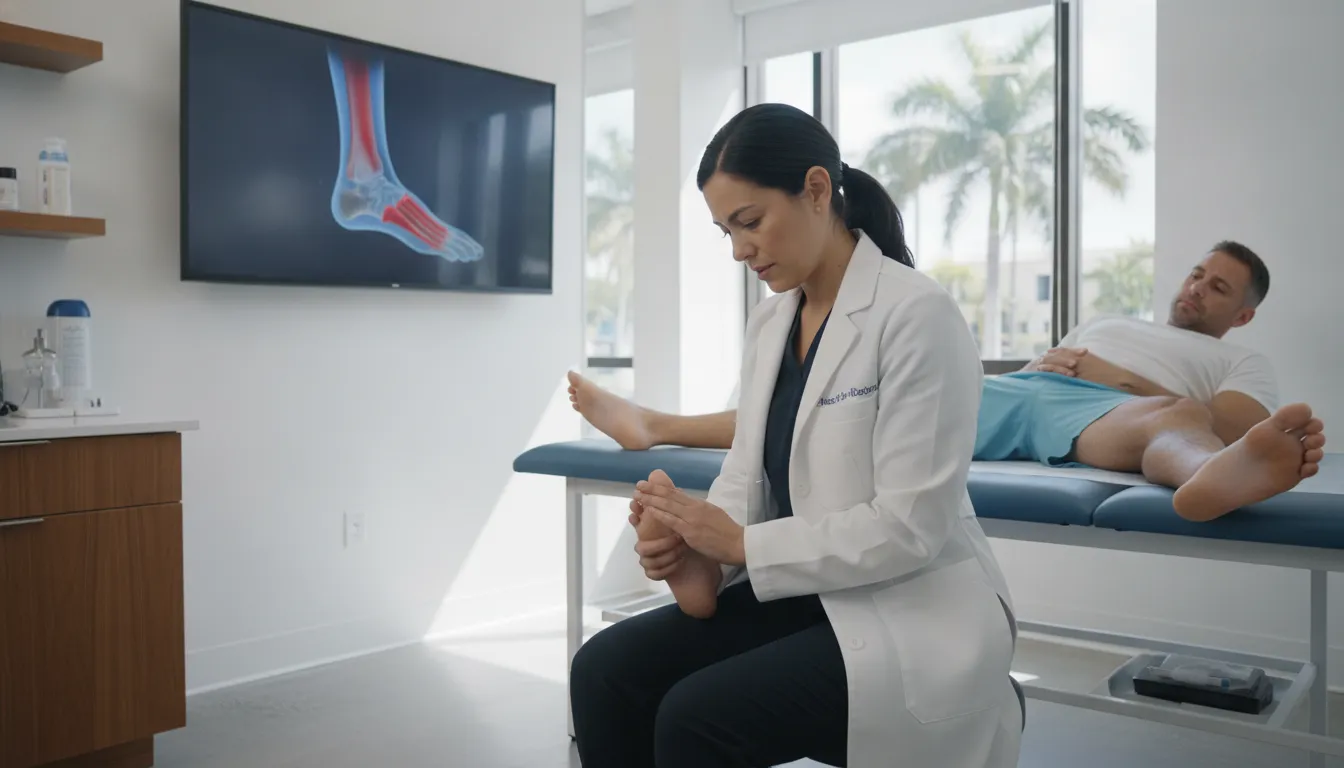
Next, we do a physical exam to check for sore spots and how well your foot moves. We look at the shape of your arch and how you walk. In some cases, we use tools like ultrasound to see the tissue. This helps us rule out other issues like small bone breaks or pinched nerves.
Finding the exact spot of the injury is key for a good regenerative treatment for plantar fasciitis. If we find bone spurs, we can also talk about treating plantar fasciitis without surgery. This full view helps us see if regenerative care is right for you.
Step-by-step treatment steps
Once we have the data, we build your own plan. We talk about the types of cells or growth factors that might help you best. We also plan for your life after the care to make sure you heal well.
- Consultation: You meet with our team to talk about your health and goals.
- Evaluation: We use exams and tools to assess your foot.
- Option review: We talk about the benefits and limits of each choice.
- Procedure: We do the care in our South Miami clinic with great care.
- Follow-up: We check your progress as you heal and move.
- Rehabilitation: You follow a simple plan to make your foot strong and stop new pain.
Our team stays with you through every part of this path. We want to make sure you have the help you need to get back on your feet. Most people see the best results when they follow the full plan from start to finish.
Who may consider regenerative treatment for plantar fasciitis?
About one in 10 people in the U.S. will deal with plantar fasciitis at some point. This issue is the most common cause of heel pain in adults, according to research published by the NIH. While many people start with rest or ice, some find that their pain does not go away with standard care. This is when they might look for a regenerative treatment for plantar fasciitis to find long-term relief.
Ideal candidates for care
The best candidates for these treatments are often people who want to avoid surgery. You may think about this path if you have had heel pain for more than six months. It is also a good choice if you want to avoid steroid shots. While steroids can help with pain, they can sometimes cause tissue to break down over time.
Regenerative care focuses on helping the body heal its own tissue naturally. Patients who have tried physical therapy or foot inserts without success may also benefit. If you are looking for a way of treating heel pain without surgery, these tools can help. Many people who work on their feet choose this care to get back to their daily tasks quickly.
Medical review and expectations
Before you start care, you will need a full health review. A doctor will check your foot health and look at your past injuries. This helps them make a plan that fits your needs. You should know that these treatments are not a quick fix. Most people need time to see the full results as the tissue heals.
You may also need more than one session to get the best outcome for your foot pain. Real goals are a key part of the process. While many patients see a big change in their pain, every person heals at a different speed. It is also vital to plan for your healing time. You might need to limit hard work for a few weeks to let the new cells do their job.
A stem cell therapy for foot pain visit can help you understand what to expect during this time. When you meet with an expert, it is helpful to have a list of questions ready. Asking the right things can help you feel sure about your choice.
Questions for your doctor
When you talk to your doctor, you might want to ask about the specific plan for your foot. Some helpful questions include:
- How many sessions will I likely need for my case?
- What should I do to prepare for my first visit?
- How soon can I go back to my normal routine?
- Are there any risks I should know about for my health history?
Your clinician should explain which biologic is being proposed, why it fits the diagnosis, and what evidence supports it. PRP has direct clinical research in plantar fasciitis, while evidence for MSC-based and exosome approaches is more limited. Asking about sourcing, preparation, image guidance, adverse effects, and rehabilitation helps patients make a more informed decision.
Frequently Asked Questions
How long does regenerative treatment for plantar fasciitis take to work?
Response time varies by diagnosis, symptom duration, treatment choice, and rehabilitation plan. Some patients report changes within weeks, while tissue remodeling and functional improvement may take several months. The treating clinician should set individualized milestones and reassess progress rather than promise a fixed timeline.
Is regenerative therapy better than steroid injections for heel pain?
Neither option is universally better. Corticosteroid injections may provide short-term symptom relief, while PRP is intended to support a repair response. In a systematic review of randomized trials, PRP showed greater pain improvement at 3 and 6 months. The best choice still depends on diagnosis, prior care, contraindications, and patient goals.
Will I need more than one regenerative medicine session?
The number of sessions depends on the diagnosis, the selected treatment, and response to the initial procedure. Some protocols use one PRP injection, while others may include reassessment or additional treatment. Ask the treating clinician to explain the proposed protocol and the criteria used to decide whether another session is appropriate.
Are regenerative treatments for plantar fasciitis covered by insurance?
At this time, most health plans do not pay for biological heel treatments. These services are cash-pay because many groups still see them as new or for choice. While this means you must pay out of pocket, these options focus on long-term repair instead of short-term relief. Our office can give you a clear cost sheet during your first visit. This helps you plan for your care without any surprises.
Can regenerative medicine help chronic plantar fasciitis when other treatments fail?
It may be reasonable to discuss regenerative options when a confirmed case remains symptomatic after an adequate trial of conservative care. Persistent pain also warrants reassessment because another diagnosis or an unresolved mechanical factor may be contributing. Treatment is individualized, and no regenerative procedure can guarantee relief.
Medical note: PRP, MSC, and exosome-based approaches have different evidence and regulatory considerations. No treatment outcome is guaranteed. Stem cell and exosome products used for regenerative medicine are not FDA-approved; discuss investigational status, alternatives, and risks during informed consent.
Are you ready to find long-term relief for your chronic heel pain?
Persistent heel pain deserves a clear diagnosis and a plan that considers both symptom relief and the factors loading the plantar fascia. Earlier evaluation can help identify whether rehabilitation, orthotics, another conservative option, or an injection-based treatment is appropriate. Results vary, and a consultation is the right setting to review likely benefits, limitations, costs, and risks.
Ready to schedule a consultation? Call (305) 598-7777 to talk to a specialist about regenerative treatment for plantar fasciitis and get long-term relief today.