

Back pain is the single leading cause of disability worldwide, yet lasting relief is often hard to find. This condition is the second most common reason patients see a doctor today.
Stem cell therapy for back pain is a non-surgical treatment using umbilical-cord-derived mesenchymal stem cells (MSCs) to support the body’s natural healing processes. These cells may help reduce inflammation and provide a signaling environment that assists in the repair of damaged spinal discs and tissues. Unlike major surgery that removes tissue or joins bones together, this regenerative approach aims to treat root causes of pain by potentially restoring physiological function. According to research from the National Institutes of Health, back pain currently lacks a treatment that can fully restore disc function. This makes MSC therapy a promising choice for patients who want to avoid surgery while supporting long-term spinal health and mobility.
Call (305) 598-7777 to Schedule Your Consultation Today
Many patients struggle to find relief because conventional treatments often only mask pain without addressing the underlying structural damage. Understanding why standard care frequently fails to restore spinal health is the first step toward finding lasting improvement. The next section examines this gap and explains how regenerative approaches may offer a different path forward.
Understanding Back Pain: Why Conventional Treatments Often Fall Short
Back pain is a complex condition that often persists because standard treatments address symptoms rather than the underlying tissue damage in the spine. According to NIH research, spinal discs have a naturally low blood supply, making self-repair difficult. Conservative options such as rest, physical therapy, and pain medications may provide temporary relief but do not restore disc structure, which is why many patients eventually seek non-surgical alternatives for back pain.
Back pain affects people of all ages and remains one of the most common reasons for medical visits. Many patients experience pain that makes daily tasks difficult. While acute cases often resolve with rest, chronic pain can persist for months or years, leading to a cycle of limited movement and decreased quality of life.
The global burden of spinal pain
The impact of back pain on a global scale is substantial. Research confirms that back pain is the leading cause of disability worldwide. It prevents millions of people from working and participating fully in daily life. Despite its prevalence, the medical community still lacks a gold-standard approach to fully restore degenerated spinal discs. Most conventional care plans focus on symptom management rather than structural repair, leaving many patients in a cycle where pain persists or recurs over time.
Where standard treatments fall short
Most patients begin with conservative measures such as heat, rest, or physical therapy. While these approaches may help some individuals, they often fail to address deep structural damage within the discs. The spine’s naturally low blood supply means discs heal poorly on their own. Other common interventions include:
- Pain medications and opioids that mask discomfort but do not promote tissue healing.
- Corticosteroid injections that reduce inflammation temporarily but may lose effectiveness with repeated use.
- Spinal surgery that carries significant risks and may not restore natural motion.
These options frequently fall short because they do not address the biological changes that occur as discs degenerate over time. Many patients find their pain returns after initial relief subsides, and some face complications such as scar tissue following invasive procedures. This treatment gap underscores why comprehensive back pain treatment options that target underlying causes are essential for long-term outcomes.
The search for better spinal health
In Miami, clinicians are exploring approaches that go beyond symptom management to support the body’s innate repair capacity at the cellular level. This is where stem cell therapy for back pain enters the clinical picture. Unlike surgery, which alters spinal anatomy, regenerative options aim to support disc health through biological signaling. These methods focus on the root causes of degeneration. By working with the body’s natural mechanisms, clinicians can help patients pursue a course that supports lasting comfort without the inherent risks of more invasive treatments. This paradigm shift in spinal care may help many patients achieve improved function and quality of life.
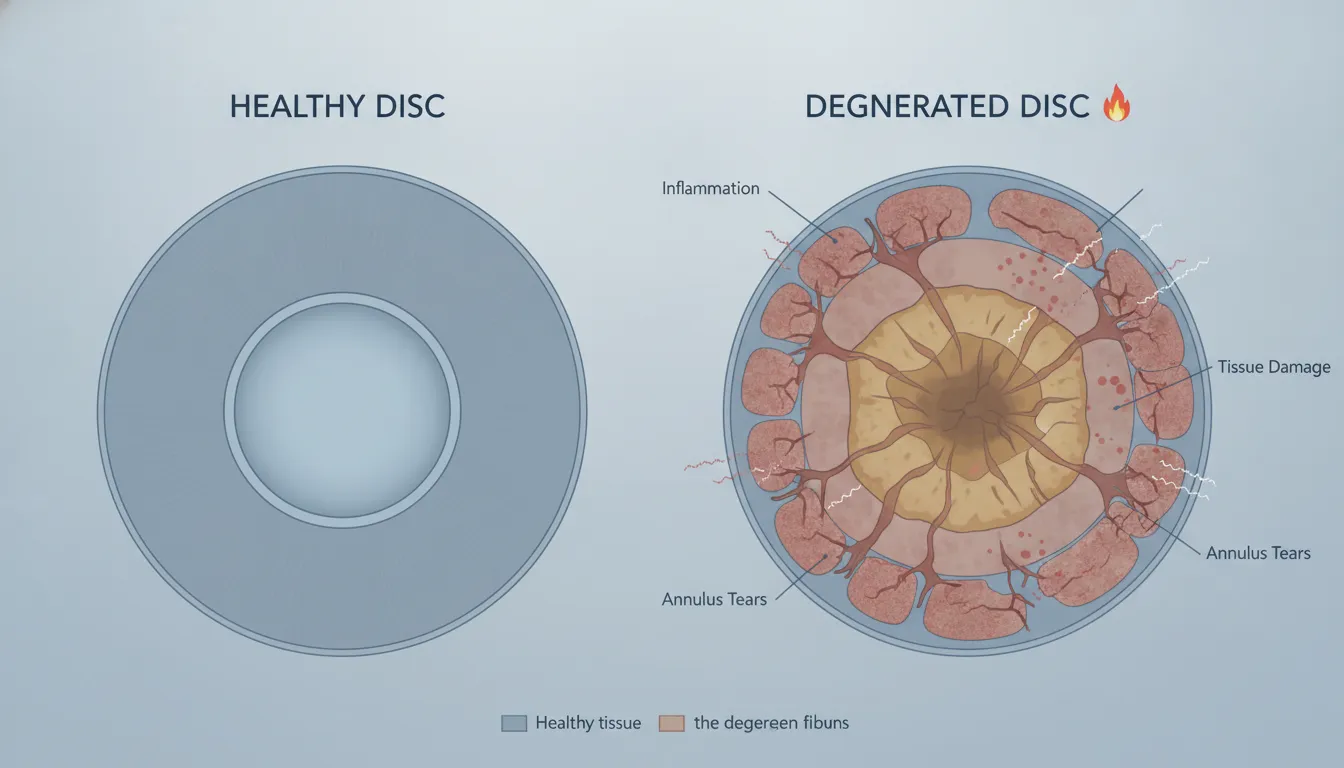
What Is Stem Cell Therapy for Back Pain?
Stem cell therapy for back pain is a regenerative medical approach that uses mesenchymal stem cells (MSCs) to support the body’s ability to repair damaged spinal tissues. These cells are designed to reduce inflammation and create a signaling environment conducive to tissue repair. For patients seeking an alternative to surgery, this non-surgical alternative for back pain offers a path that addresses the biological underpinnings of disc degeneration rather than merely managing symptoms.
Unlike conventional treatments that focus on pain relief through pharmaceuticals or structural alteration through surgery, MSC therapy targets the cellular environment of the spine. This therapy aims to help the body heal itself by providing the biological signals needed for tissue repair and regeneration.
The science of spinal repair
Spinal discs naturally degenerate over time due to aging, injury, or repetitive stress. When this occurs, it can lead to chronic pain and reduced mobility. Research indicates that umbilical-cord MSCs are a promising regenerative therapy for degenerative disc disease. These cells function by secreting growth factors and cytokines that recruit the body’s own repair cells to the affected area. Rather than simply masking pain, this therapy is designed to support the long-term health and structural integrity of spinal discs.
This approach is distinctive because it addresses the biological causes of disc degeneration. Multiple studies suggest that MSC therapy reduces inflammation and supports the restoration of disc matrix components. This represents a significant departure from traditional care, which often relies on long-term medication or surgical intervention. By leveraging the body’s own cellular machinery, clinicians can help patients achieve improved outcomes with fewer side effects and less downtime.
Types of stem cells used in clinical practice
Not all stem cell treatments use the same cell source. Some clinics harvest cells from the patient’s own adipose tissue or bone marrow, known as autologous cells. These procedures require an additional collection step, which may involve liposuction or bone marrow aspiration, adding discomfort and recovery time.
Miami Stem Cell uses umbilical-cord-derived stem cell therapy. These cells are sourced from healthy donors following full-term births and undergo rigorous safety screening. Because they are not harvested from the patient, there is no need for a painful extraction procedure. This approach streamlines the treatment process and reduces the overall burden on patients seeking relief from chronic back pain. Additionally, umbilical-cord MSCs are younger and more biologically active than adult-derived cells, which may enhance their therapeutic signaling capacity.
How Umbilical-Cord-Derived MSCs Support Spinal Tissue Regeneration
Umbilical-cord-derived mesenchymal stem cells (MSCs) support spinal tissue regeneration primarily through paracrine signaling rather than direct cell replacement. These cells secrete growth factors and anti-inflammatory cytokines that create a favorable environment for the body’s own repair mechanisms. According to peer-reviewed research, umbilical-cord MSCs demonstrate strong potential for treating degenerative disc disease by helping preserve disc height and hydration.
These cells represent an advanced class of therapeutic tools for spinal care. Rather than replacing damaged tissue with new cells, they function as biological guides that direct the body’s healing response. This mechanism is central to how modern regenerative clinics help patients avoid invasive spinal surgery.
How cells signal for tissue repair
MSCs work through the secretion of bioactive molecules including growth factors, cytokines, and extracellular vesicles. These molecules function as a signaling network that directs the body’s endogenous repair cells to the site of injury. When these signals reach the damaged area, they initiate a cascade of healing activities including reduced inflammation, decreased cell death, and increased matrix production. Umbilical-cord MSCs are a particularly robust tool for treating disc disease because of their high proliferative capacity and potent immunomodulatory properties.
This signaling process is essential for maintaining spinal health. It helps preserve the hydration and structural integrity of intervertebral discs, which function as shock absorbers between vertebrae. Without adequate hydration, discs can thin and cause mechanical pain. By providing the appropriate biological signals, these cells help maintain disc health and support spinal mobility over time.
The use of young, umbilical-cord-derived cells offers significant advantages over adult autologous cells. These cells have not undergone the same degree of aging-related decline as cells harvested from older patients. Their robust signaling capacity may translate to more effective support for tissue repair, helping the body respond more efficiently to spinal damage.
Reducing inflammation in the spine
Chronic back pain is frequently associated with persistent inflammation in and around the spinal structures. This inflammatory environment can compress nerve roots and generate significant discomfort. MSC therapy works by secreting anti-inflammatory cytokines that help modulate this immune response. This is a core component of an FDA-compliant, science-backed treatment protocol designed to address the root cause of pain rather than its symptoms alone.
When inflammation subsides, pressure on nerve structures decreases, allowing patients to experience improved comfort and range of motion. The cells shift the local environment from a pro-inflammatory state to a pro-repair state, creating conditions conducive to healing. This immunomodulatory function is a vital element of any regenerative approach to spinal care.
Reducing inflammation also improves blood flow and nutrient delivery to the tissues surrounding the spine. This creates a healthier overall environment and reduces the likelihood of recurrent injury. By addressing the inflammatory component of disc disease, MSC therapy provides a foundation for sustained improvement in spinal health.
Research and clinical evidence
The scientific literature supporting MSC therapy for back pain continues to expand. Researchers are refining protocols to identify which patient populations derive the greatest benefit from treatment. Current studies published in peer-reviewed journals like those indexed in PMC help clinicians match patients to appropriate regenerative protocols based on individual pathology and health status.
While published outcomes are encouraging, ongoing research focuses on long-term safety and durability of response. Scientists are investigating how the body’s response to MSC therapy evolves over years rather than months. This commitment to evidence-based care helps ensure that stem cell treatments remain a safe and effective option for appropriate candidates. Following the science is the best way to provide patients with the care they deserve.
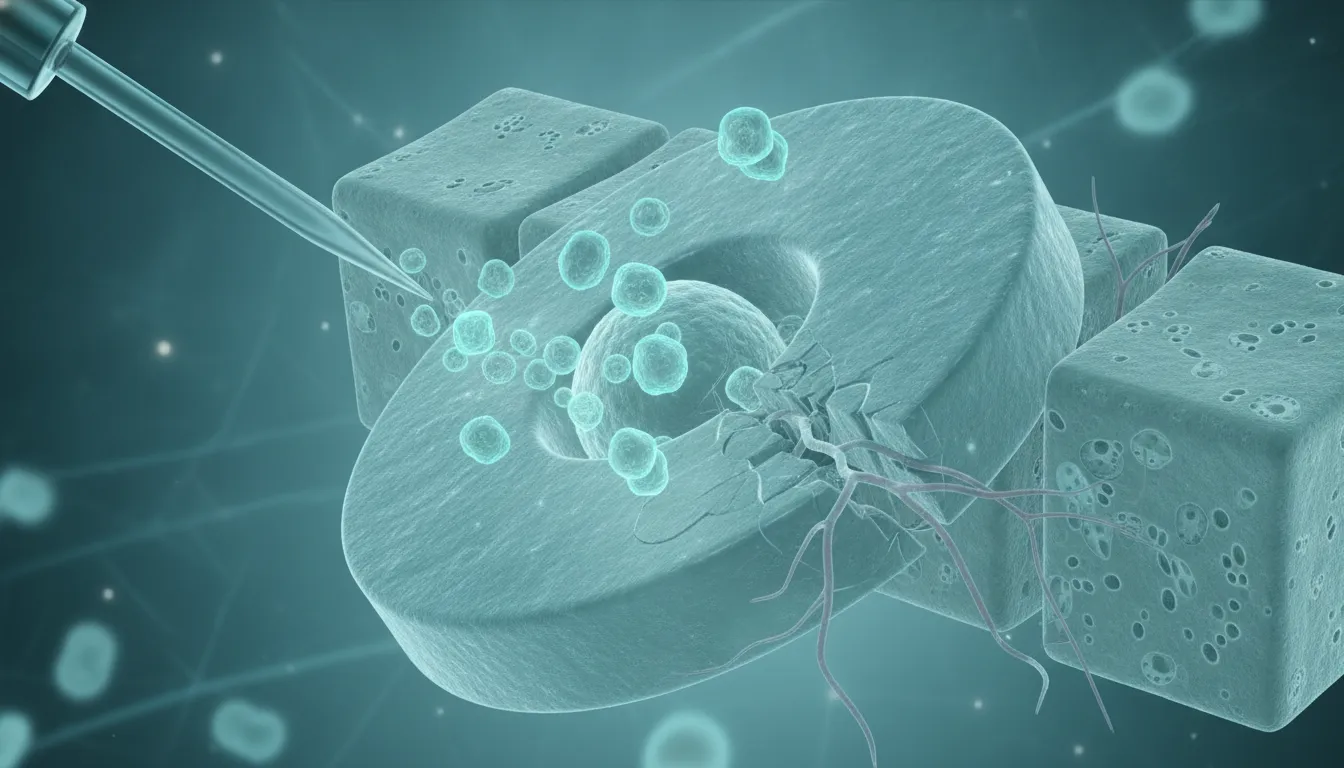
The MSC Treatment Process: What to Expect
The MSC treatment process at Miami Stem Cell begins with a comprehensive consultation to determine candidacy, followed by a targeted injection using image guidance. Because the clinic uses umbilical-cord-derived cells, no bone marrow aspiration or fat harvesting is needed. The entire procedure is performed in an outpatient setting, and most patients return home the same day with minimal discomfort.
The path to relief begins with a clear clinical plan. The medical team evaluates each patient’s health history, imaging studies, and treatment goals to determine whether regenerative therapy is appropriate for their specific spinal condition.
Your initial consultation
The first step is a thorough clinical evaluation. The team reviews medical records, past imaging, and current symptoms to identify the underlying cause of pain. Not every patient is a suitable candidate for MSC therapy. Research in PMC emphasizes that appropriate patient selection is critical for both safety and outcomes. This evaluation process ensures that the treatment plan is tailored to each individual’s specific needs and pathology.
The injection procedure
The treatment itself is brief and does not require hospitalization. Because Miami Stem Cell uses umbilical-cord-derived MSCs, there is no need to harvest cells from the patient’s own bone marrow or adipose tissue, which simplifies the process significantly. The cells are precisely delivered to the target area using imaging guidance to ensure accurate placement. This is a central element of stem cell therapy for back pain at our Miami clinic.
- Consultation: The team reviews your diagnostic studies and health history to confirm candidacy for treatment.
- Preparation: The injection site is cleansed and numbed to ensure patient comfort throughout the procedure.
- MSC Injection: The physician delivers the cells to the target spinal structures using real-time imaging guidance.
- Monitoring: You remain under observation for a short period following the injection to ensure stability.
- Discharge: Most patients return home the same day with no need for an overnight stay.
- Follow-Up: The care team tracks your progress over the subsequent weeks to assess response and adjust your recovery plan as needed.
Recovery and expected outcomes
Most patients resume light daily activities shortly after the procedure. Some individuals experience mild soreness at the injection site for the first 48 to 72 hours. Published clinical data suggest that patients may experience localized discomfort for 48-72 hours post-procedure before this resolves. Patients receive detailed aftercare instructions to support optimal healing. Strenuous activity is typically restricted for several weeks while the cells work to support tissue repair.
Who Is a Good Candidate for Stem Cell Therapy for Back Pain?
Good candidates for stem cell therapy for back pain are individuals with chronic spinal conditions such as degenerative disc disease who have not achieved adequate relief through conservative measures. Ideal candidates want to avoid surgery, have realistic expectations about outcomes, and are in generally good health. At Miami Stem Cell. Candidacy is determined through a comprehensive consultation that includes a review of imaging studies and medical history to ensure the treatment aligns with each patient’s specific pathology.
Not every patient with back pain will benefit from regenerative treatments. Clinicians use a structured evaluation process to identify appropriate candidates and maximize the likelihood of a positive response.
Common spinal conditions treated
Stem cell therapy for back pain is typically designed to assist patients with degenerative changes in the spine. This includes individuals with degenerative disc disease, where the intervertebral discs begin to lose hydration and structural integrity over time. Patients with chronic pain persisting for months or years may be considered for this approach. These regenerative treatments for spinal regeneration aim to support the body’s natural repair processes and reduce the inflammatory environment that perpetuates pain.
Patients who have exhausted conservative options often explore this path. If physical therapy, activity modification, or medications have not provided adequate relief, regenerative medicine may offer a non-surgical alternative. The approach is best suited for individuals who wish to avoid the extended recovery periods and inherent risks of spinal surgery. The clinical team at Miami Stem Cell evaluates each patient’s imaging and history to determine whether umbilical-cord-derived cells align with their clinical picture.
Setting realistic expectations
An appropriate candidate approaches treatment with realistic and informed expectations. While many patients report meaningful reductions in pain and improvements in mobility, stem cell therapy is not a guaranteed cure. It is a biological intervention designed to support the body’s natural healing capacity over time. Most patients begin to notice changes in their symptoms within weeks of treatment. Though the full benefit may take several months to manifest as the cells work to modulate inflammation and support tissue repair.
Overall health status influences treatment outcomes. Patients who maintain a healthy lifestyle and adhere to post-procedure guidelines tend to experience better results. Miami Stem Cell provides personalized recovery protocols to help each patient maximize their response to treatment. By targeting the underlying pathology rather than symptoms alone. This approach aims to support meaningful improvement in function and quality of life without the need for invasive surgical intervention. For more information about your specific condition, visit the clinic’s spine and neck pain resource page.
Stem Cell Therapy vs. Surgical Alternatives: A Comparison
Stem cell therapy and spinal surgery differ fundamentally in their approach to back pain: MSC therapy supports the body’s natural repair capacity through minimally invasive injection, while surgery alters anatomy through resection or fusion. The table below compares these two approaches across key metrics including invasiveness, recovery time, and risk profile.
Many patients with chronic back pain feel caught between enduring their symptoms and undergoing major surgery. Back pain remains the leading cause of disability worldwide, yet clinicians still lack a universally accepted gold-standard approach to fully restore degenerated spinal discs. Surgical procedures such as spinal fusion address structural instability, but they do not always resolve the underlying biological causes of disc-related pain. For many patients, MSC therapy functions as a non-surgical bridge that should be considered before proceeding to irreversible surgical intervention.
Limitations of standard spine surgery
Spinal surgeries are major procedures that typically require hospitalization and extended recovery periods. While these operations can stabilize the spine, they often involve removing tissue or fusing vertebral segments together. This approach may limit range of motion and transfer mechanical stress to adjacent spinal segments, potentially leading to future problems. For patients considering their options, degenerative disc disease treatment through regenerative medicine offers a less invasive first step.
Patients must also weigh the risks of infection, blood clots, and anesthesia complications that accompany any major surgical procedure. Additionally, a single surgery sometimes leads to additional procedures years later, a phenomenon known as failed back surgery syndrome. Many patients prefer to explore non-surgical options first to avoid this potential cascade of interventions.
Regenerative medicine as a non-surgical bridge
Regenerative approaches such as MSC therapy focus on supporting the body’s intrinsic healing mechanisms. Rather than removing damaged disc tissue or fusing spinal segments, this strategy delivers biological signals that help the local environment shift toward repair. It is a minimally invasive option that does not require large incisions or extended recovery periods. The objective is to support disc health from within, helping the intervertebral discs regain their function as effective shock absorbers. By using umbilical-cord-derived MSCs, clinicians aim to treat the root causes of disc degeneration without permanently altering spinal anatomy.
The evidence base for stem cell therapy continues to expand through active clinical research. Many patients find it a worthwhile option before considering irreversible surgical changes, as it preserves all future treatment options while potentially providing meaningful relief.
Side-by-side comparison of approaches
When evaluating these two treatment paths, the differences in recovery time, risk, and impact on spinal function become clear. The table below summarizes how MSC therapy compares with common spinal surgery across key clinical parameters.
| Feature | MSC Therapy | Spine Surgery |
|---|---|---|
| Invasiveness | Non-surgical injection | Open surgical procedure |
| Recovery Time | 48 to 72 hours of mild soreness | Weeks to months |
| Risk Profile | Low risk of infection or complication | Higher risk including infection, blood clots, anesthesia |
| Disc Function | Aims to support natural disc structure | May limit segmental motion |
| Hospital Stay | Outpatient; no overnight stay needed | Typically requires hospitalization |
This comparison highlights why many patients explore regenerative medicine early in their decision process. MSC therapy offers a conservative starting point that preserves future options while addressing pain and supporting tissue health without the significant costs and risks of the operating room. To learn more about your options for lasting relief, contact the Miami Stem Cell team to schedule a consultation.
Frequently Asked Questions
This FAQ section addresses common questions about stem cell therapy for back pain, including efficacy, cost, safety, candidacy, and how regenerative treatment compares with surgical options. The answers are based on current peer-reviewed research and clinical experience at Miami Stem Cell.
Does stem cell therapy really work for back pain?
Clinical research suggests that stem cell therapy may help manage chronic back pain by reducing inflammation and supporting the body’s natural repair mechanisms. According to published studies, umbilical-cord-derived MSCs show promise for patients with degenerative disc disease. While research is ongoing, many patients report meaningful improvements in pain and mobility following treatment. Individual results vary based on the specific cause of pain and overall health status.
How much do stem cell injections cost for back pain?
The cost of stem cell therapy for back pain varies depending on the number of injections required and the type of cells used. Most health insurance plans do not currently cover these treatments, as they are still considered emerging therapies. Patients should plan for out-of-pocket expenses. At Miami Stem Cell, transparent pricing is provided during the initial consultation so patients can make informed decisions about their care.
Is stem cell therapy for back pain FDA approved?
Umbilical-cord-derived MSCs are not FDA-approved specifically for back pain treatment. However, they are used under FDA enforcement discretion as part of the practice of medicine. Miami Stem Cell operates with strict adherence to FDA regulations, using cells processed in accordance with current Good Tissue Practices. Patients should discuss the regulatory landscape and safety protocols with their provider before proceeding with any treatment.
How long does it take to see results from stem cell therapy?
Most patients begin noticing improvements within two to four weeks following treatment, though the full therapeutic effect may take several months to develop. The cells work gradually to modulate inflammation and support tissue repair. The timeline varies based on the severity of the condition, the area treated, and individual healing capacity. Follow-up visits help the care team track progress and adjust recovery protocols as needed.
Who should not get stem cell therapy for back pain?
Patients with active infections, certain cancers, or severe systemic illnesses may not be suitable candidates for stem cell therapy. Pregnant women and individuals with bleeding disorders are also typically excluded. A comprehensive medical evaluation is essential to identify any contraindications before proceeding. The clinical team at Miami Stem Cell reviews each patient’s full health history to ensure safety and appropriateness of treatment.
Take the Next Step Toward Lasting Relief
Chronic back pain does not have to define your quality of life. Stem cell therapy for back pain offers a science-backed, non-surgical option for patients seeking relief without the risks and extended recovery of spinal surgery. At Miami Stem Cell, our team brings years of clinical experience in regenerative medicine, having performed thousands of procedures using ethically sourced, umbilical-cord-derived MSCs.
If you are ready to explore whether this treatment is right for your condition, we invite you to schedule a consultation. Our team will review your medical history, discuss your goals, and help you determine the most appropriate path forward. Contact us today or call (305) 598-7777 to speak with a member of our team.