

Persistent knee pain from cartilage wear makes simple daily walks feel like a major chore. For millions of people, joint degeneration slowly steals their mobility and leaves them with few good options. Finding a non-surgical way to protect your joints is key to staying active.
Modern stem cell therapy for knee osteoarthritis offers a science-backed, non-surgical option that may help reduce joint inflammation and support tissue repair. Clinical reviews show that mesenchymal stem cell treatments have net positive effects on reducing joint pain and improving knee function in most randomized trials (PubMed, 2023). Rather than just masking symptoms, these specialized cells target the root causes of wear by releasing anti-inflammatory signals directly inside the joint. This treatment may help patients manage chronic pain, preserve remaining cartilage, and potentially delay or avoid the need for invasive total knee replacement surgery. In Miami, personalized protocols focus on using high-quality umbilical-cord-derived cells to support lasting joint wellness.
Request a consultation today to find out if stem cell therapy for knee osteoarthritis is the right path for your joint health.
Understanding Knee Osteoarthritis and Mesenchymal Stem Cells
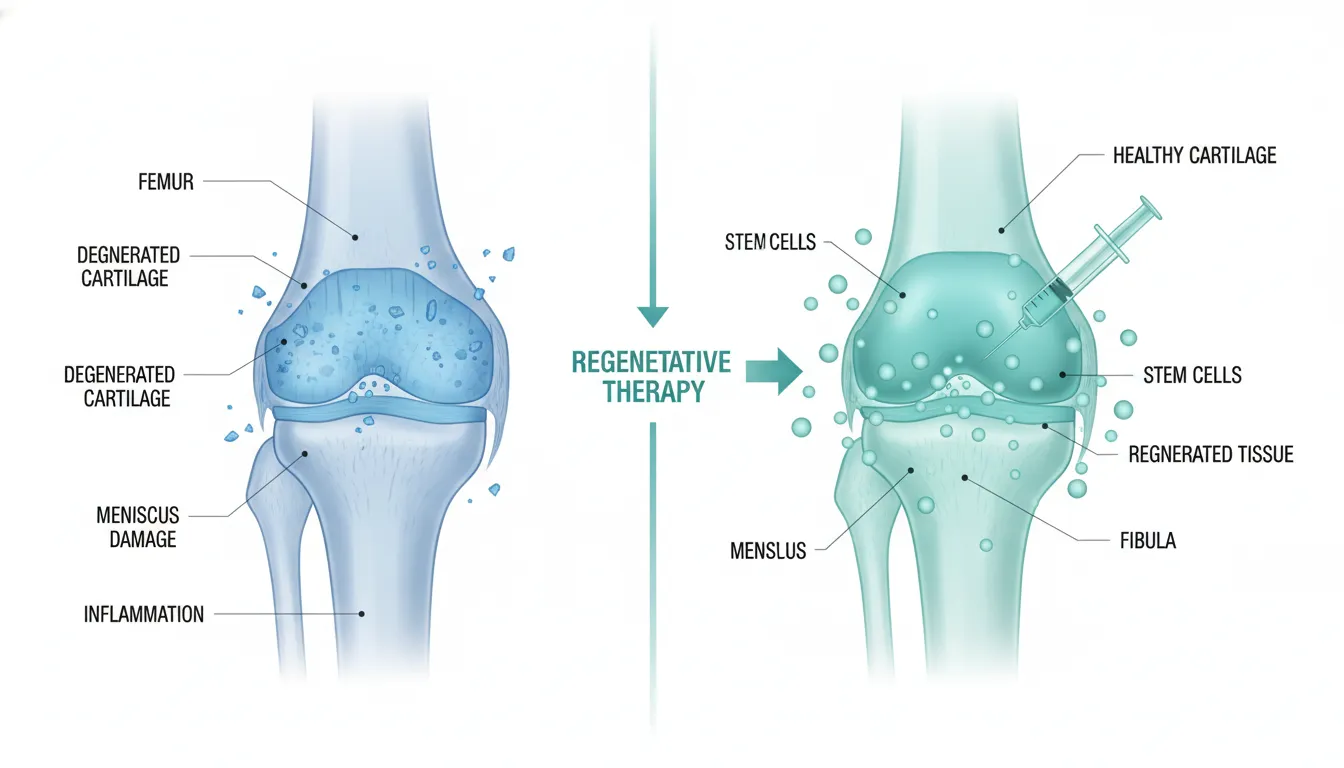
Knee osteoarthritis is a progressive joint disease that affects millions of people. It starts when the protective cartilage that cushions the ends of your bones wears down over time. As this vital cartilage thins, the bones of the joint begin to rub directly against each other. This friction leads to pain, swelling, and a loss of joint movement. Inside the joint, this mechanical damage triggers a continuous inflammatory cascade. The tissue that lines the joint becomes swollen and irritated, which releases proteins that break down cartilage even faster.
For many patients, finding effective joint regeneration options is key to maintaining their daily lifestyle. Mesenchymal stem cells, or MSCs, are specialized cells that may mitigate knee osteoarthritis symptoms and slow down joint damage. These cells can home in on areas of injury and tissue distress. Once they reach the worn joint, they release a variety of biological signals. This process, known as paracrine signaling, helps change the local environment of the knee from a state of breakdown to a state of support. This makes stem cell therapy a compelling option for those looking to avoid joint replacement surgery.
How MSCs Fight Joint Inflammation
The primary benefit of MSCs in treating knee osteoarthritis lies in their immunomodulatory effects. In a degenerating joint, the immune system is highly active, which drives chronic swelling and pain. MSCs have strong anti-inflammatory and immunomodulatory effects that help quiet this overactive immune response. By secreting helpful cytokines, these cells work to block the pathways that cause joint irritation. This reduction in local swelling helps protect the remaining joint tissue and allows for a more comfortable healing environment. Over time, reducing this inflammation can help restore joint function and ease daily movement.
Summary: MSCs reduce knee osteoarthritis inflammation by quieting overactive immune signals and releasing cytokines that protect remaining cartilage and ease daily movement.
Why Umbilical Cord Tissue Is Preferred
Stem cells can come from different tissue sources, including bone marrow, fat tissue, and umbilical cord tissue. At Miami Stem Cell, we prefer umbilical-cord-derived MSCs because they offer clear biological benefits over other sources. Cells harvested from adult bone marrow or fat tissue are older and have been exposed to environmental toxins over time. In contrast, umbilical cord MSCs are young, highly active, and replicate much faster. They also do not require an invasive extraction procedure like liposuction or bone marrow drilling, which makes the overall treatment process much easier for the patient. By choosing umbilical cord MSCs, we provide our patients with a highly potent option for managing their joint health.
The Cellular Pathophysiology of Knee OA
To understand how stem cells help, we must look at the cellular breakdown of knee osteoarthritis. Chronic joint wear and tear changes the cellular behavior of chondrocytes, which are the cells responsible for cartilage health. Instead of maintaining the joint matrix, these cells begin to release destructive enzymes. This cellular dysfunction leads to micro-cracks in the cartilage, exposing the subchondral bone beneath. The bone reacts by thickening and forming painful bone spurs, further restricting joint mobility. By targeting these specific pathways, regenerative therapies help restore balance at the microscopic level.
Summary: Knee osteoarthritis progresses from cartilage wear to bone spur formation. Stem cells target these pathways at the cellular level to restore joint balance.
Clinical Evidence: What Research Shows About Stem Cell Therapy for Knee Osteoarthritis
Doctors and researchers continue to study stem cell therapy for joint pain to verify its clinical benefits. Modern trials offer valuable data on how these cells affect joint function. Let us look at what recent medical science says about this option.
Randomized controlled trials and patient outcomes
Large reviews of clinical data show clear benefits for joint health. A review of multiple clinical studies published in the National Institutes of Health database assessed the impact of mesenchymal stem cells on knee pain. The researchers found that stem cell therapy reduced pain and improved joint function in 12 out of 15 randomized controlled trials compared to baseline scores. The same review showed that 11 out of 15 trials reported better outcomes than control groups at study endpoints. This clinical evidence shows that stem cells may help patients manage symptoms. While medical experts continue to study the specific ways these cells slow down joint damage, the current data points to measurable, real-world relief.
The MILES study and steroid comparisons
One major trial in this field is the Multicenter Trial of Stem Cell Therapy for Osteoarthritis, also known as the MILES study. This trial compared three types of stem cell treatments against a standard corticosteroid injection. A report on the study from Duke Health shows that all groups experienced a similar level of joint improvement after one year. This result is notable because steroid injections often wear off after three months. The study shows that mesenchymal stem cell treatments can provide long-term joint support that matches the gold standard of care. Researchers are now using follow-up imaging trials to see how these therapies affect joint structure over two and three years.
Cell dosage and cartilage preservation
Dosing is another key factor in how well these therapies work. Clinical studies suggest that the number of cells used in an injection affects the overall result. Higher doses of mesenchymal stem cells may lead to structural improvements and better cartilage repair alternatives in select patients. This dose-dependent effect shows that personalized plans are vital for joint care. A higher dose may help support the natural repair processes in the joint. It is important to remember that research into these mechanisms is still ongoing. Doctors must evaluate each joint to find the best approach for each individual patient.
Summary: Clinical trials show stem cell therapy for knee osteoarthritis reduces pain in 12 of 15 studies, with the MILES trial demonstrating one-year outcomes comparable to steroid injections without cartilage damage.
The Stem Cell Treatment Process at Miami Stem Cell
Every person has a unique joint structure. That is why we do not use a standard, one-size-fits-all injection. Our clinic designs a custom plan for your needs. This plan focuses on how stem cell therapy may help soothe pain and support joint health.
We use a structured process to ensure safety and precision. The steps below outline how we deliver targeted care to address joint wear and support your healing journey.
- Medical Evaluation and Imaging: Your care begins with a complete medical check in our Miami office. Our medical team looks at your history and asks about your daily limits. We want to find the root cause of your joint issues. If you do not have recent knee scans, we will request new medical imaging. This helps us see the exact level of joint wear. To start, you can contact us to book this first visit.
- Choosing Umbilical Cord MSCs: We use umbilical-cord-derived mesenchymal stem cells (MSCs) for our care. Other clinics may use cells from fat tissue, which requires a surgical liposuction procedure. We avoid this extra step. We use pre-screened umbilical cord tissue from healthy, scheduled births. It offers a rich source of active MSCs without any extra surgery for you.
- Precise Joint Injection: On the day of your visit, we prepare your custom cell dose. A physician performs the injection. We use live imaging like ultrasound to guide the needle. This ensures we place the cells directly into the knee joint space where you need them most. The procedure is brief and causes very little pain. Most patients walk out of our office right after the injection.
- Monitoring Your Recovery: Our care does not end after the injection. We schedule follow-up checks to monitor your progress. Your body needs time to respond to the cells. Many patients start to see small changes in pain and joint movement within a few weeks. We guide you on safe ways to return to your normal routine as your knee heals.
Summary: At Miami Stem Cell, the treatment process includes a full medical evaluation, use of umbilical cord MSCs, ultrasound-guided injection, and personalized follow-up care.
Recovery Timeline: What to Expect After Stem Cell Knee Treatment
Getting regenerative care for joint pain is a major step. It helps to know what to expect as you heal. Unlike major joint surgery, this therapy does not require a long hospital stay. Most people who choose cartilage repair alternatives can walk out of the clinic on the same day. Your body needs time to use these active cells to soothe the joint and support repair.
Here is what the recovery timeline looks like at a glance:
- Immediate (Days 1 to 2): Mild soreness or fullness in the knee. Cold packs help. Most patients return to desk work within two days.
- First Week: Rest and protect the joint. Avoid heavy lifting, running, or twisting. Short slow walks on flat ground are fine. No anti-inflammatory drugs like ibuprofen, as they can interfere with the healing process.
- Weeks Two to Four: Add gentle low-impact activity such as stationary biking or swimming. Joint fluid movement helps without adding weight.
- Weeks Five to Eight: Begin focused physical therapy to strengthen thigh and hip muscles. Healthy nutrition and hydration support tissue rebuilding.
- Months Three to Twelve: Return to full activity. Many patients resume sports by month three. Follow-up imaging may track structural improvements.
Immediate Post-Injection Care
Right after your treatment, you may feel mild soreness or fullness in your knee. This is a normal response as the joint takes in the fluid. Some patients also note a bit of swelling or warmth. These signs usually fade in a few days. You can use a cold pack for ten to fifteen minutes at a time to ease any early discomfort. Most patients can return to light desk work within one to two days after their visit.
The First Week: Rest and Protection
During the first seven days, your main goal is to protect the joint. Keep your physical strain low. You should avoid heavy lifting, running, or twisting your knee. Short, slow walks on flat surfaces are fine and help keep the joint from getting stiff. Do not take common anti-inflammatory drugs like ibuprofen. These drugs can block the natural healing process that the cells start. Stick to plainer pain relief options if needed.
Weeks Two to Four: Gentle Motion
In the second phase of healing, you can slowly add more movement. Many patients start to return to light, low-impact activities within a few weeks of the procedure. This timeline is supported by clinical observations of patient recovery reported by Palmdale Regional Medical Center. You can try easy options like riding a stationary bike with light tension or swimming. These activities help move joint fluid without putting too much weight on the knee.
Weeks Five to Eight: Joint Strengthening
By week five, you can start focused physical therapy to build up the muscles around your knee. Strengthening your thigh and hip muscles takes the pressure off your joint cartilage. A physical therapist can guide you through safe knee moves. At this stage, your daily nutrition also plays a big role. Eating healthy proteins and drinking plenty of water supports your body as it rebuilds tissue.
Months Three to Twelve: Return to Full Activity
True joint healing is a slow process that takes place over several months. You may feel steady gains in how your knee moves and feels. Your clinic will schedule follow-up visits to check your progress. In some cases, the team may suggest new imaging tests to look at the joint space. By month three, many patients can return to their favorite sports. Your body will keep using the therapy to soothe joint pain and support your active life for up to a full year.
Summary: Recovery from stem cell therapy for knee osteoarthritis involves minimal downtime, with most patients returning to desk work in two days and full activity within three months.
Stem Cell Therapy vs. Traditional Knee Osteoarthritis Treatments
When you seek relief from joint pain, you will find many options. Choosing the right path requires comparing how each option works, how long it lasts, and its overall impact on your body. Many patients seek injections to avoid knee replacement surgery because they want to stay active without long recovery times.
| Treatment Option | How It Works | Relief Duration | Downtime Needed | Invasiveness |
|---|---|---|---|---|
| Stem Cell Therapy (MSC) | Uses cells to help reduce joint inflammation and support tissue. | Often months to years; active research continues. | Minimal; return to light activity in weeks. | Low; simple joint injection. |
| Corticosteroid Injections | Uses strong drugs to block acute local pain and swelling. | Typically 2 to 12 weeks. | None to 2 days of rest. | Low; standard joint injection. |
| PRP Therapy | Uses blood platelets to help support natural healing. | Often 6 to 12 months. | Minimal; a few days of joint soreness. | Low; blood draw and joint injection. |
| Physical Therapy | Uses guided exercises to build strength and support. | Varies; ongoing effort is needed. | None; builds strength over time. | None; non-invasive routine. |
| Knee Replacement | Surgically replaces damaged bone and joint parts with metal. | Typically 15 to 20 years. | Several months of rehabilitation. | High; major open joint surgery. |
Understanding Temporary Pain Blockers
Steroid injections are a common starting point for knee pain. They work fast to stop severe swelling. But these drugs only mask your symptoms for a short time. They do not repair tissue or address the root cause of your joint issues. In fact, getting these shots too often may harm joint cartilage over time.
A major trial known as the MILES study compared different stem cell therapies with corticosteroid shots. The study showed that patients who received stem cell injections experienced a level of improvement at one year that was equal to those who got steroids, as detailed in the Duke Health review of the MILES study. This shows that regenerative options can provide lasting support without the tissue breakdown risks linked to steroid drugs.
Comparing Regenerative Solutions
Platelet-rich plasma (PRP) is another popular option. Doctors take your own blood, spin it to concentrate platelets, and inject it back into your knee. It is helpful for mild joint wear. However, stem cell therapy for knee osteoarthritis utilizes umbilical-cord-derived mesenchymal stem cells (MSCs) which have stronger anti-inflammatory properties. These cells are highly active and are designed to support a healthier environment inside your joint.
Some clinics also look at cell signaling options like exosome therapy for knee pain to target joint damage. While PRP relies on your body’s current healing signals, MSCs provide a robust, young source of cell signals. This makes them highly suitable for moderate to severe joint issues. These regenerative therapies may help patients manage joint pain and potentially delay or avoid the need for invasive operations, according to clinical news from Palmdale Regional Medical Center.
Surgical Options and Long-Term Choices
Total knee replacement is a major surgery. Doctors cut away your bone and place a plastic and metal joint. It is highly invasive and carries risks like blood clots or infection. It also requires months of physical therapy to regain your basic mobility. Most artificial joints last about 15 to 20 years, so younger patients may face a second surgery later in life.
Non-surgical methods help you avoid these big surgical risks. While surgery is sometimes needed for bone-on-bone cases, regenerative methods offer a gentle path for many patients. They allow you to keep your natural joint tissue. You also avoid the high costs, pain, and long recovery times that come with open joint replacement surgery.
Summary: Stem cell therapy offers longer-lasting relief than steroid injections, stronger anti-inflammatory effects than PRP, and avoids the major risks and downtime of knee replacement surgery.
Who Benefits Most From Stem Cell Therapy for Knee Osteoarthritis?
Finding the right relief for joint pain can be a challenge. For many people, a customized protocol using stem cell therapy for joint pain offers a clear path forward. This approach works best when tailored to your unique joint health and lifestyle goals. Knowing who stands to gain the most from this care helps set realistic expectations.
The main goal of this therapy is to address the root causes of joint wear. Over 30 million Americans deal with the daily challenges of joint stiffness and pain. According to a clinical review on ncbi.nlm.nih.gov, cellular therapies may help mitigate symptoms and support better function. This makes the therapy an attractive option for people who want to stay active without relying on temporary fixes.
Ideal Candidates for Joint Care
The best candidates for stem cell therapy for knee osteoarthritis are people with mild-to-moderate joint wear. In clinical terms, this covers Kellgren-Lawrence grades 1 through 3. At these stages, some joint cartilage still remains to work with. Patients who have tried physical therapy, pain medication, or lifestyle changes without enough relief often see great value in cartilage repair alternatives. This care is a strong choice if you want to avoid joint replacement and stay active in your daily life.
Ideal candidate traits:
- Mild to moderate knee osteoarthritis (Kellgren-Lawrence grades 1 to 3)
- Chronic pain that limits daily activities, walking, or exercise
- Has tried physical therapy, medication, or lifestyle changes without lasting relief
- Wants to avoid or delay knee replacement surgery
- Is generally healthy with no active infections, blood-borne cancers, or bleeding disorders
When Help May Be Limited
This therapy may offer less benefit for people with bone-on-bone osteoarthritis, which is Kellgren-Lawrence grade 4. In these severe cases, there is very little cartilage left to protect. That said, some patients still see symptom relief from the anti-inflammatory effects of the cells. An expert team must review your health history and joint scans to build a plan just for you. This personal screening ensures you get the right care for your specific level of joint wear. A customized path is the best way to support long-term joint health.
The Need for Custom Planning
Your joint health is like a fingerprint. No two cases are the same. That is why a thoughtful evaluation is the first step for any candidate. Our team takes the time to learn about your history, your goals, and your activity level before designing a plan. Custom planning is what separates a good result from a great one. It ensures you are not just getting a treatment, but getting the right treatment for your unique situation.
Can Stem Cell Therapy Help You Avoid Knee Replacement Surgery?
Many patients arrive at our clinic hoping to avoid total knee replacement. This is one of the most common questions we hear. For many people with moderate knee osteoarthritis, stem cell therapy can help delay or even avoid the need for surgery altogether. By reducing inflammation and supporting the joint environment, the treatment addresses the underlying factors that drive cartilage loss.
The Concept of Buying Joint Time
Stem cell therapy is often described as buying time for your joint. Cartilage does not heal on its own easily. But when you give the joint a healthier environment, the remaining cartilage has a better chance of surviving longer. This approach works best when combined with lifestyle changes like weight management and low-impact exercise. Together, these steps can help you stay active for years without needing an artificial joint.
Why Early Joint Care Matters
The sooner you address joint wear, the better your chances of preserving your natural knees. Once cartilage is gone, it cannot grow back. That is why acting early is so important. If you are experiencing knee pain that limits your daily life, now is the time to explore your options. Waiting until the pain becomes severe often leaves surgery as the only path forward.
Many patients who choose injections to avoid knee replacement find that regenerative care helps them maintain their active lifestyle. By meeting with our local clinical team, you can learn whether this approach fits your specific joint health goals.
What Clinical Trials Show About Joint Care
Real clinical data supports using cells for joint health. In the medical field, the MILES study is a major reference. This trial compared joint cell therapies to standard corticosteroid injections. The results of the MILES study showed that cell-based options gave an equal level of pain relief at one year compared to steroid shots. However, steroid shots can break down joint cartilage over time. Cell therapies do not cause this tissue damage and may assist with cartilage preservation. Other clinical reviews support these findings. A broad analysis of several trials showed that cell care had positive effects on pain and function in most cases, with many studies reporting structural joint protection.
The Economic Choice: Cellular Care vs. Surgery
When weighing your options, the financial cost is a major factor. The upfront cost of cell-based care can seem high because health insurance rarely covers it. However, the total cost of a joint replacement is also very high. Surgery involves hospital fees, surgeon costs, sleep medicine fees, and months of physical therapy. It also leads to weeks of missed work. In contrast, cell-based procedures are done in an outpatient clinic. There is minimal downtime, and most people return to light activity quickly. This makes regenerative care a strong financial option for busy people.
If you want to keep your natural joints and avoid a major operation, explore joint regeneration as a first step. Our Miami clinic is ready to help you find the best path for your joint health.
Summary: Stem cell therapy can help many patients delay or avoid knee replacement by reducing inflammation, preserving remaining cartilage, and supporting joint health without surgery.
Frequently Asked Questions
How much does stem cell therapy for knee OA cost?
The cost of stem cell therapy for knee osteoarthritis generally ranges from $3,000 to $8,000 per knee. Because these treatments are considered elective and regenerative, major health insurance providers and Medicare do not currently cover them. The final price depends on the source of the cells, such as umbilical tissue, and the specific plan of care. A detailed consultation in our Miami office is needed to receive an exact cost estimate for your joint care.
Who is NOT a good candidate for stem cell therapy?
You may not be a suitable candidate for stem cell therapy if you have active joint infections, blood-borne cancers, or severe bleeding disorders. Patients with bone-on-bone knee osteoarthritis may also see less benefit compared to those with mild or moderate joint wear. Those taking high doses of blood thinners or steroid drugs may need to pause them before care. A thorough medical evaluation helps us find if other options are safer for you.
Is stem cell therapy FDA-approved for knee OA?
The FDA has not approved stem cell therapy specifically as a drug treatment for knee osteoarthritis. The agency does regulate human cells and tissue products under strict rules to ensure patient safety and product purity. Clinics must use compliant lab standards when handling umbilical tissue or other cells. While research is ongoing, these therapies are offered as compliant, off-label procedures for joint pain and mobility support.
How long do the results last?
Many patients report relief and improved joint function lasting between one to three years after their procedure. According to a clinical review published in PubMed, mesenchymal stem cells show net positive effects on pain and joint function across multiple studies. Your personal results will depend on your age, your joint wear, and your daily activity levels. Regular low-impact exercise and weight control can help extend the life of your treatment results.
What is the difference between umbilical MSCs and PRP?
Platelet-rich plasma uses concentrated platelets from your own blood to reduce joint inflammation and speed up healing. Umbilical mesenchymal stem cells are sourced from donated tissue and contain higher levels of cytokines and growth factors. While platelet-rich plasma serves as a helpful starter therapy for mild wear, umbilical stem cells offer a more robust option for moderate to severe joint damage. We often combine these methods to achieve better long-term joint support.
Can I have both knees treated at the same time?
Yes, you can have both knees treated during a single visit to our clinic. Treating both knees at once is very common and does not increase your overall recovery time. Because the procedure is non-surgical, you can walk out of our office right after your injections. Many patients prefer this approach because it reduces the number of clinic visits and allows both joints to heal on the same timeline.
Ready to Explore Stem Cell Therapy for Your Knees?
Living with knee osteoarthritis pain can make even simple daily tasks a challenge. Waiting to address joint degeneration often leads to more cartilage wear, which can eventually make major knee replacement surgery your only option. Choosing to explore regenerative care today helps you take control of your joint health before the damage worsens. Our personalized care protocols aim to support your body’s natural healing potential and help you keep your mobility without undergoing invasive joint surgery. Making this choice now can set you on a path toward a more active and comfortable life.
Ready to find a lasting solution for your joint discomfort? Call (305) 598-7777 to schedule a consultation to discuss whether stem cell therapy is right for your knee osteoarthritis.