
Severe joint pain can make climbing stairs or walking short distances a daily struggle. Choosing a regenerative treatment offers a non-surgical way to address the root cause of this pain. Call (305) 598-7777 today to schedule your free consultation and learn how stem cell therapy can help you return to an active life.
The stem cell therapy recovery timeline is a gradual healing process that supports the body’s natural regenerative abilities. While some patients notice minor changes within days, significant improvements in mobility and pain reduction typically appear between six and twelve weeks after treatment. The cells work steadily to stabilize and repair damaged tissues, with effects compounding over six months as patients steadily regain their quality of life without undergoing invasive surgery.
Understanding each stage of recovery helps you set realistic expectations and take the right steps to support your body’s healing. This guide walks you through what happens from the first week through month six after your procedure.
What Happens During the First Week After Stem Cell Therapy?
Most patients return to their normal routine within a day or two after treatment, with minimal downtime required. You will not need bed rest or extended time off work. However, giving your body a short period of rest allows the cells to settle in the treated area and begin their work.
Soreness at the injection site is a normal part of the process. Mild swelling signals that your natural healing systems are active. This temporary discomfort typically resolves within a few days. Avoid taking ibuprofen or aspirin during this time, as anti-inflammatory medications can interfere with the stem cells. Cold packs applied for ten to fifteen minutes at a time help manage discomfort without disrupting cellular activity. Follow these guidelines during your first week of recovery:
- Rest the treated joint for the first 24 to 48 hours, keeping movement minimal while the cells settle into the targeted tissue.
- Apply cold packs for 10-15 minutes at a time to manage injection-site soreness without using anti-inflammatory drugs.
- Stay hydrated and eat nutrient-rich meals that supply the vitamins and minerals needed for cellular repair.
- Resume light walking after day one but avoid running, lifting, or any activity that stresses the treated joint.
The stem cells introduced during your procedure are mesenchymal cells known for their ability to modulate the immune response and send repair signals to damaged areas. During the first week, they migrate toward sites of inflammation and begin communicating with your body’s native repair cells. This initial communication phase is why rest matters so much in these early days, allowing the cells to home in on the targeted tissues without interference.
Light walking is safe and supports circulation to the treated area. Avoid running, heavy lifting, and high-impact workouts for at least the first week. Most daily tasks like cooking, driving, and desk work are fine. If your job involves physical labor, ask your doctor for a custom return-to-work plan.
For a deeper look at early recovery, read our guide on when you can expect initial improvement after your procedure.
Weeks 2-3: When Does the Early Healing Phase Begin?
By the second and third weeks, the initial reaction at the injection site subsides. The early soreness and swelling fade as your body moves past the first stage of healing. You will likely feel your baseline pain level settle during this period.
Under the surface, the injected cells are actively sending signals that recruit the body’s own repair mechanisms. This signaling reduces localized inflammation and directs healing factors to the damaged area. Research on mesenchymal stem cells confirms their ability to support the repair of joint cartilage, muscle structures, and connective tissues.
As pain levels stabilize, you can begin gentle movements. Low-impact activities keep muscles active without stressing the treated area. Your doctor may recommend light stretching or short walks to maintain joint mobility and support blood flow to the healing cells. For example, patients recovering from stem cell therapy for knees may start with simple leg lifts to rebuild strength gradually. The key is to listen to your body and stop any movement that causes sharp or sudden pain.
During this phase, it is also important to maintain proper nutrition. Your body needs adequate protein, healthy fats, and key nutrients like vitamin C and zinc to support tissue repair. Including these in your daily meals helps the new cells build strong, functional tissue at the treatment site.
Weeks 4-6: How Does Active Regeneration Feel?
Weeks four through six mark the active regeneration phase. During this period, many patients notice real changes in how their joints feel and move. The early soreness is gone, and a growing sense of ease in daily movements begins to emerge.
The cells are now busy rebuilding damaged tissues. They work to replace worn cartilage and reduce persistent inflammation at the cellular level. This deep repair work forms the foundation for long-term joint health. While regeneration is active now, full results typically appear between six and twelve weeks after treatment. The cells continue secreting growth factors and anti-inflammatory cytokines that create an optimal healing environment within the joint space.
Thirty to fifty percent pain reduction is common during this phase. Your range of motion begins to expand. With less pain and better flexibility, you can gradually resume more activity. Safe options include:
- Walking on flat surfaces to maintain joint motion
- Swimming or water aerobics to reduce joint load
- Stationary cycling at low resistance
- Light stretching and mobility exercises
Continue avoiding heavy lifting and high-impact workouts during this phase. Working with a physical therapist helps ensure your movements support proper tissue formation. If any activity causes sharp pain, stop and rest immediately.
Months 2-3: What Accelerated Improvement Can You Expect?
The second and third months after treatment often bring the most noticeable progress. This is when your stem cell therapy recovery timeline shows its clearest results. Most patients report 50 to 75 percent pain reduction during this window. Joint stiffness continues to fade, and daily tasks become significantly easier.
The improvements are grounded in ongoing cellular repair. The cells continue rebuilding damaged structures and sending signals that attract additional healing factors to the site. A structured exercise plan amplifies these effects. Studies confirm that rehabilitation programs support cellular repair and lead to better long-term outcomes when combined with regenerative cell therapy.
With reduced pain, you can return to most daily activities and light recreational sports. Longer walks, light golf, and swimming are typically safe. Protect the new tissue by avoiding high-impact jumping or heavy lifting. Your doctor can help you determine the right time to advance your activity level. Many patients also ask how long the effects of stem cell injections typically last once they begin feeling better.
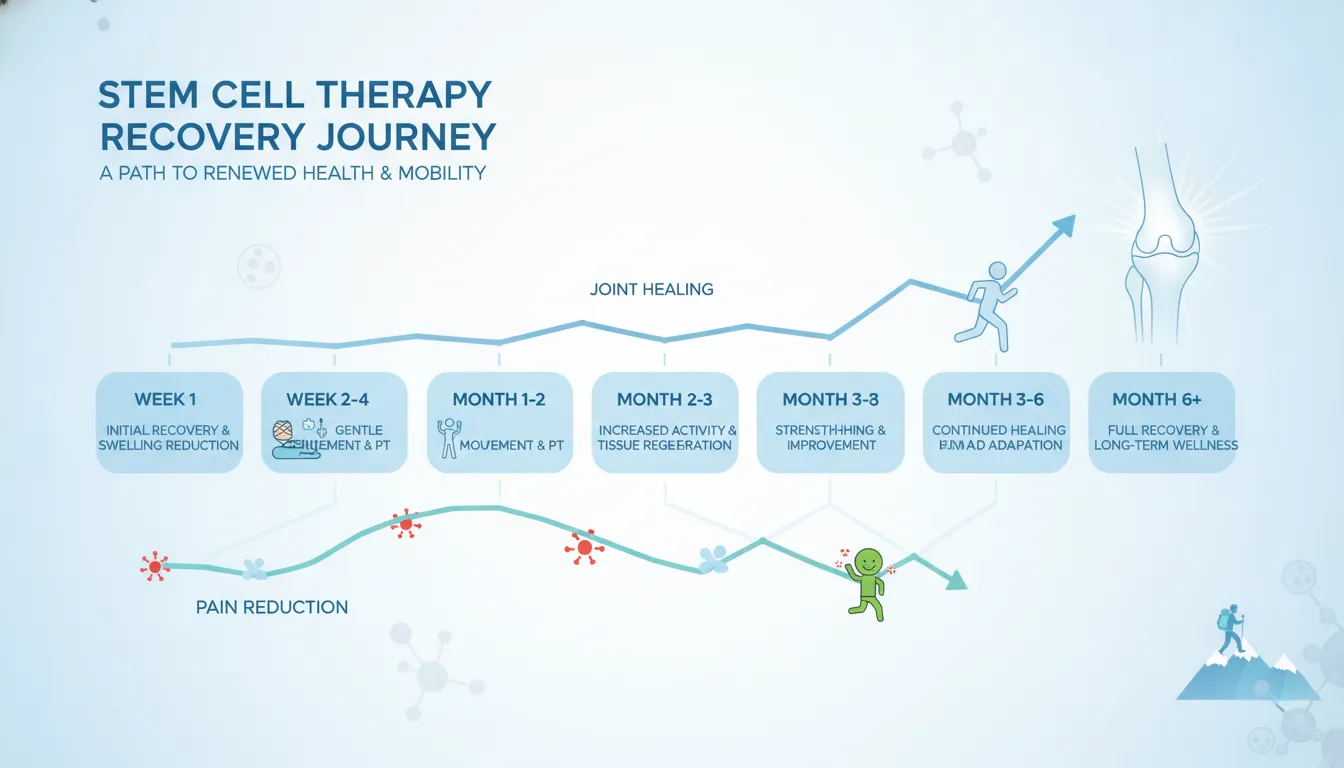
| Recovery Phase | Timeline | Pain Reduction | Activity Level |
|---|---|---|---|
| Immediate Post-Treatment | Days 1-7 | Mild soreness, possible flare | Rest, light daily tasks only |
| Early Healing | Weeks 2-3 | Stabilizing or slight improvement | Gentle walking, basic movement |
| Active Regeneration | Weeks 4-6 | 30-50% reduction | Light strength, swimming, stretching |
| Accelerated Improvement | Months 2-3 | 50-75% reduction | Most daily and recreational activities |
| Long-Term Healing | Months 4-6 | 70-90% reduction | Full activity, sports possible |
Months 4-6: When Do Maximum Results Appear?
By month four, the active cellular work begins to plateau, but the outcomes become most apparent in daily life. Most patients experience 70 to 90 percent pain reduction by the end of month six. New tissue is now strong and stable enough to support full daily function.
Research confirms that mesenchymal stem cells support the repair of joint cartilage and surrounding tissues. By this stage, the repaired tissue provides smooth joint movement without the grinding or stiffness patients experienced before treatment. The new tissue has had time to mature and integrate with surrounding healthy structures, creating a more durable repair.
Clinical data shows 87.5 percent of patients report sustained pain relief and improved joint function by the three-month mark, with continued gains through month six. You can plan trips, play recreational sports, and engage in active hobbies without fear of sudden pain flares. The slow, steady healing of the cells provides a strong foundation for lasting relief.
Unlike temporary treatments such as steroid shots that mask symptoms for a few weeks, stem cell therapy addresses the root cause of joint pain. With proper maintenance, including low-impact exercise and healthy nutrition, the benefits can last for years. Contact our Miami clinic to learn how a personalized maintenance plan can protect your results.
Factors That Influence Your Stem Cell Therapy Recovery Timeline
Your individual recovery depends on several variables. Understanding these factors helps set realistic expectations for your healing journey. Age and overall health play a significant role, with younger patients and those in good general health often seeing faster results. The severity of your joint damage also matters, as minor injuries tend to respond more quickly than advanced degeneration.
Lifestyle choices such as smoking, poor nutrition, and chronic stress can slow cellular repair. On the other hand, a clean diet rich in anti-inflammatory foods, adequate hydration, quality sleep, and stress management all support faster healing. Adding omega-3 fatty acids, antioxidant-rich vegetables, and lean protein to your daily meals provides the building blocks your body needs for tissue regeneration. The size and weight-bearing role of the treated joint also influences recovery time. Larger joints such as hips and knees carry more weight and may need additional time to heal fully.
Adherence to your post-treatment protocol is one of the most important factors. Following your provider’s guidelines for exercise after stem cell injections and avoiding activities that stress the treated area during early recovery significantly improves outcomes.
Ready to begin your recovery journey? Call (305) 598-7777 now to schedule a free consultation with our regenerative medicine team in Miami.

Frequently Asked Questions
How long does it take for stem cell therapy to start working?
The timeline for noticing initial improvement varies by patient. Some people report subtle changes within the first week, while others see meaningful progress at six to twelve weeks. The cells need time to settle, signal the body’s repair mechanisms, and begin rebuilding damaged tissue.
Can I walk after stem cell injections in my knee?
Yes, light walking is safe and encouraged after stem cell therapy for the knees. Walking keeps blood flowing and supports joint mobility. Avoid high-impact activities, running, or heavy lifting during the first few weeks to protect the treated area.
What activities should I avoid after stem cell therapy?
Avoid high-impact exercise, heavy lifting, and anti-inflammatory medications like ibuprofen for at least the first two weeks. Running, jumping, and contact sports should wait until your doctor confirms the treated area has healed sufficiently. Light walking and gentle stretching are safe alternatives.
When can I return to work after stem cell therapy?
Most patients return to desk work and light daily activities within one to two days. Jobs involving heavy lifting, prolonged standing, or physical labor may require a week or more of modified duties. Your provider can recommend a specific timeline based on your treatment area and occupation.
How long does the pain relief from stem cell therapy last?
Many patients experience sustained relief for a year or longer after completing their treatment protocol. Because stem cell therapy addresses the underlying tissue damage rather than masking symptoms, the results tend to be more durable than corticosteroid injections. Longevity depends on factors such as your age, joint health, and commitment to a maintenance plan.
Ready to Take the Next Step in Your Recovery?
Understanding your stem cell therapy recovery timeline is the first step toward making an informed decision about your health. The healing process unfolds over several months, with each phase building on the last to restore joint function and reduce pain without surgery. At Miami Stem Cell, we create personalized treatment plans designed to match your unique needs and recovery goals. Call (305) 598-7777 today to schedule your free consultation and learn how stem cell therapy can help you return to the activities you love.