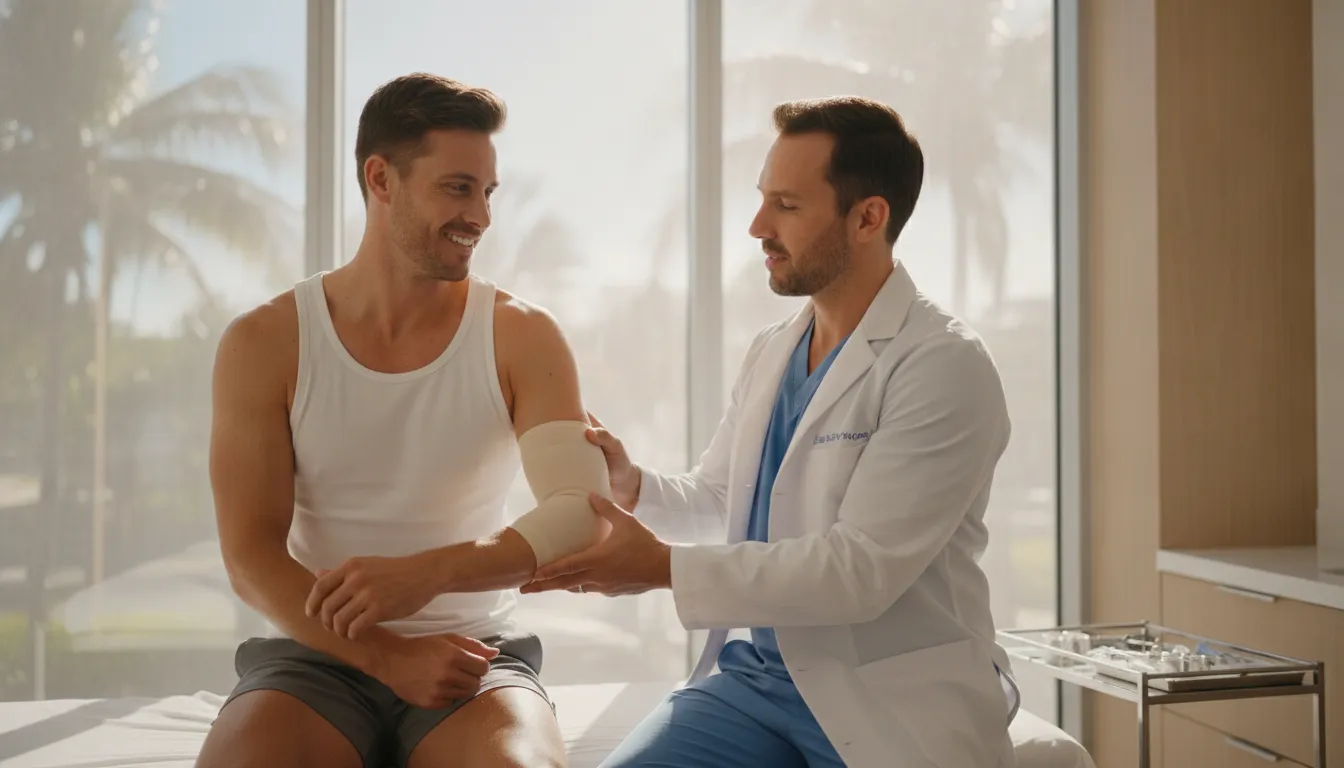

Persistent shoulder pain can make ordinary movements feel difficult, whether the cause is a rotator cuff injury, arthritis, impingement, bursitis, or tendinitis. When physical therapy, activity changes, or other conservative measures have not provided enough relief, some Miami patients explore regenerative care before committing to surgery. A careful evaluation is essential because treatment should be matched to the source and extent of the problem.
Stem cell therapy for shoulder pain is a minimally invasive regenerative approach that uses umbilical cord-derived mesenchymal stem cells in a personalized protocol designed to support tissue repair and reduce inflammation. It may help some patients with shoulder pain or degeneration, but it is not a guaranteed cure and is not appropriate for every injury.
Schedule a consultation with Miami Stem Cell to discuss whether this approach fits your diagnosis.
Understanding the structures involved and the pattern of symptoms can clarify which options deserve consideration. That starts with the common conditions behind shoulder pain and the circumstances in which a non-surgical path may be reasonable.
Stem Cell Therapy for Shoulder Pain: Common Causes and Non-Surgical Options
Shoulder pain can develop gradually or appear after a fall, repetitive motion, athletic activity, or an untreated injury. Because the shoulder depends on several tendons, muscles, bones, and a fluid-filled bursa working together, discomfort in one structure can limit the entire arm. Soft tissue injuries involving tendons and ligaments represent up to 45% of musculoskeletal injuries, making an accurate evaluation especially important.
Rotator cuff tears and tendinitis
The rotator cuff helps stabilize the shoulder and control lifting and rotation. A tear may cause weakness, pain at night, or difficulty reaching overhead. Tendinitis, which involves irritation of a tendon, can create similar symptoms even when a complete tear is not present. A randomized controlled trial has explored stem cell injection as a potential intervention for tendon tears affecting the shoulder. But this research does not establish a guaranteed outcome for every patient. Read the research on tendon tear treatment.
Impingement and bursitis
Shoulder impingement occurs when movement repeatedly narrows the space around a tendon. Bursitis involves inflammation of the small sac that cushions movement between tissues. Both conditions may cause pain when reaching overhead or lying on the affected side. Treatment depends on the cause and may include activity changes, physical therapy, medication, or other conservative approaches before surgery is considered.
Glenohumeral osteoarthritis
Osteoarthritis in the glenohumeral joint can gradually wear down cartilage and cause stiffness, grinding, and reduced range of motion. Unlike an isolated strain, joint degeneration may require a broader plan that addresses pain, movement, inflammation, and the underlying condition. Regenerative medicine approaches aim to address the contributing causes of joint degeneration and chronic pain rather than focusing only on short-term symptom relief.
For Miami patients, surgery is not automatically the next step. A qualified clinician can review imaging, examine shoulder function, and determine whether non-surgical care is appropriate. Depending on the diagnosis, a plan may combine rehabilitation, targeted pain management, lifestyle adjustments, and regenerative options. Patients researching stem cell therapy for shoulder pain should receive individualized guidance about potential benefits, limitations, and alternatives before making a decision.

Summary: Shoulder pain has several common causes, from rotator cuff tears to osteoarthritis. A thorough evaluation helps determine whether non-surgical options, including regenerative care, are appropriate before considering surgery.
Can Stem Cell Therapy Help With Shoulder Joint Damage?
Shoulder pain can involve several structures, including the rotator cuff tendons, cartilage, joint lining, and surrounding soft tissue. A regenerative approach is designed to address the local environment contributing to pain, rather than simply masking symptoms. At Miami Stem Cell, treatment plans use umbilical cord-derived mesenchymal stem cells (MSCs) as part of a personalized, non-surgical protocol for appropriate patients.
How MSCs may support the shoulder’s healing environment
MSCs are studied for their potential role in musculoskeletal tissue repair and regeneration. In the shoulder, researchers are examining how these cells may influence inflammation and support the body’s repair processes around damaged tendons and joint tissue. A review focused on rotator cuff regeneration describes MSCs as a potential tool for healing and regenerating musculoskeletal tissues, including the rotator cuff (research on MSCs for rotator cuff regeneration).
This does not mean an injection rebuilds a severely damaged shoulder or guarantees pain relief. The goal is to create conditions that may support tissue recovery, reduce inflammatory activity, and improve function over time. Patients may notice changes in pain, mobility, or daily activity at different rates, depending on the underlying condition and overall health.
Allograft MSCs versus autologous cells
Miami Stem Cell uses umbilical cord-derived MSCs, which are an allograft source. Allograft means the cells come from a screened donor source rather than from the patient receiving treatment. By contrast, autologous cell therapy uses a patient’s own cells, such as cells collected from bone marrow. These approaches differ in their source, preparation, and clinical protocol, so they should not be treated as interchangeable.
Umbilical cord-derived MSCs offer a way to pursue a cell-based protocol without harvesting bone marrow from the patient’s hip. Whether this approach is appropriate depends on the diagnosis, imaging, symptom history, prior treatment, and clinical assessment. A consultation can help determine whether the shoulder problem is more consistent with tendon injury, arthritis, bursitis, or another condition requiring a different treatment plan.
Connecting cellular support with joint care
The broader objective is to support healthier shoulder function while avoiding unnecessary surgery when clinically reasonable. Learn more about mesenchymal stem cells and Miami Stem Cell’s approach to joint regeneration before discussing your options with a qualified provider.
Summary: Umbilical cord-derived MSCs are being studied for their potential to support tendon and joint healing in the shoulder. A consultation can help determine whether this approach is appropriate for your specific diagnosis.
How Does Stem Cell Therapy Compare With Shoulder Surgery?
For Miami patients who prefer a non-surgical path, comparing treatment intensity, recovery demands, candidacy, and cost can make the next step clearer. Stem cell therapy is minimally invasive, while surgery may be necessary when structural damage is advanced or cannot be addressed conservatively. A consultation should begin with an exam and appropriate imaging rather than an assumption that one approach fits every shoulder.
| Approach | Recovery Time | Invasiveness | Cost Range | Candidacy |
|---|---|---|---|---|
| Stem Cell Therapy | Often measured in weeks, with timing depending on the shoulder condition and treatment plan. | Minimally invasive injection-based care; no surgical incision. | Approximately $2,000 to $8,000 or more, depending on the clinic and extent of damage. See this guide to the cost of shoulder stem cell therapy. | May be considered for partial tears, moderate osteoarthritis, and selected chronic shoulder conditions after evaluation. |
| Arthroscopic Surgery | Often requires months for rehabilitation, depending on the procedure and tissue repaired. | Surgical procedure using small incisions and specialized instruments. | Varies considerably by the procedure, facility, surgeon, insurance, and rehabilitation needs. | May be recommended for full-thickness tears, loose bodies, or structural problems that require direct surgical correction. |
| Shoulder Replacement | About 3 to 6 months for substantial recovery, with progress varying by the patient and procedure. | Major surgery that replaces part or all of the shoulder joint. | Approximately $15,000 to $50,000 or more, depending on coverage, facility, and procedure. | Generally reserved for end-stage osteoarthritis or severe joint damage when other options are no longer appropriate. |
What the evidence can and cannot tell you
Research is still developing. A randomized controlled trial has explored stem cell injection as a potential intervention for tendon tears affecting the shoulder. But that does not establish a guaranteed outcome for every patient. The evidence should be discussed alongside your diagnosis, imaging, activity goals, medical history, and prior treatments. Stem cell therapy is designed to support the body’s repair environment, not to replace an evaluation for a tear or advanced joint disease.
Choosing the least invasive appropriate option
Patients with partial damage or moderate degeneration may wish to ask whether a non-surgical approach is reasonable before committing to a lengthy surgical recovery. Patients with complete tears, loose bodies, severe loss of joint structure, or end-stage arthritis may need an orthopedic opinion about surgery. Miami Stem Cell can help clarify whether regenerative care belongs in your treatment discussion while a qualified surgeon should explain when an operation offers the safer or more effective path.
Stem cell therapy for shoulder pain should therefore be viewed as one option within a diagnosis-led plan, not as a universal substitute for surgery. Discuss the potential benefits, limitations, risks, alternatives, and expected costs before deciding.
Evidence note: Research on stem cell injection for tendon tears is available in a randomized controlled trial report at PubMed Central.
Summary: Stem cell therapy offers a less invasive alternative to surgery for appropriate candidates. The decision should be based on diagnosis, imaging, and a thorough discussion of expected outcomes and alternatives.
What Happens During a Stem Cell Injection for the Shoulder?
Miami Stem Cell uses a personalized, in-office process designed to help patients understand their shoulder condition and make informed treatment decisions. The experience is minimally invasive, and most patients return home the same day. While each protocol depends on the patient’s symptoms, examination, and medical history, the process generally follows four steps:
- Initial consultation and evaluation. The visit begins with a detailed consultation about your shoulder pain, range of motion, previous injuries, activity limitations, and prior treatments. The clinical team evaluates the affected area and reviews relevant imaging or diagnostic information when available. This step helps determine whether a regenerative approach may be appropriate and whether additional evaluation or a different form of care is needed.
- Treatment planning and preparation. If treatment is considered appropriate, Miami Stem Cell develops a care plan around your condition, goals, and overall health. The team explains the proposed protocol, expected appointment flow, preparation instructions, and conservative expectations for recovery.
- The injection procedure. The injection is performed in the office using ultrasound guidance when clinically appropriate, allowing the provider to visualize the treatment area and guide placement. The procedure typically takes about 30 to 60 minutes, although the total appointment may be longer because it includes preparation and post-procedure instructions.
- Immediate post-procedure care. After the injection, the care team reviews activity guidance, shoulder protection, and follow-up plans. Patients may experience temporary soreness or other short-term changes. Because this is an outpatient procedure, patients generally go home the same day.
Stem cell therapy for shoulder pain is not a guaranteed cure, and outcomes vary. A consultation can clarify whether this approach is suitable for your symptoms and goals.

What Is the Recovery Time After Shoulder Stem Cell Therapy?
Recovery after an injection is usually gradual rather than immediate. Many patients may return to light daily activities within a few days, depending on how the shoulder responds and the instructions provided by their clinician. Full tissue healing is often discussed in the range of four to six weeks, although the timeline can be shorter or longer for an individual patient.
The goal of treatment is to support the body’s repair environment and improve comfort and movement over time. Patients may experience a meaningful reduction in shoulder pain and better function as inflammation settles and the affected tissues recover. These changes are not guaranteed, and improvement may occur in stages rather than all at once.
What can affect the recovery timeline?
- Extent of the injury: A mild degenerative problem or irritation may follow a different course than a significant tendon injury, advanced arthritis, or multiple sources of pain.
- Age and overall health: Age, activity level, existing medical conditions, and the body’s general healing capacity can affect recovery.
- Post-care adherence: Following activity restrictions, rehabilitation guidance, and follow-up recommendations gives the shoulder the best opportunity to respond appropriately.
Because shoulder pain can come from arthritis, bursitis, tendinitis, impingement, or a tendon tear, expected results depend on identifying the underlying problem first. A provider may review imaging, symptoms, prior treatments, and functional goals before estimating what treatment may accomplish. Patients should discuss the likely timeline, potential benefits, limitations, and alternatives during their consultation.
Treatment cost can also vary with the extent of damage, the recommended protocol, and the clinic providing care. Review the cost of shoulder stem cell therapy to understand the factors that may shape pricing, then ask your provider which details apply to your situation.
Summary: Recovery is gradual, with many patients resuming light activities in days and full tissue healing often discussed in the four to six week range. Results vary by individual diagnosis and adherence to aftercare.
Who Is a Good Candidate for Shoulder Stem Cell Therapy?
A good candidate is usually someone with a shoulder condition that causes ongoing pain or limited movement, but does not require immediate surgical repair. At Miami Stem Cell, candidacy is determined through a personalized evaluation of your symptoms, medical history, imaging, activity level, and previous treatment response. The goal is to understand the source of the problem and determine whether stem cell treatments are appropriate for your situation.
Conditions that may respond to a non-surgical approach
Patients may be considered for this approach when they have shoulder problems such as partial rotator cuff tears that have not improved with appropriate care. Mild-to-moderate osteoarthritis, or chronic tendinitis after conservative treatment.
Other potential candidates include those with stable labral tears that do not require urgent repair and individuals with shoulder impingement causing persistent pain. A detailed assessment helps clarify whether the symptoms come from the joint, tendons, bursa, or another source. It also helps identify patients who may benefit from a broader pain management plan alongside regenerative care.
- Partial-thickness rotator cuff tears that have not improved with appropriate care
- Mild-to-moderate shoulder osteoarthritis
- Chronic tendinitis or bursitis after conservative treatment, including physical therapy or a cortisone injection
- Labral tears that are stable and do not require urgent repair
- Shoulder impingement causing persistent pain and restricted function
These conditions do not automatically make someone a candidate. A detailed assessment helps clarify whether the symptoms are coming from the joint, tendons, bursa, labrum, or another source. It also helps identify patients who may benefit from a broader pain management plan alongside regenerative care.
When surgery may be the better option
Stem cell therapy may not be suitable when the shoulder has damage that requires mechanical correction. Full-thickness rotator cuff tears, massive or irreparable tears, and end-stage osteoarthritis may require evaluation by an orthopedic surgeon. Severe weakness, major loss of function, traumatic injury, or symptoms that continue to worsen should also be assessed promptly. A regenerative treatment should not delay necessary surgical care.
Patients should also plan for the financial aspect of care. Insurance typically does not cover stem cell therapy, so costs are generally paid out of pocket. During your consultation, the Miami Stem Cell team can review your findings. Discuss reasonable treatment options, explain potential limitations, and help you decide whether this approach fits your goals.
Frequently Asked Questions
How much does stem cell therapy for shoulder pain cost?
Shoulder treatment commonly ranges from $2,000 to $8,000 or more, depending on the clinic, treatment plan, and extent of tissue damage. A consultation is needed to determine whether imaging, the number of injections, and the source of the cells affect your individualized estimate. For more detail, review the cost of shoulder stem cell therapy.
Is stem cell therapy effective for rotator cuff tears?
Research is still developing, and results can vary by the type and severity of the tear. Mesenchymal stem cells are being studied for their potential to support musculoskeletal tissue healing, including the rotator cuff. A randomized controlled trial has also examined stem cell injection as a potential treatment for tendon tears. Patients should discuss the evidence and realistic goals with a qualified provider. Review the research on MSCs and rotator cuff tissue.
What is the recovery time after a shoulder stem cell injection?
Many patients may return to light activities within a few days, while a complete tissue-healing process may take approximately four to six weeks. Your timeline depends on the treated structure, baseline health, and adherence to post-treatment guidance.
Is stem cell therapy safe for shoulder conditions?
Umbilical cord-derived MSCs used in regulated clinical settings have a well-documented safety profile. As with any injection, there are risks such as temporary soreness or infection. A qualified provider should review your medical history and explain potential risks before treatment.
Does insurance cover stem cell therapy for shoulder pain?
Insurance typically does not cover stem cell therapy, so costs are generally paid out of pocket. Some clinics offer payment plans. Confirm your expected costs during the consultation.
Schedule a Consultation for Shoulder Pain
Ready to explore stem cell therapy for shoulder pain? Contact Miami Stem Cell today to schedule a consultation. Our team will evaluate your shoulder condition, review your medical history and imaging, and discuss whether a personalized regenerative treatment plan is right for you.
Book your consultation online to take the first step toward non-surgical shoulder relief.