
For many Miami patients with joint pain or tissue damage, the decision is not simply whether to pursue regenerative care. It is which option matches the severity of the problem, the tissue involved, and the treatment goals. A careful comparison can help set realistic expectations before considering an injection. Schedule a consultation at Miami Stem Cell today to discuss which regenerative approach may be right for your condition.
Stem cell therapy vs PRP therapy is not a question of one treatment being universally better. PRP uses concentrated platelets from your own blood to release growth factors that support the body’s natural repair response. Stem cell therapy uses specialized umbilical-cord-derived mesenchymal stem cells (MSCs) intended to support deeper tissue regeneration. PRP may be a reasonable conservative starting point for milder injuries, while stem cell therapy may be considered for more advanced degeneration. Results vary, and neither approach guarantees an outcome. The right choice depends on the severity of the injury, the tissue involved, and an individual evaluation by a qualified provider.
At Miami Stem Cell, both options are evaluated through a personalized, non-surgical plan rather than a one-size-fits-all recommendation. Our treatments are out-of-pocket and not covered by insurance. Understanding how PRP works is the first step toward seeing why its role may differ from a cellular therapy approach.
How Does PRP Therapy Work for Joint Pain?
Platelet-rich plasma (PRP) therapy uses components of your own blood to support the body’s natural repair response. During the procedure, a clinician draws a small blood sample and places it in a centrifuge. This process separates and concentrates the platelets and plasma, creating an injection with platelet levels above those normally found in circulating blood. Research on PRP describes the preparation as a blood-derived concentrate containing platelet-related growth factors and fibrinogen.
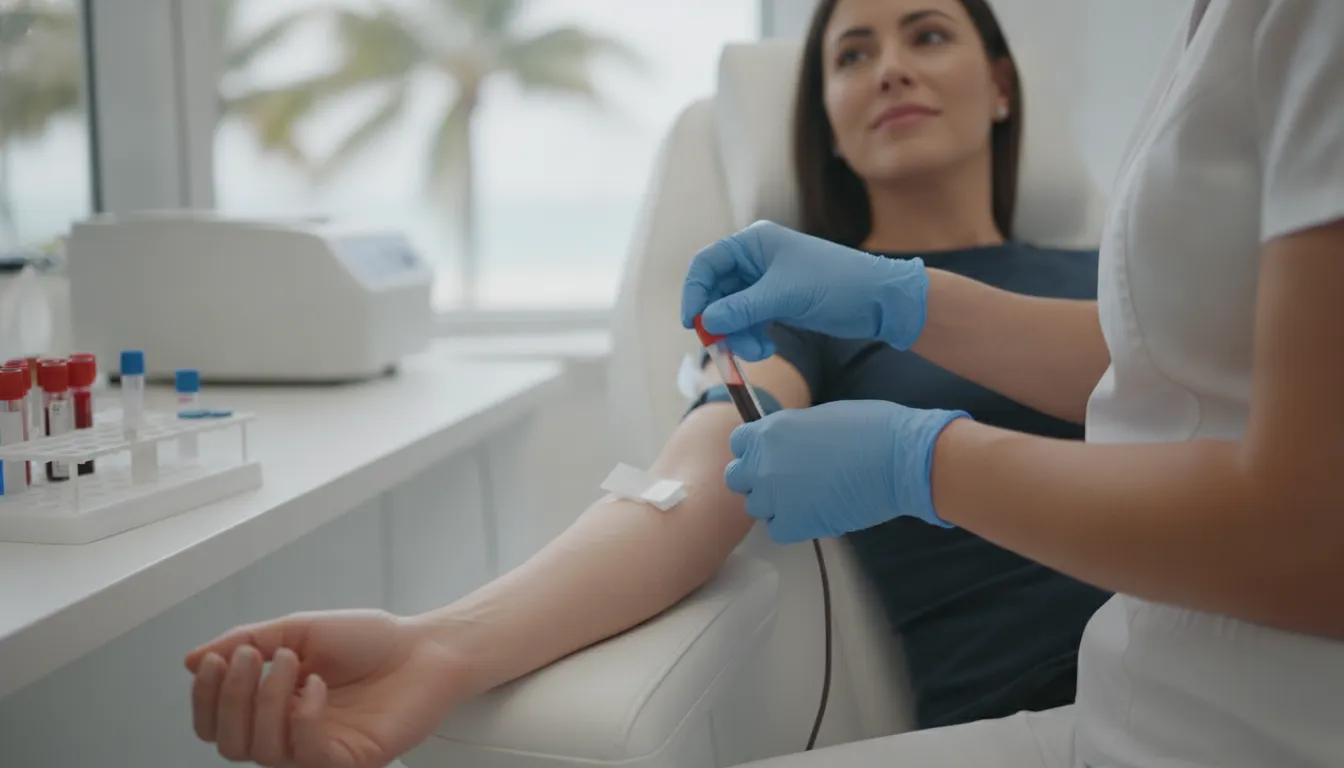
From blood draw to targeted injection
After preparation, the concentrated PRP is injected at or near the area being treated. Depending on the condition, that may include a joint, tendon, ligament, or other soft tissue. The goal is to place the growth-factor-rich concentrate where it can support the local healing environment. Treatment planning may include imaging, a review of symptoms, and an assessment of how the injury affects movement and daily activities.
Why platelets matter in tissue repair
Platelets are part of the body’s frontline response to tissue injury. They release growth factors involved in the repair process, which is why PRP is designed to help initiate and support tissue recovery rather than simply mask discomfort. The biological response varies by the condition being treated, the severity of the tissue damage, and the patient’s overall health.
When PRP may be considered
PRP is often considered for:
- Mild to moderate joint osteoarthritis
- Tendinitis and tendon injuries
- Soft tissue injuries and sports-related strains
- Earlier-stage degeneration where the tissue still has meaningful capacity to respond
This is one reason the question of stem cell therapy vs PRP therapy cannot be answered without evaluating the specific injury and its severity. Learn more about PRP therapy at Miami Stem Cell and how it may fit into a personalized pain management plan.
How Does Stem Cell Therapy Work for Tissue Regeneration?
Stem cell therapy uses unspecialized cells that can respond to biological signals and develop into more specialized tissue types. In regenerative medicine, this capacity is studied as a way to support the body’s repair environment when injury, chronic inflammation, or degeneration has affected normal function. Research describes stem cells as immature cells that may divide and differentiate in response to specific stimuli, rather than arriving as fully formed replacement tissue. Read more about the biology of stem cells.
What makes umbilical-cord-derived MSCs different?
Miami Stem Cell uses umbilical-cord-derived mesenchymal stem cells, also called MSCs. This is an allogeneic approach, meaning the cells come from a qualified donor source rather than being harvested from the patient’s own bone marrow or fat. That distinction matters when comparing treatment options. Patients do not undergo a separate harvesting procedure to obtain their own cells. And the clinical team can focus on selecting a protocol that fits the condition being evaluated.
MSCs are not intended to act as a guaranteed replacement for a damaged joint or to promise a cure. Their potential role is to support a healthier repair environment and provide regenerative signaling that may help the body respond to damaged tissue.
How the cells may support damaged tissue
Once delivered as part of a personalized protocol, unspecialized cells may receive signals that influence their activity and differentiation. Under the right stimuli, stem cells can develop toward tissue-specific cell types, and differentiated cells may contribute to the replacement or support of worn or damaged structures. The scientific literature emphasizes that this process is stimulus-dependent, so treatment should not be viewed as an automatic conversion of cells into new cartilage, bone, or tendon. Explore stem cell therapy at Miami Stem Cell.
Who may be considered for stem cell therapy?
In a clinical comparison of stem cell therapy vs PRP therapy, stem cell therapy is generally considered when degeneration or joint damage is more advanced. Candidates often include patients with:
- Severe osteoarthritis or substantial cartilage wear
- Chronic joint problems that have not responded to conservative treatments
- Large cartilage defects or advanced joint damage
- Conditions that may otherwise lead patients to consider surgical intervention
Miami Stem Cell develops personalized, non-surgical protocols for these situations. Candidacy still requires an individual assessment. The affected tissue, symptoms, imaging when appropriate, activity demands, and overall health all factor into the decision. Learn more about joint regeneration options and arthritis treatment approaches.
Key Differences Between Stem Cell Therapy and PRP Therapy
Both approaches are regenerative options, but they deliver different biological materials and are chosen for different clinical situations. PRP concentrates platelets from a patient’s blood, while Miami Stem Cell uses umbilical-cord-derived mesenchymal stem cells. The right fit depends on the condition, severity, treatment goals, and medical evaluation.
| Factor | PRP Therapy | Stem Cell Therapy |
|---|---|---|
| Source material | Platelets concentrated from the patient’s own blood | Umbilical-cord-derived mesenchymal stem cells (allogeneic) |
| How it works | Platelets release growth factors that help initiate the body’s repair response | Mesenchymal stem cells may respond to local signals and support tissue repair and regeneration |
| Common candidate profile | Mild to moderate injuries, tendinitis, earlier-stage degeneration | Advanced degeneration, substantial tissue damage, broader regenerative approach needed |
| Treatment timeline | Blood collection, concentration, and injection typically occur during the same visit | Cells require preparation and processing before administration; timing depends on protocol |
| Approximate cost | $500 to $2,500 | $5,000 to $10,000 |
| Typical recovery | Approximately 24 to 48 hours of soreness or reduced activity | Approximately 3 to 7 days of recovery depending on injection site and protocol |
These ranges are general estimates, not a personal quote or guaranteed recovery schedule. A systematic review of knee osteoarthritis studies found that intra-articular PRP and several stem cell approaches were associated with better outcomes than hyaluronic acid or saline injections. Though results vary by protocol, diagnosis, and patient factors (PubMed study 33713757).
In practical terms, PRP may be a reasonable conservative starting point when the tissue problem is mild or moderate. Stem cell therapy may be discussed when degeneration is more substantial. Both are out-of-pocket treatments and are not covered by insurance, so a consultation should address candidacy, expected costs, alternatives, and realistic goals before treatment begins.
Which Conditions Respond Best to Each Treatment?
The most useful way to compare these options is by looking at the condition’s severity, the tissue involved, and the amount of structural damage. The principle is straightforward: severity guides choice.
Knee osteoarthritis and joint degeneration
Knee osteoarthritis can range from early cartilage wear to substantial joint deterioration, so the same injection is not appropriate for every patient. PRP is commonly considered for mild to moderate arthritis when symptoms are present but significant structural damage has not progressed. Stem cell therapy may be discussed for more severe osteoarthritis, larger cartilage defects, or advanced joint damage when the goal is to support a deeper regenerative strategy.
A systematic review published in PubMed reported better outcomes for intra-articular PRP and certain mesenchymal stem cell injections than hyaluronic acid or saline in knee osteoarthritis. This supports considering regenerative options, but it does not mean either treatment guarantees the same result for every knee.
Tendinitis and sports injuries
PRP may fit mild soft-tissue injuries, tendinitis, and some sports-related injuries because it uses concentrated components from the patient’s blood to support the body’s repair response. It may be especially appropriate when the injury is localized and the surrounding tissue remains relatively healthy. The treatment plan still depends on the specific tendon, the duration of symptoms, activity demands, and findings from an examination or imaging. Learn about labrum tear treatment options.
Hip, spine, and advanced tissue damage
Hip degeneration, spinal issues, larger cartilage tears, and advanced joint damage require a more careful assessment. When degeneration is extensive, stem cell therapy may be considered for its potential to support tissue-level regeneration rather than relying only on growth-factor signaling. These therapies are designed to provide a non-surgical option for joint and tissue problems that might otherwise lead patients to consider surgery.
Patients in Miami can explore joint regeneration, arthritis care, and pain management options through a personalized evaluation. Because both PRP and stem cell treatments are out-of-pocket and not covered by insurance. The consultation should also clarify the expected protocol, alternatives, and total investment before treatment begins.
Recovery Timeline and Expected Results
Recovery depends on the treatment selected, the condition being treated, and the patient’s baseline health. A consultation should set realistic expectations rather than promise a fixed result or timetable.
PRP recovery and timing
- Minimal downtime; soreness or mild swelling at the injection site for approximately 24 to 48 hours
- Most patients return to routine activities soon after the procedure
- Strenuous exercise should be limited per the treating clinician’s instructions
- Results typically develop gradually over several weeks to months
- When PRP is helpful, benefits may last approximately 6 to 12 months, though duration varies
Stem cell recovery and timing
- Initial recovery period of approximately 3 to 7 days
- Temporary soreness or activity restrictions may be part of the care plan
- Biological response develops over time; improvement is not necessarily immediate
- Stem cell therapy is often considered when degeneration is more advanced and a deeper regenerative approach may be appropriate
- Outcomes cannot be guaranteed and depend on individual factors
For knee osteoarthritis, a clinical review found that injections using PRP and mesenchymal stem cells were associated with better outcomes than hyaluronic acid or saline treatments. The findings support careful consideration of regenerative options, not a guarantee that either treatment will work for every patient. Review the knee osteoarthritis research.
Cost and practical planning
PRP is commonly reported in a general range of $500 to $2,500, while stem cell therapy may range from $5,000 to $10,000. The difference reflects preparation, processing, and the complexity of the protocol. At Miami Stem Cell, all treatments are out-of-pocket and not covered by insurance. A personalized evaluation can clarify the expected recovery, number of visits, and total investment. Contact Miami Stem Cell to discuss your regenerative medicine options.
Choosing the Right Regenerative Treatment in Miami
Selecting between PRP and stem cell therapy is a medical decision that should be made with a qualified provider after a thorough evaluation. Here is a summary of when each approach may be appropriate:
- PRP may be a reasonable starting point for mild to moderate osteoarthritis, tendinitis, soft tissue injuries, and sports-related strains. It is generally lower in cost, requires minimal downtime, and uses the patient’s own blood components.
- Stem cell therapy may be considered for more advanced joint degeneration, larger cartilage defects, chronic joint conditions, and situations where conservative treatments have not provided sufficient relief. It involves a higher investment and longer initial recovery period.
Both options are part of a broader non-surgical approach to regenerative medicine in Miami. Patients who are not ready for either injection may also explore complementary therapies such as peptide therapy as part of their treatment plan. The goal at Miami Stem Cell is to provide an honest, evidence-based recommendation that aligns with the patient’s condition, goals, and budget.
Every treatment at Miami Stem Cell is out-of-pocket and not covered by insurance. Reach out to schedule a consultation and learn which regenerative medicine option may be appropriate for your needs.
Frequently Asked Questions
Is stem cell therapy better than PRP therapy?
Neither option is automatically better for every patient. PRP may be a reasonable starting point for mild soft-tissue injuries or less advanced joint concerns. Stem cell therapy may be considered when degeneration or tissue damage is more substantial. A clinical evaluation, imaging, activity goals, and overall health help determine which approach is appropriate.
Which is more expensive, PRP or stem cell therapy?
Stem cell therapy generally costs more because preparation and processing are more complex. A review of treatment pricing found typical ranges of approximately $5,000 to $10,000 for stem cell therapy and $500 to $2,500 for PRP. Actual pricing depends on the treatment plan and provider (review of knee osteoarthritis treatments). Miami Stem Cell treatments are out-of-pocket and not covered by insurance.
What conditions may respond well to PRP therapy?
PRP may be considered for mild arthritis, tendinitis, and certain soft-tissue or sports injuries. Because it uses concentrated platelets from your own blood, the treatment is designed to support the body’s repair response. Candidacy still depends on the location and severity of the problem.
What conditions may be considered for stem cell therapy?
Stem cell therapy may be considered for more advanced degeneration, significant joint damage, or selected cartilage and tendon concerns. Stem cells are unspecialized cells that can respond to specific biological signals, but treatment is not a guaranteed cure. A provider should review your diagnosis and treatment goals before making a recommendation.
How long is recovery after PRP compared with stem cell therapy?
PRP commonly involves minimal downtime, although soreness may last about 24 to 48 hours. Stem cell treatment may involve a longer initial recovery of approximately 3 to 7 days, depending on the injection site and protocol. Learn more about pain management options at Miami Stem Cell.
Schedule a Consultation at Miami Stem Cell
Choosing between stem cell therapy and PRP therapy is an important medical decision. The right answer depends on your specific condition, the severity of your symptoms, your health history, and your treatment goals. No online comparison can replace a thorough in-person evaluation with a qualified regenerative medicine provider.
At Miami Stem Cell, we specialize in personalized, non-surgical treatment plans using the latest advances in regenerative medicine. Our team will take the time to understand your condition, review your imaging and medical history, and recommend the approach that is most likely to support your recovery. Both PRP and stem cell therapy are available at our Miami clinic, and we welcome patients from throughout South Florida.
All treatments at Miami Stem Cell are out-of-pocket and not covered by insurance. Call us at +1 (305) 598-7777 or book your consultation online today to take the first step toward a non-surgical regenerative treatment plan designed for your needs.