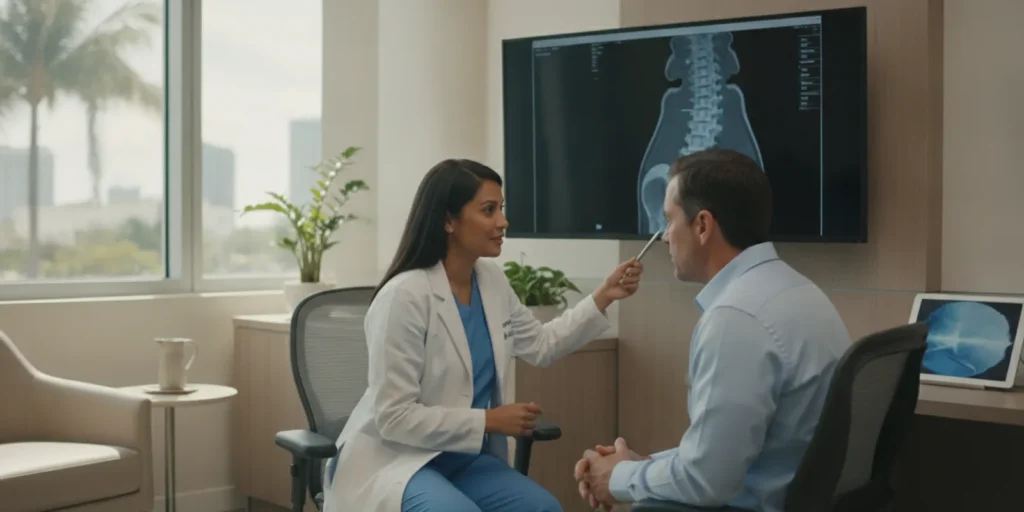

Lumbar radiculopathy describes symptoms that occur when a nerve root in the lower back is irritated or compressed. It can cause pain that travels from the back or buttock into a leg, sometimes with tingling, numbness, or weakness. The pattern and cause matter: similar symptoms can have different explanations and care needs.
What does lumbar radiculopathy mean?
The lumbar spine is the lower portion of the back. Nerve roots leave the spinal canal through openings between the vertebrae and carry signals to parts of the hips and legs. When one of these roots becomes irritated, symptoms may follow the nerve’s path. People often call this “sciatica,” especially when pain runs down the back of a leg, but sciatica is a symptom description rather than a complete diagnosis.
Radiculopathy can include sensory changes, pain, or muscle weakness. Symptoms may affect one side or, less commonly, both sides. The precise location depends partly on which nerve root is involved. A clinician considers the full symptom pattern and examination rather than relying on one sensation or a scan by itself.
The term does not identify a single cause, and it does not automatically mean that surgery is needed. It is a reason to understand what may be affecting the nerve and whether symptoms are stable, improving, or progressing. For a broader overview of the clinic’s back-pain focus, see its back pain information.
Which symptoms can occur?
Symptoms vary. Some people mainly notice pain; others have numbness, tingling, or weakness. Pain may begin in the lower back or buttock and travel into the thigh, calf, or foot. It may feel sharp, burning, electric, or aching. Coughing, sneezing, certain positions, or prolonged sitting can affect symptoms for some people, but these patterns do not confirm a diagnosis on their own.
- Pain: discomfort in the lower back, buttock, or one leg, sometimes extending below the knee.
- Tingling or “pins and needles”: an unusual sensation along part of a leg or foot.
- Numbness: reduced sensation in a specific area.
- Weakness: difficulty moving a leg or foot with usual strength, such as trouble lifting the front of the foot.
Make note of when symptoms started, where they travel, what changes them, and whether they affect walking, sleep, work, or daily activities. Tell a healthcare professional if symptoms are getting worse or if you notice new weakness. A symptom log can help you describe changes clearly.
How can you track symptoms before an appointment?
Keep a brief daily record rather than trying to remember every detail later. Note the location of pain or altered sensation, whether it moves, how intense it feels, and what you were doing when it changed. Record whether you can complete usual activities, and note any new weakness or areas of numbness. A simple description such as “pain moves from the right buttock to the outer calf after standing” can be more useful than a general statement that the leg hurts.
Write down what you have tried and whether it changed symptoms, including any activity adjustments or medicines. Do not start, stop, or change prescribed medicines based only on a symptom log. Bring the notes to your appointment and mention any rapid change right away. Tracking does not diagnose the cause, but it can help make the discussion more specific and show whether the pattern is changing over time.
What can irritate a lumbar nerve root?
A herniated lumbar disc is one possible cause. A disc may bulge or its inner material may protrude, potentially irritating a nearby nerve root. Changes associated with aging, including narrowing around the spinal canal or the openings where nerves pass, can also contribute. Other conditions may produce overlapping symptoms, so an assessment is needed before attributing leg pain to a particular spinal structure.
Imaging findings need context. Disc changes can appear on scans even when they are not the source of a person’s symptoms. A clinician may compare the location of symptoms and examination findings with imaging when imaging is appropriate. The North American Spine Society’s guideline on lumbar disc herniation with radiculopathy addresses evidence-based diagnosis and treatment recommendations for that specific condition.
Risk and history also shape the evaluation. A recent injury, prior back problems, general health, medications, and the duration of symptoms can all be relevant. A new episode of leg pain is not enough to determine whether a disc, narrowed space, or another issue is responsible.
When should symptoms be assessed promptly?
Arrange medical assessment when leg pain persists, returns, limits normal activities, or comes with tingling, numbness, or weakness. Seek urgent medical care for new difficulty controlling bladder or bowel function, numbness around the groin or saddle area, rapidly worsening or severe weakness, or symptoms affecting both legs. These can indicate a serious problem that needs prompt evaluation.
Also seek timely care after a significant injury or when back symptoms occur with fever, unexplained weight loss, a history of cancer, or other concerning changes. This list is not a diagnosis or a substitute for individualized advice. If symptoms feel severe or rapidly worsen, do not wait for a routine appointment.
How might a clinician assess the problem?
An evaluation generally starts with a conversation about symptoms and health history. A clinician may ask when symptoms began, whether they travel below the knee, what makes them better or worse, and whether weakness or numbness is changing. They may ask about daily function, prior episodes, injury, and treatments already tried.
A physical examination can include observing movement and walking, checking leg strength and sensation, and assessing reflexes or positions that reproduce symptoms. The exact examination depends on the person’s situation. If findings suggest the need for further investigation, imaging or other tests may be considered. Not everyone needs imaging immediately; the decision depends on the clinical picture and whether the result would guide care.
It is reasonable to ask what the examination suggests and what remains uncertain. If a test is recommended, ask what question it is intended to answer, whether it is time-sensitive, and how different possible results could affect the plan. If symptoms and test findings do not seem to match, ask how the clinician is interpreting that difference. These questions can help you understand the reasoning without assuming that one test alone settles the diagnosis.
Bring a current medication list, relevant reports or images, and questions. If you have had imaging, ask how each finding relates to your symptoms instead of assuming that every abnormality is the cause. The clinic’s patient FAQs can help with general questions about consultations, while an individual medical assessment is needed for personal guidance.
How do common care options compare?
Care depends on the suspected cause, symptom severity, duration, examination, and personal health factors. A clinician can explain which choices fit the situation, what each is intended to do, and when to reassess. The comparison below is general education, not a treatment recommendation.
| Option | What it may involve | Points to discuss |
|---|---|---|
| Monitoring and activity adjustments | Tracking symptoms and adapting activities while maintaining safe movement as advised. | Which activities to modify, what movement is appropriate, and what changes should prompt follow-up. |
| Rehabilitation or guided exercise | A clinician-directed plan to address movement, strength, or function. | Whether it fits the diagnosis, how progress is measured, and what to do if symptoms worsen. |
| Medication-based care | A clinician may discuss medicines based on symptoms and medical history. | Expected benefit, risks, interactions, duration, and alternatives for your circumstances. |
| Further testing or specialist review | Imaging, other testing, or referral when indicated by symptoms and findings. | What question the test is meant to answer and how results would change the care plan. |
| Procedural or surgical evaluation | Discussion of procedures or surgery for selected cases, based on diagnosis and clinical factors. | Potential benefits, risks, recovery, alternatives, and the consequences of waiting. |
| Regenerative-care consultation | A separate discussion of whether a non-surgical regenerative approach is appropriate. | Evidence for the specific condition, candidacy, limitations, risks, costs, and other reasonable choices. |
There is no single sequence that is right for everyone. Ask how the proposed approach addresses the suspected cause, what outcome is realistic, how that outcome will be measured, and what the next step would be if symptoms do not improve. For general background on the clinic’s scope, visit its pain management and regenerative care page.
How do you compare recommendations in a practical way?
When you hear more than one recommendation, compare the reasoning, not just the names of treatments. Ask each clinician to explain the working diagnosis, the goal of the proposed care, and the basis for believing it fits your symptoms. Clarify what is known for the specific cause being considered and what remains uncertain. A plan should also explain when progress will be reviewed and what would trigger a change in approach.
Think about your own priorities as well. One person may place more weight on staying active at work; another may be focused on sleep or walking. Tell the clinician what activities matter to you and what limitations are most disruptive. Ask whether a proposed plan has practical demands, such as visits, activity restrictions, recovery time, or follow-up. Discuss whether your other health conditions or medicines affect the decision.
Be cautious of a promise that a treatment will work for everyone or that one scan guarantees a particular outcome. Ask for time to review information, and consider a second opinion when the diagnosis or choices remain unclear. For persistent or progressive neurological changes, arrange appropriate medical review rather than delaying evaluation while comparing options. A useful decision is one you understand, including its uncertainties and alternatives.
What should you ask before considering regenerative care?
A consultation should help you understand whether an option is appropriate—not assume that it is. Miami Stem Cell describes its offering as Non‑Surgical Regenerative Treatments that target the root cause of pain and mobility limitations. The clinic also highlights 8500+ procedures, 17+ years of experience, and 4.8 stars on Google reviews. These background points do not establish that a treatment is appropriate or effective for an individual diagnosis. Whether any approach may be suitable for lumbar radiculopathy depends on an individualized medical evaluation. A consultation cannot guarantee symptom relief or replace a complete diagnosis.
- What is the likely cause of my symptoms, and what else should be considered?
- What findings support the proposed treatment for my particular condition?
- What is known about potential benefits and limitations for this diagnosis?
- What risks, side effects, recovery needs, or reasons not to proceed should I understand?
- What alternatives are reasonable, including continued observation or another specialist opinion?
- How will we decide whether treatment helped, and when will we review progress?
- What is the full out-of-pocket cost, and what payment or insurance details should I confirm?
Miami Stem Cell states that its treatments are cash-pay and are not billed to insurance. Confirm current costs and payment details directly before making a decision. A consultation request is an opportunity to ask questions; it is not a commitment to treatment. You can also review the clinic’s about information and its description of joint and spine regenerative care as background, then discuss whether those services apply to your situation.
Frequently asked questions
Is lumbar radiculopathy the same as sciatica?
Not exactly. Sciatica commonly describes pain that travels along the sciatic nerve, often into the leg. Lumbar radiculopathy refers to symptoms linked to irritation or compression of a nerve root in the lower spine. The terms can overlap, but neither phrase alone identifies the cause.
Does lumbar radiculopathy always require surgery?
No. The appropriate approach depends on the cause, symptoms, examination, and how the condition changes over time. Some situations need urgent evaluation, while others may be assessed and managed without an operation. A clinician can explain the choices for an individual’s findings.
Can a scan show exactly why my leg hurts?
A scan may help identify structural changes, but results need to be matched with symptoms and examination findings. Some changes may not be causing symptoms. Ask the clinician to explain how an imaging result relates to the affected side, symptom location, and physical findings.
What should I bring to an appointment?
Bring a list of symptoms and when they started, medicines and relevant health history, prior imaging or reports, and questions about goals, risks, alternatives, and cost. Mention new or worsening weakness, numbness, or changes in bladder or bowel function promptly.
What is a sensible next step?
Lumbar radiculopathy is a useful description of nerve-related symptoms, but finding the cause and choosing a safe plan require context. Record what you are experiencing, seek prompt care for warning signs, and discuss the evidence, options, limits, and costs with a qualified healthcare professional before deciding what to do.