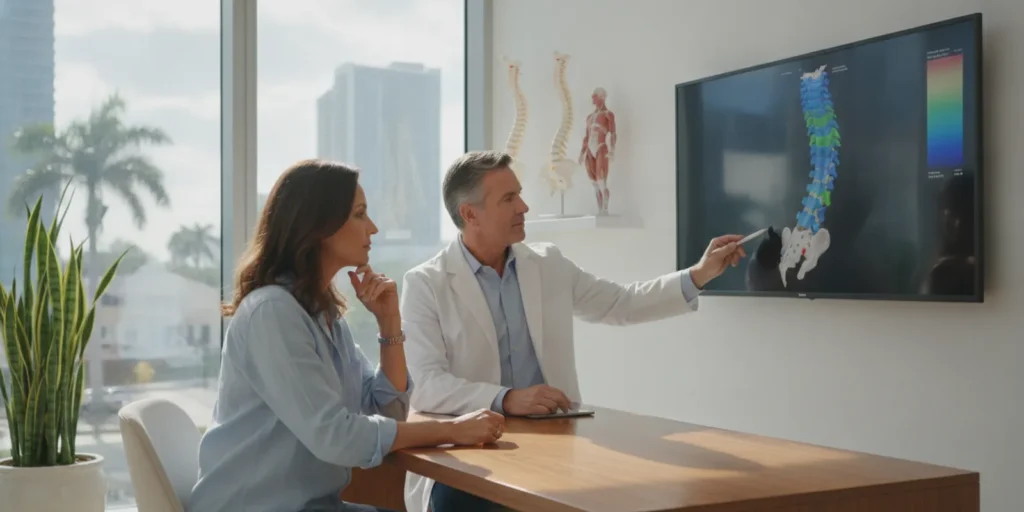
Lumbar spinal stenosis is narrowing of spaces in the lower spine that can place pressure on nerves. The effects vary: some people have no symptoms, while others notice pain, tingling, weakness, or reduced walking tolerance. This guide focuses on the lumbar region, especially symptoms brought on by standing or walking, how clinicians evaluate them, and the kinds of non-surgical care that may be discussed.
What does lumbar spinal stenosis mean?
The lumbar spine is the lower portion of the back. Spinal stenosis means that one or more spaces around the spinal nerves have become narrower. Narrowing may involve the central canal, the openings where nerves exit, or both. Age-related changes such as thickened ligaments, arthritic joints, or disc changes can contribute, but an image alone does not tell the whole story.
Some people have narrowing on an imaging study without related symptoms. A clinician considers the scan alongside the person’s symptoms, physical examination, medical history, and day-to-day function. The pattern and location matter: lumbar symptoms differ from problems arising in the neck. For a broader overview, see the clinic’s guide to sciatica and its information on back pain.
What symptoms can occur?
Symptoms depend on which nerves are affected and how much space is available. They may include lower-back discomfort, aching or tingling in the buttocks or legs, numbness, or a sense of weakness. One common pattern is neurogenic claudication: symptoms in the buttocks or legs that appear or worsen with standing or walking and may ease when sitting or bending forward. Walking distance can become limited, but this pattern is not unique to stenosis and deserves proper assessment.
Symptoms may affect one or both legs and can fluctuate. Note when they begin, where they travel, what activities bring them on, and what relieves them. Share whether you have trouble with balance, leg control, or routine tasks. This record helps a clinician distinguish a nerve-related pattern from other possible causes.
When should symptoms be assessed promptly?
Seek urgent medical assessment for new loss of bladder or bowel control, numbness around the groin or saddle area, or rapidly worsening leg weakness. These symptoms can signal serious nerve compression and should not wait for a routine appointment. Sudden changes or severe symptoms also warrant timely medical advice.
How is lumbar spinal stenosis evaluated?
Evaluation usually starts with a conversation about symptoms, health history, and function. A clinician may ask how far you can walk, whether standing triggers symptoms, whether sitting or leaning forward changes them, and whether one or both legs are involved. The physical examination may include checking strength, sensation, reflexes, balance, and walking.
Imaging may be considered when it is likely to clarify the diagnosis or guide care. MRI can show soft tissues and the spinal canal; other imaging may be appropriate in particular cases. The scan must be interpreted in context: narrowing on an image does not automatically explain pain or mean that a procedure is needed. A clinician may also consider other conditions that can cause leg symptoms, including problems with circulation or peripheral nerves.
Bring a list of medications, previous imaging or reports, and questions. If symptoms change with activity, a short symptom diary can be useful. The clinic’s patient FAQs and pain-management information can help you prepare for a care discussion.
How do common care options compare?
The right approach depends on symptom severity, examination findings, overall health, and personal goals. A clinician can explain what each option aims to address and what it cannot promise.
| Approach | What it may involve | Points to discuss |
|---|---|---|
| Activity adjustments | Adapting walking distance, pacing, or positions that aggravate symptoms | How to stay active while avoiding unsafe increases in symptoms |
| Physical therapy or exercise plan | Individualized movement, strength, flexibility, and balance work | Which exercises fit your condition and how progress will be monitored |
| Medication review | Discussion of medicines that may address pain or related symptoms | Potential benefits, side effects, interactions, and alternatives |
| Further specialist assessment | Additional evaluation when symptoms persist, progress, or limit function | What findings would change the plan and whether a procedure is appropriate |
| Regenerative-care discussion | Review of whether a clinic’s non-surgical regenerative approach is relevant | Evidence, candidacy, uncertainty, risks, costs, and alternatives |
What can non-surgical management involve?
Non-surgical care often begins with a plan tailored to function and symptom triggers. A clinician or physical therapist may help set practical activity goals and build a gradual exercise approach. Pacing can mean taking breaks before symptoms become severe, varying positions, and increasing activity in a measured way rather than pushing through worsening symptoms.
Medication decisions should be made with a qualified clinician who knows your health history. Do not start, stop, or change a prescribed medicine based only on general information. Ask what improvement to look for, how long to try a plan, and when to return for reassessment. If symptoms keep limiting walking or daily activities, discuss whether additional evaluation is needed.
Some people explore regenerative treatments as part of a broader discussion. These approaches should not be presented as a guaranteed way to reverse spinal narrowing or restore nerve function. Ask what the proposed treatment is intended to address, what evidence applies to your specific diagnosis, what risks and uncertainties exist, and how it compares with established options. Miami Stem Cell describes its scope as Non-Surgical Regenerative Treatments that target the root cause of pain and mobility limitations. Suitability requires an individualized medical evaluation; treatment is not appropriate for everyone.
How can you compare recommendations in a practical way?
Before deciding, make sure you understand the diagnosis and the goal of each recommendation. A useful appointment conversation can include:
- Which findings support lumbar stenosis as the cause of my symptoms?
- Could another condition explain my walking-related leg symptoms?
- What change should I expect from this option, and on what time frame?
- What are the possible risks, limitations, and costs?
- What alternatives are reasonable, and what would prompt a different plan?
- Which symptoms should lead me to seek urgent care?
Consider whether the proposed plan addresses your main limitation, such as walking, standing, sleep, or a specific activity. It is reasonable to ask for explanations in plain language and to take time before making a decision. Learn more about the clinic’s joint and spine regenerative care and stem cell therapy information, then discuss relevance with a qualified clinician.
How can you prepare for a lumbar stenosis appointment?
A focused visit can make it easier to connect symptoms with findings and identify useful next steps. Before the appointment, write down when symptoms began, whether they are changing, and how they affect ordinary tasks. Be specific: for example, note whether leg discomfort begins after standing in line, walking a particular route, or carrying groceries. Record what happens after sitting or changing position, and whether symptoms are on one side or both.
Bring prior imaging reports if available, a medication list, and information about relevant health conditions or previous treatments. You do not need to diagnose yourself or interpret a scan. Instead, use your notes to describe what you experience. If a clinician recommends imaging, ask what question the test is meant to answer and how the result could change your care plan.
People often benefit from separating goals from assumptions. A goal might be to walk to the mailbox with fewer interruptions or stand long enough to prepare a meal. A scan finding, by itself, does not establish that a particular treatment will meet that goal. Ask how progress will be measured and when the plan will be reviewed. The National Institute of Neurological Disorders and Stroke provides general information about neurological conditions; personal symptoms still require advice from a qualified healthcare professional.
How do lumbar and cervical stenosis differ?
Both terms describe narrowing in the spine, but they refer to different regions and may affect different nerve structures. Lumbar stenosis concerns the lower back and may be associated with buttock or leg symptoms, including walking-related symptoms. Cervical stenosis concerns the neck; symptoms and potential concerns can differ because the spinal cord and nerves in that region are involved. This article focuses on lumbar symptoms and should not be used to interpret neck pain, hand symptoms, or a scan from another spinal region.
Tell the clinician where symptoms occur rather than relying only on a label from an imaging report. If you have symptoms in more than one region, mention that clearly. The assessment should account for the full pattern, relevant examination findings, and your health history. Avoid assuming that a treatment discussed for one spinal level is automatically suitable for another.
Frequently asked questions
Does lumbar spinal stenosis always cause pain?
No. Some people have narrowing visible on imaging but no symptoms. Clinical assessment determines whether the finding fits the person’s symptoms and examination.
Why can walking make symptoms worse?
In neurogenic claudication, standing or walking can bring on buttock or leg symptoms, while sitting or bending forward may ease them. Other conditions can cause similar symptoms, so evaluation is important.
Can non-surgical care cure stenosis?
Non-surgical care may aim to manage symptoms and support function; it should not be described as reliably reversing structural narrowing. Ask the clinician to explain the goal and limitations of each option.
When is surgery discussed?
A specialist may discuss procedural or surgical options when symptoms and findings warrant it, especially if function is substantially limited or neurological problems progress. The decision depends on an individual assessment, risks, and preferences.
What is a sensible next step?
Discuss your symptoms with a clinician
Track your symptoms, seek timely assessment for concerning changes, and compare options based on your diagnosis, goals, and personal health circumstances.