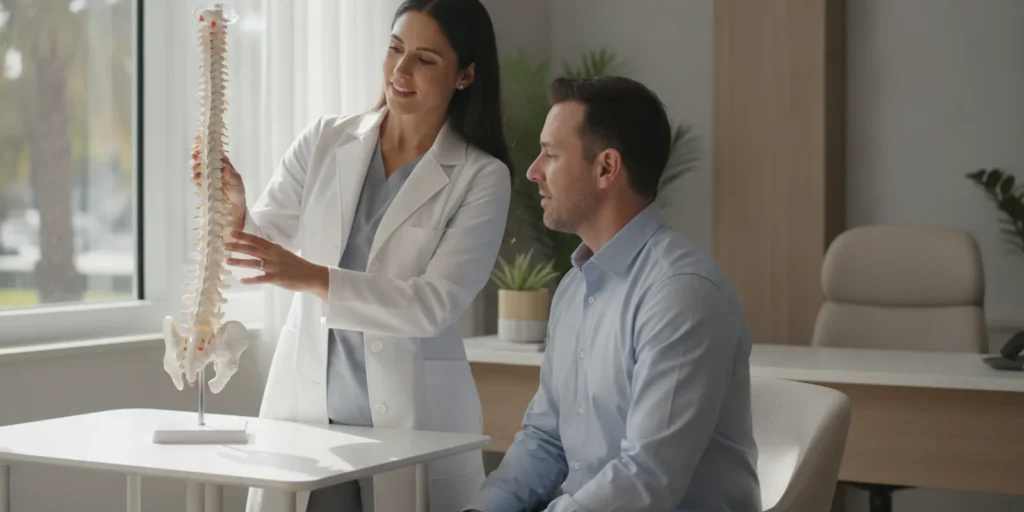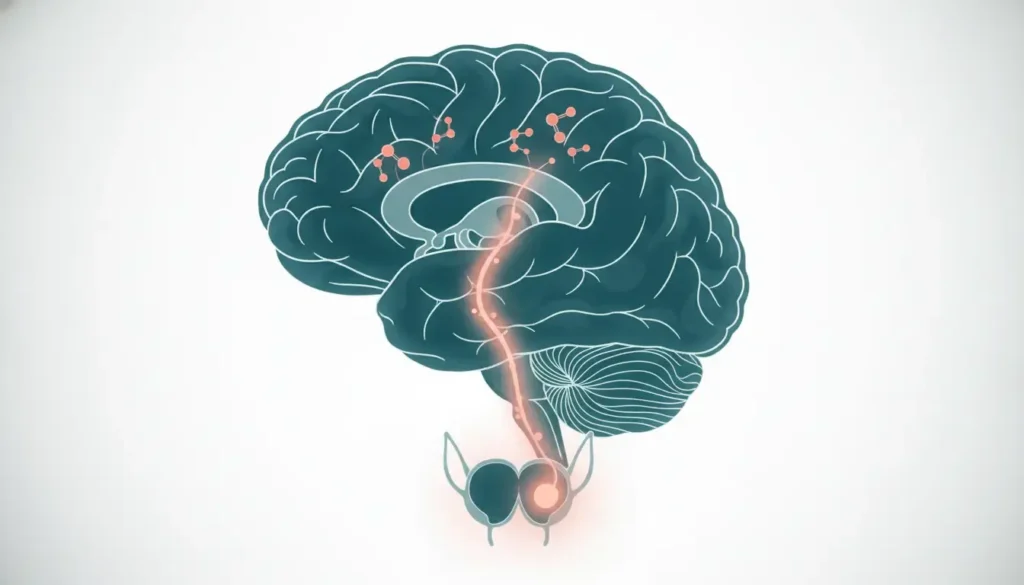
A rotator cuff tear can turn simple Miami routines into painful decisions: reaching into a cabinet, lifting luggage, swimming, working out, or sleeping on the injured shoulder. The right next step is not choosing an injection or surgery first. It is understanding the tear, the shoulder mechanics, and whether regenerative medicine is a reasonable fit.
Considering shoulder pain treatment in Miami? Call Miami Stem Cell at (305) 598-7777 to book a free 15-minute consultation and ask whether your imaging and symptoms are appropriate for evaluation.
Short answer: Stem cell therapy for rotator cuff tear Miami patients consider may be an option for some partial tears, chronic tendon damage, and shoulder inflammation. It is not a guaranteed repair and it is not right for every tear. A physician should review symptoms, strength, range of motion, imaging, prior treatment, and surgical red flags before recommending regenerative care.
Miami Stem Cell has more than 15 years of regenerative medicine experience and 8,000+ procedures performed under board-certified clinical oversight. That experience matters because rotator cuff injuries need realistic expectations, careful candidacy screening, and a plan that still respects when surgery may be necessary.
Is stem cell therapy for rotator cuff tear Miami patients worth considering?
Key takeaway: It may be worth considering when the tear is partial, symptoms are persistent, and imaging shows enough remaining tendon structure to support recovery. It is not a replacement for surgical evaluation when there is severe weakness, a large tear, tendon retraction, or rapid loss of function.
For some patients, regenerative medicine becomes part of the conversation after rest, physical therapy, anti-inflammatory strategies, or activity changes have not restored enough comfort. The goal is not to cover up pain while the tendon continues to fail. The goal is to evaluate whether the injured shoulder has a healing environment that can reasonably respond to a targeted biologic treatment.
A rotator cuff injury can involve inflammation, fraying, partial tearing, or a full-thickness tear. These categories matter. A patient with a smaller partial tear and preserved strength may need a very different plan than a patient who cannot lift the arm after a fall. That is why symptoms alone are not enough to choose treatment.
Patients researching regenerative treatments for shoulder pain should expect a careful diagnosis first. Arthritis, frozen shoulder, bursitis, nerve pain, biceps tendon problems, and neck issues can all mimic or worsen rotator cuff pain. Treating the wrong source of pain can waste time and delay the right care.
When a non-surgical path may fit
A non-surgical regenerative option may be discussed when pain is limiting work, exercise, sleep, or daily motion, but the injury is not clearly a surgical emergency. A published scientific review on stem cells and rotator cuff repair describes potential roles in tendon healing, inflammation control, fibrocartilage formation, and biomechanical strength. It also makes clear that research is still evolving.
That balance is important. Regenerative medicine should be presented as a possible supportive strategy, not a miracle claim. The most useful consultation answers practical questions: What is torn? How severe is it? What has already been tried? What function does the patient need back? What outcome is realistic over the next several months?
When caution is needed
Stem cell therapy should not be used to avoid an urgent surgical opinion when the shoulder has red flags. Sudden weakness after trauma, a large full-thickness tear, tendon retraction, severe loss of motion, or advanced joint damage can change the decision. In those cases, delaying surgical review may reduce future options.
Miami patients should also be cautious of clinics that promise instant cartilage or tendon regrowth from one injection. Tendon remodeling is slow. The body needs time, controlled activity, and follow-up. A credible regenerative plan should explain what improvement may look like, what would count as a warning sign, and when another approach should be considered.
How rotator cuff tears affect shoulder function
Key takeaway: The rotator cuff stabilizes the shoulder and helps lift and rotate the arm. A tear can create pain, weakness, clicking, night pain, and loss of overhead function. The exact pattern depends on which tendon is injured and how much structure remains.
The rotator cuff is a group of tendons and muscles that help keep the shoulder joint centered while the arm moves. These tissues are under stress when you reach overhead, lift, pull, swim, throw, play tennis, carry groceries, or push yourself up from a chair. Because the shoulder has a wide range of motion, small changes in tendon function can create large changes in comfort.
Many patients first notice pain at night or with overhead movement. Others feel weakness, stiffness, or sharp pain when reaching behind the back. A partial tear may create irritation and reduced strength while some tendon fibers remain attached. A full-thickness tear means the tendon has torn through its full depth. A retracted tear means the tendon has pulled away, which can make repair more complex.
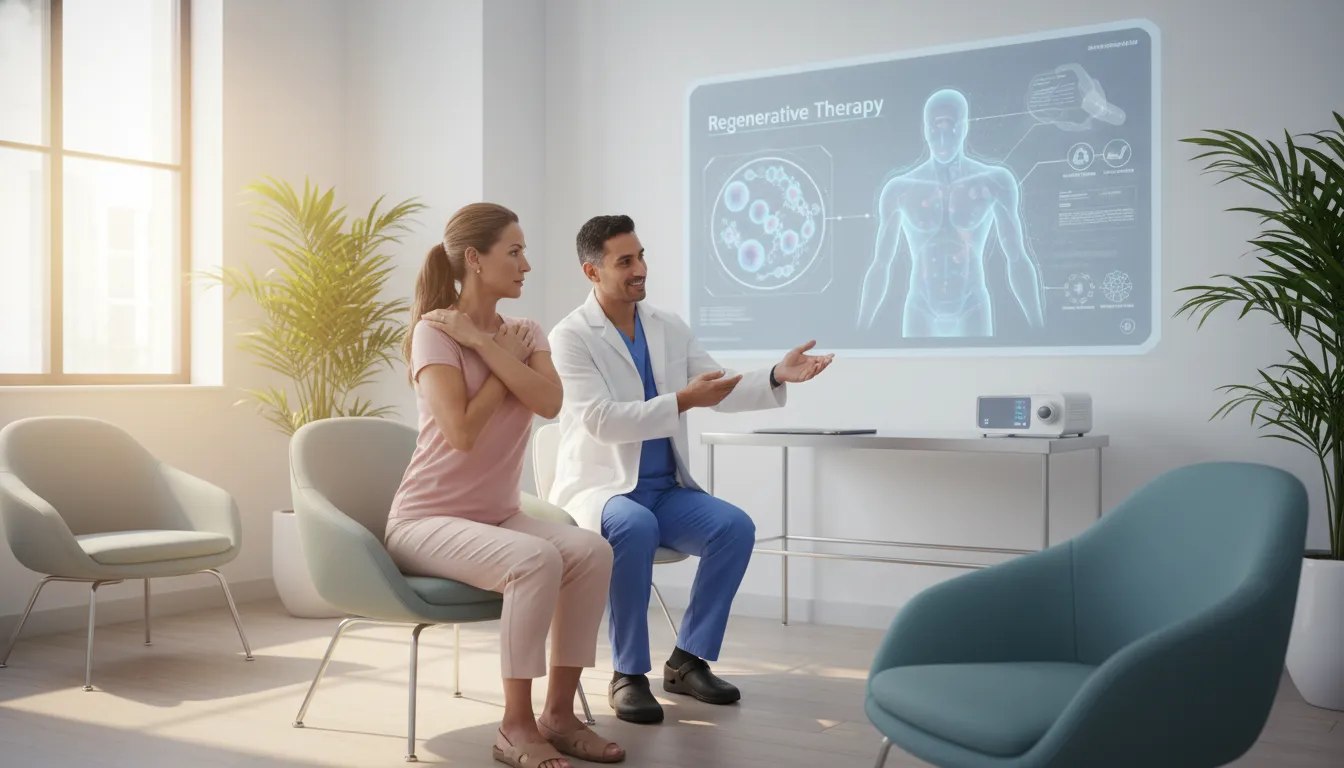
Why the tear type matters
- Partial tear: Some fibers remain intact, so regenerative care may be discussed if symptoms and imaging support it.
- Full-thickness tear: The tendon is torn through its depth, which may require a closer surgical discussion.
- Retracted tear: The tendon has pulled back from its attachment, often making timing and repair options more important.
- Degenerative tear: Long-term tendon wear may need a plan that addresses inflammation, mechanics, and realistic function.
- Traumatic tear: A sudden injury with weakness deserves prompt evaluation so the patient does not miss a repair window.
The treatment conversation changes when a tear is driven by long-term degeneration versus a sudden accident. It also changes when arthritis or poor shoulder mechanics are present. Good care is not just about the injection. It is about matching the plan to the injury.
What evaluation is needed before regenerative shoulder treatment?
Key takeaway: A proper evaluation should include medical history, shoulder exam, strength testing, range-of-motion testing, imaging review, prior treatment review, and a discussion of goals. The physician should explain both regenerative options and reasons surgery may still be recommended.
Before any regenerative treatment, the clinician needs to understand the patient’s shoulder story. When did pain begin? Was there a fall, lifting injury, or gradual decline? What movements are painful? Does the shoulder feel weak or stiff? Has the patient tried physical therapy, injections, medication, rest, or previous surgery?
Imaging is often central to the decision. MRI can help define tear size, tendon quality, muscle changes, retraction, arthritis, and other shoulder problems. Ultrasound may also be useful in some settings. The point is not to collect scans for the sake of paperwork. The point is to answer whether the tendon and joint still support a non-surgical regenerative strategy.
A practical candidacy checklist
- Confirm the diagnosis: Make sure symptoms match the imaging and exam.
- Define the tear: Clarify whether it is partial, full-thickness, degenerative, traumatic, or retracted.
- Assess function: Review strength, range of motion, sleep disruption, work demands, and activity goals.
- Review prior care: Understand what has helped, what has failed, and whether rehab was adequate.
- Discuss risks and alternatives: Compare regenerative care, continued conservative care, and surgical referral when appropriate.
- Set a follow-up plan: Decide how progress will be measured over weeks and months.
This process protects the patient from a one-size-fits-all recommendation. A Miami construction worker, a tennis player, a swimmer, and a retiree who wants to sleep without pain may all need different treatment priorities. A useful plan respects those differences.
Need help interpreting your shoulder MRI? Call (305) 598-7777 to schedule a free 15-minute consultation with Miami Stem Cell and ask what information to bring to your visit.
How stem cells may support a partial rotator cuff injury
Key takeaway: Stem cells are studied for their ability to influence inflammation, signaling, collagen organization, and tendon remodeling. In a partial rotator cuff injury, the intent is to support the local healing environment, not to promise that a torn tendon will instantly rebuild itself.
Miami Stem Cell uses regenerative medicine as part of an individualized clinical plan. The clinic’s broader orthopedic services include stem cells, exosomes, PRP, A2M, peptides, and rehabilitation strategies for joint and spine degeneration, sports injuries, and soft tissue problems. For shoulder injuries, the treatment discussion depends on the diagnosis and the patient’s goals.
Patients comparing options often ask whether stem cells are supposed to become new tendon tissue. The more practical answer is that regenerative cells and signaling factors are being studied for how they may improve the healing environment. That can include inflammation control, cell signaling, collagen activity, and tissue remodeling. The published evidence is promising in some areas, but not absolute.
Why targeted placement matters
Shoulder injections should be guided by anatomy and diagnosis. The rotator cuff sits near the bursa, joint capsule, biceps tendon, and other pain-generating structures. A treatment plan may focus on the injured tendon region, associated inflammation, or related structures depending on the findings. This is one reason a careful evaluation is more valuable than a generic injection package.
Patients can learn more about related shoulder applications on Miami Stem Cell’s page about stem cell injections for shoulder pain. That page can help frame consultation questions about recovery, activity limits, and realistic improvement.
Why rehab still matters
Regenerative treatment does not eliminate the need for smart loading. Tendons respond to time, blood flow, mechanics, and progressive activity. Too much stress too early can aggravate symptoms. Too little movement can contribute to stiffness and poor function. A good plan explains what the patient should avoid, when movement can progress, and how progress will be measured.
Stem cell therapy vs rotator cuff surgery: how they compare
Key takeaway: Stem cell therapy and surgery serve different roles. Regenerative care may support a non-surgical path for selected partial injuries. Surgery may be necessary for large tears, retracted tendons, severe weakness, trauma, or structural problems that need mechanical repair.
Patients often compare stem cell therapy and surgery as if one must be universally better. That is the wrong frame. The better question is which option fits the specific tear, shoulder function, health status, timeline, and goals. Some patients want to avoid surgery if a safe non-surgical path is reasonable. Others need a surgical opinion because the shoulder structure may not recover well without repair.
| Decision point. | Regenerative care may fit when. | Surgical review may be needed when. |
|---|---|---|
| Tear type. | Partial tear or chronic tendon irritation. | Large full-thickness tear or retracted tendon. |
| Strength. | Strength is reduced but still functional. | Major weakness or inability to lift the arm. |
| Timeline. | Symptoms are persistent but stable. | Sudden traumatic injury or rapid decline. |
| Goal. | Support healing, reduce inflammation, improve comfort. | Mechanically repair torn tissue when appropriate. |
| Recovery. | Often less invasive, with gradual improvement. | More structured post-operative recovery and rehab. |
This comparison is not a substitute for medical advice. It is a way to prepare better questions. A good clinician should be willing to explain when an injection is reasonable and when the patient deserves a surgical referral.
For patients whose pain is tied to arthritis as well as tendon injury, Miami Stem Cell’s page on stem cell therapy for shoulder osteoarthritis may help explain why joint degeneration changes expectations.
What timeline should Miami patients expect?
Key takeaway: Rotator cuff improvement after regenerative care is usually measured over months, not days. Some patients notice early comfort changes, but tendon remodeling and functional gains may continue over a 3 to 12 month window when the plan is appropriate.
One of the most important parts of patient education is setting the right timeline. A shoulder injection is not the same as a numbing medication. If the goal is to support tissue repair and reduce inflammation, the body needs time to respond. That can be frustrating for active patients, but it is more honest than promising an overnight fix.
Early changes may include less night pain, easier daily movement, or better tolerance of rehabilitation. Later changes may include improved strength, more confidence with overhead motion, and better function during work or sport. These improvements are not guaranteed, and they are not always linear.
What follow-up should track
- Pain pattern: Is night pain, reaching pain, or post-activity soreness changing?
- Range of motion: Can the patient move more comfortably without guarding?
- Strength: Is lifting, carrying, or overhead work improving safely?
- Function: Can the patient sleep, dress, work, train, or swim with less limitation?
- Warning signs: Is weakness worsening or motion declining despite care?
Patients should ask how Miami Stem Cell measures progress and when the plan would be adjusted. Clear follow-up protects against both overreacting too early and waiting too long when the shoulder is not responding.
When surgery may still be necessary
Key takeaway: Surgery may still be necessary when the tear is large, retracted, traumatic, mechanically unstable, or causing major weakness. Regenerative medicine should not be used to delay needed surgical evaluation when the shoulder structure requires repair.
Some patients come to regenerative medicine because they want to avoid surgery. That is understandable, especially when work, family responsibilities, sports, or travel make recovery time difficult. Still, avoiding unnecessary surgery is different from avoiding every surgery. The safest care plan keeps both ideas in view.
A surgical opinion may be appropriate after an acute injury with sudden weakness, a full-thickness tear with retraction, a tear that is rapidly worsening, or pain with severe functional loss. Surgery may also be discussed when conservative care and regenerative approaches are unlikely to restore the shoulder’s mechanical function.
Questions to ask before deciding
- What exactly is torn? Ask for the tear size, depth, and whether the tendon is retracted.
- What happens if I wait? Ask whether delay could change future repair options.
- What improvement is realistic? Ask what pain and function changes are reasonable.
- What are my alternatives? Ask about rehab, regenerative care, surgery, and combined plans.
- How will we measure progress? Ask what follow-up findings would change the recommendation.
These questions help patients make a decision based on anatomy and goals, not fear. Miami Stem Cell’s role is to help patients understand whether a regenerative option fits their case and to set clear expectations before treatment.
Frequently asked questions
Is stem cell therapy effective for rotator cuff tears?
Stem cell therapy may help some partial rotator cuff tears by supporting the local healing environment and reducing inflammation. It is not guaranteed to heal every tear. Effectiveness depends on tear type, tendon quality, age, activity level, shoulder mechanics, and rehabilitation. A medical evaluation is needed before deciding whether it is appropriate.
Am I a candidate for rotator cuff stem cell treatment?
Possible candidates often have partial tears, chronic tendon irritation, shoulder pain that has not improved enough with conservative care, and enough remaining tendon structure to support recovery. Patients with large retracted tears, sudden traumatic weakness, advanced arthritis, or major loss of function may need a surgical review instead.
What is the recovery time for rotator cuff stem cell therapy?
Recovery is usually tracked over months. Some patients may notice early comfort changes, but tendon remodeling and functional improvement may continue over a 3 to 12 month window. Activity modification, rehabilitation, and follow-up are important parts of the process.
What are the benefits of non-surgical rotator cuff treatment?
Potential benefits include avoiding or delaying surgery when appropriate, targeting inflammation at the injured area, supporting tendon remodeling, and returning to daily activity with less downtime than an operation. These benefits depend on the diagnosis and the patient’s candidacy.
Does insurance cover stem cell therapy for shoulder injuries in Miami?
Miami Stem Cell identifies its regenerative services as cash-pay rather than insurance-billed care on its practice website. Patients should request a written cost estimate, confirm what follow-up is included, and ask about available financing. Insurance questions about imaging, physical therapy, or surgical consultation should be directed to the insurer and provider.
Ready to discuss your rotator cuff options?
If shoulder pain is limiting your work, sleep, training, or daily movement, start with a clear evaluation rather than a guess. Miami Stem Cell brings 15+ years of regenerative medicine experience, 8,000+ procedures performed, and board-certified clinical oversight to help patients understand realistic non-surgical options.
Book your free 15-minute consultation today. Call Miami Stem Cell at (305) 598-7777 to discuss stem cell therapy for rotator cuff tear Miami options and learn what information to bring for your shoulder evaluation.