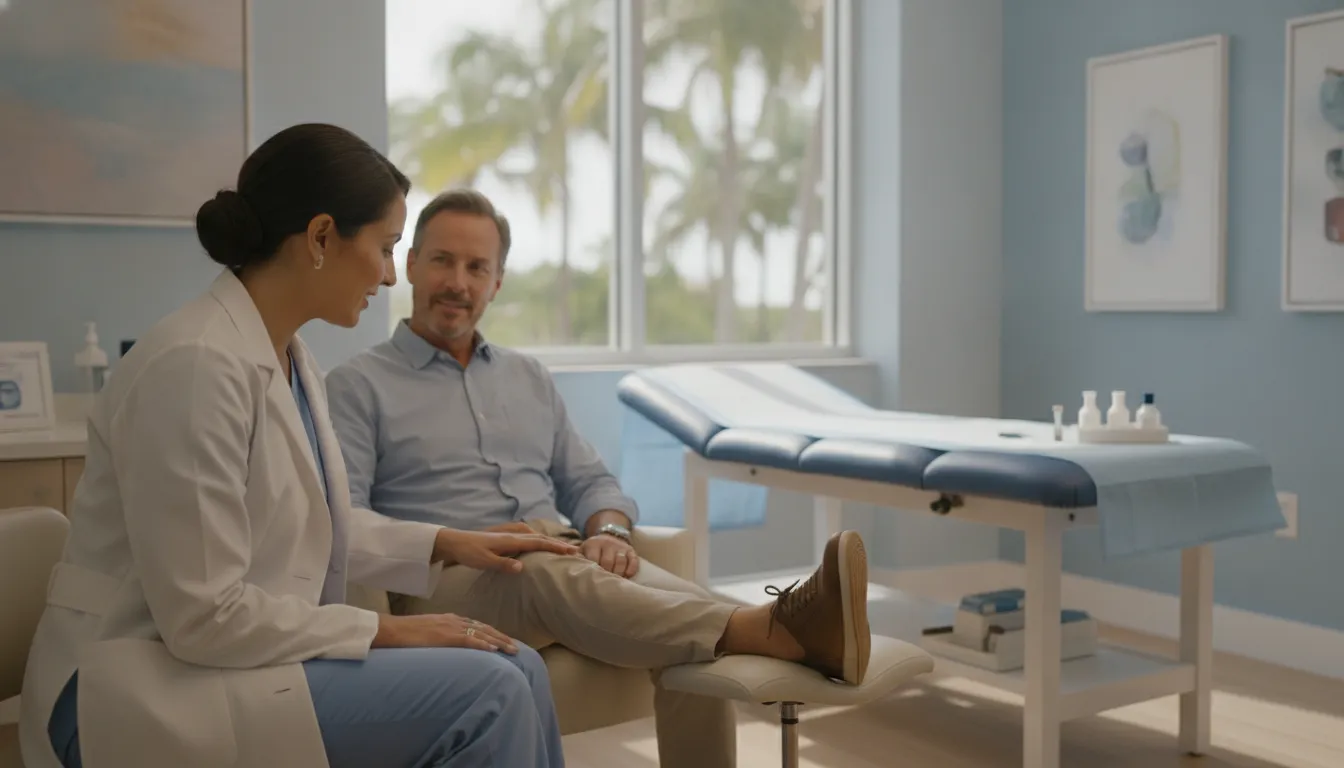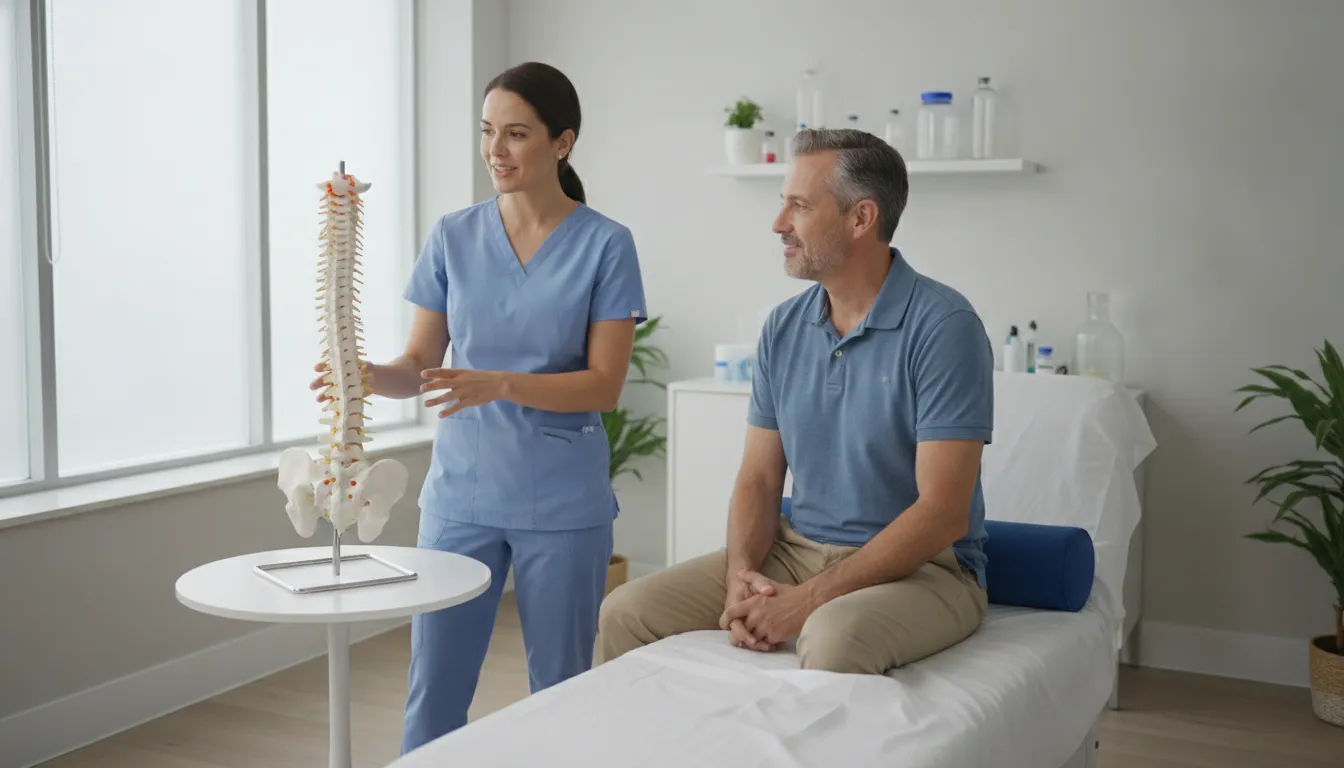

Persistent elbow or wrist pain can make a tennis serve, golf swing, workout, or even a workday difficult. The challenge is identifying whether repetitive strain has damaged the tendon or ligament enough to require more than rest and activity changes.
Stem cell therapy for tennis elbow may help support the body’s repair processes when chronic tendon degeneration has not responded to conservative care. MSC-based protocols are designed to address damaged tissue, while exosomes may act as cellular messengers that support repair and help modulate inflammation. Results vary, and treatment should follow an individualized, FDA-compliant evaluation rather than a promise of a cure.
For Miami athletes and active adults, regenerative care may also be considered for golfer’s elbow and selected wrist injuries. Understanding what happens inside these tissues is the first step toward choosing an appropriate, non-surgical plan. Our treatments are out-of-pocket and not covered by insurance.
Schedule a consultation for stem cell therapy in Miami
Our team can review your elbow or wrist condition and help you understand whether regenerative care may be right for you.
What Causes Tennis Elbow, Golfer’s Elbow, and Wrist Injuries
Elbow and wrist pain often develops gradually, especially when the same tendons and ligaments are loaded repeatedly without enough time to recover. This pattern is common among active Miami adults who play tennis, golf, pickleball, or other sports. As well as people whose work involves gripping, lifting, typing, or repetitive hand movements.
Tennis elbow is usually tendon degeneration, not simple inflammation
Tennis elbow, also called lateral epicondylitis, affects the tendons that attach to the outside of the elbow. Despite its name, it is not limited to tennis players. Repeated gripping, backhand swings, lifting, and wrist extension can place small, recurring stresses on the tendon. Over time, the tissue may become weakened and disorganized.
The Mayo Clinic describes tennis elbow as a degenerative condition characterized by tendinosis rather than traditional inflammation. That distinction matters because the underlying problem may involve tendon wear and impaired tissue quality, not only an inflammatory response. Rest may reduce irritation, but persistent symptoms can require a broader evaluation of movement patterns, tendon health, and contributing activities.
Golfer’s elbow affects the inner elbow
Golfer’s elbow, or medial epicondylitis, involves the tendons on the inner side of the elbow. Golf swings can contribute, but throwing, climbing, weight training, racquet sports, and repeated forceful gripping may also stress this area. It shares similar degenerative mechanisms with tennis elbow, although the location and specific tendon group differ. Learn more about golfer’s elbow treatment and the non-surgical options that may be considered after an evaluation.
How wrist strain develops
Wrist injuries can involve tendonitis, ligament strain, or repeated overload from sports and daily activities. A sudden increase in training, poor technique, falls, or constant gripping may irritate or damage soft tissue. Swelling, reduced grip strength, stiffness, or pain with rotation can indicate that the wrist needs assessment rather than continued strain. Regenerative protocols such as PRP for wrist pain may be discussed when the goal is to support tendon and ligament repair.
A consultation can help distinguish a persistent tendinopathy from an acute injury and identify whether activity changes, rehabilitation, PRP, or a cellular treatment approach is appropriate. Regenerative care is personalized, and outcomes cannot be guaranteed.
How Stem Cell Therapy for Tennis Elbow Works
Stem cell therapy for tennis elbow is designed to support the body’s repair response in a tendon affected by chronic wear and degeneration. Rather than focusing only on temporarily masking discomfort, a personalized protocol may address the damaged tissue and the biological environment around it. The goal is to help the tendon function more effectively over time, while setting realistic expectations about recovery.
Using regenerative cells to support tendon repair
Depending on the treatment plan. Regenerative cells may be collected from the patient’s own bone marrow or fat tissue and prepared for injection into or near the damaged tendon. The clinician determines whether this approach is appropriate after reviewing symptoms, medical history, physical findings, and any relevant imaging. The injection is placed with clinical precision, often using image guidance when indicated, so the treatment can be directed toward the area requiring support.
These cells are not presented as a guaranteed cure. They are used in a treatment strategy designed to stimulate the body’s natural regenerative processes. Because tennis elbow is generally a degenerative tendinosis rather than traditional inflammation, addressing the tendon environment matters. Stem cell therapy may help support repair of damaged tissue and reduce the cycle of pain and limited function. Learn more about mesenchymal stem cells and how they are studied in regenerative medicine.
The role of exosomes in cell communication
Some regenerative protocols also include exosomes, which are small vesicles released by stem cells. They act as messengers between cells, carrying biological instructions that may promote tissue repair and help modulate inflammation. Exosomes do not replace a careful diagnosis or rehabilitation plan, but they may be considered as part of a broader effort to create conditions that support healing.
The exact protocol depends on the severity and location of the tendon problem, prior treatments, activity demands, and overall health. A consultation can clarify whether stem cell therapy, exosomes, PRP, or another conservative option best fits the patient’s goals. Treatment is self-pay and out-of-pocket, not covered by insurance.
What Clinical Research Shows About Stem Cells for Elbow Tendons
Research into regenerative care for chronic elbow tendinopathy is encouraging, but it remains early. The available evidence includes pilot studies and small prospective investigations rather than large, definitive clinical trials. That distinction matters when evaluating stem cell treatment for tennis elbow. Results from one study should not be treated as a guaranteed outcome for every patient.
Early findings with adipose-derived MSCs
A pilot study examined adipose-derived mesenchymal stromal cells in people with chronic lateral elbow tendinopathy. The authors reported promising improvement after treatment, suggesting that these cells may have potential in supporting a damaged tendon. However, a pilot study is designed to explore feasibility and possible benefit. It does not establish that the therapy will work for all patients, or that it can permanently resolve the underlying condition.
The study is available through the National Library of Medicine. Reviewing the methods, patient characteristics, and follow-up period is important because those details help show what the findings can, and cannot, tell us.
What a bone marrow aspirate study found
Another prospective study investigated a single bone marrow aspirate injection as a minimally invasive treatment for chronic lateral epicondylitis. It included 30 adults with previously untreated tennis elbow. Researchers measured outcomes with the Patient-Rated Tennis Elbow Evaluation, or PRTEE, a 100-point scale that assesses pain, arm function, and usual activities.
The mean PRTEE score decreased from 72.8 at baseline to 40.93 at two weeks, 24.46 at six weeks, and 14.86 at 12 weeks. These changes indicate meaningful improvement within the study group during follow-up. They do not prove that bone marrow treatment is superior to every other option, and the study’s small size and limited follow-up make broader conclusions difficult.
The full paper, Bone marrow injection: A novel treatment for tennis elbow, is also indexed under PMID 25097421. Further research is needed to clarify long-term results, patient selection, dosing, and how these approaches compare with physical therapy, PRP, or surgery.
At Miami Stem Cell, treatment decisions should begin with an evaluation of the tendon, symptom history, prior care, and overall goals. Any regenerative plan should use FDA-compliant protocols and clearly explain expected benefits, limitations, and risks. Stem cell procedures are self-pay, out-of-pocket treatments and are not covered by insurance.
How Stem Cell Therapy Compares With PRP and Other Options
Choosing an elbow treatment depends on the condition, how long symptoms have lasted, and whether the tendon is responding to conservative care. Cortisone may temporarily reduce discomfort, but it does not provide the cellular components used by regenerative approaches. For chronic tendon degeneration that has not improved with cortisone, a clinician may discuss options designed to support structural healing rather than focus only on short-term pain relief.
| Option | Approach | Primary goal | Recovery considerations | When it may be suitable |
|---|---|---|---|---|
| Cortisone shots | Medication is injected around the painful area to calm symptoms. | Short-term reduction of pain and irritation. | Often involves a brief period of activity modification, based on the clinician’s guidance. | Some patients may consider it when rapid symptom control is needed, although persistent tendon degeneration may require a different strategy. |
| PRP | A concentrated preparation made from the patient’s blood is injected into the affected tendon. | Support the body’s repair response and structural healing. | Recovery varies and may include temporary soreness while the area heals. | May be considered for selected tendinopathies, including elbow or wrist problems, after an evaluation. Read about PRP therapy. |
| Stem cell therapy | Cell-based treatment is designed to support repair in damaged or degenerative tissue. | Address the underlying source of pain and degeneration, rather than simply masking symptoms. | Patients may experience temporary injection-site soreness, swelling, or bruising. The recovery plan is personalized. | May suit chronic tendon degeneration that has not responded to other care, but consultation is needed to determine fit. Compare PRP vs exosomes for joint pain. |
| Surgery | A procedure repairs or removes damaged tissue through an operative approach. | Address structural problems when less invasive care has not provided adequate improvement. | Usually requires a longer, structured rehabilitation period than an injection-based option. | May be discussed when symptoms remain disabling or a clinician identifies damage that requires operative treatment. |
PRP and stem cell therapy both aim to support structural healing, but they differ in their cellular components and mechanisms. Neither is automatically the best choice for every patient. A consultation can review the tendon findings, prior treatments, activity goals, and overall health before recommending an appropriate path.
What Recovery Looks Like and When to Expect Results
Recovery is usually gradual rather than immediate. A personalized plan can combine activity modification, guided rehabilitation, and follow-up visits so your care team can track comfort, strength, and elbow function. The timeline below is a general framework, not a promise of a specific outcome.
-
Initial days: protect the treated area
For the first several days, it is common to experience temporary swelling, soreness, or bruising around the injection site. These effects are generally mild, but you should follow your clinician’s instructions about rest, ice or other supportive measures, and medication. Avoid testing the elbow with heavy gripping, repetitive lifting, or sports activity before you have been cleared.
-
First weeks: begin guided rehabilitation
As early discomfort settles, your provider may recommend a staged rehabilitation program. Gentle mobility and carefully selected strengthening exercises can help restore movement without placing excessive strain on the tendon. Progress should be based on how your elbow responds, not on a fixed schedule. Report increasing pain, unusual swelling, or other concerns promptly.
-
Three to six months: assess meaningful change
Many patients look for meaningful pain relief and functional improvement within three to six months after an injection, although results vary by patient. Tendon recovery depends on factors such as the extent and duration of the injury, overall health, daily demands, and adherence to rehabilitation. Follow-up assessments help determine whether strength, grip tolerance, and activity capacity are improving.
-
Return to activity: progress in stages
Returning to tennis, strength training, or work that requires repetitive arm use should be gradual. Your clinician or rehabilitation professional can guide the transition from daily activities to sport-specific movements and heavier loading. A slower progression may be appropriate if symptoms return. For a more detailed overview, review this stem cell therapy recovery timeline and discuss how it applies to your situation.
Because no two elbow injuries are identical, a consultation is important before choosing a regenerative protocol. Our treatments are out-of-pocket and not covered by insurance.
Talk with a Miami Stem Cell specialist
Discuss your elbow or wrist symptoms and the regenerative options available to you.
Frequently Asked Questions
What therapy is best for tennis elbow?
The best option depends on the tendon injury, how long symptoms have lasted, activity goals, and prior treatment. A clinical evaluation may consider rehabilitation, activity changes, PRP, or a personalized stem cell protocol. Regenerative care is designed to support tissue repair, not guarantee a specific result.
How does stem cell therapy work for tennis elbow?
A clinician evaluates the affected tendon and determines whether a regenerative injection may be appropriate. MSC-based protocols are designed to support the body’s repair response, while exosomes act as cellular messengers that may support repair and help regulate inflammation. Treatment plans and injection guidance are individualized.
Which is better for tennis elbow, PRP or stem cell therapy?
Neither is universally better. PRP uses concentrated components from your blood, while stem cell protocols use different cellular components. Both aim to support structural healing, but your diagnosis, tissue condition, medical history, and goals help determine which approach may fit.
How much does treatment cost, and is it covered by insurance?
Pricing varies by the evaluation, treatment plan, and number of areas addressed. Our treatments are out-of-pocket and not covered by insurance. The clinic can review expected costs during a consultation before you make a decision.
What are the risks and recovery time?
Temporary injection-site soreness, swelling, or bruising may occur. Recovery recommendations depend on the treated tendon and may include activity modification and guided rehabilitation. Meaningful relief and functional improvement are often reported within 3 to 6 months, but individual responses vary.
Ready to Explore Regenerative Care for Your Elbow or Wrist?
Schedule a consultation with Miami Stem Cell
A personalized consultation can help clarify whether regenerative care may be appropriate for your condition, goals, and treatment history. Treatments are out-of-pocket and not covered by insurance.