Struggling to climb a single flight of stairs shows how deeply chronic lung damage limits daily life. While standard medical options often manage symptoms, they cannot reverse the structural harm done to your airways.
Stem cell therapy for COPD is an emerging regenerative treatment designed to target chronic airway inflammation and support natural lung tissue repair. Standard medical options can manage chronic symptoms, but they cannot reverse the progressive airflow obstruction and damage that limits your daily breathing. Fortunately, clinical research published in the National Institutes of Health database shows that umbilical cord mesenchymal stem cells offer vital anti-inflammatory benefits. This advanced, non-surgical therapy aims to reduce severe lung swelling, promote active cellular healing, and help patients improve their overall breathing quality. By targeting the root cause of pulmonary damage, this protocol helps patients rebuild their stamina, increase energy, and reclaim active daily lives.
If you are searching for new ways to support your lung function, you must first examine how standard therapies operate in daily practice. We will begin by exploring the reality of this condition in our first section, Understanding COPD and the Limits of Current Treatment. This crucial journey begins with
Understanding COPD and the Limits of Current Treatment
What Is Chronic Obstructive Pulmonary Disease?
Chronic obstructive pulmonary disease (COPD) is a serious and long-lasting lung illness. It involves progressive and irreversible airway obstruction that makes breathing very hard over time. Based on global health data, this illness is a major burden that affects millions of people across the world. Patients with COPD often deal with deep coughing, wheezing, and a constant struggle to get enough air.
At its core, COPD is characterized by irreversible damage. Health studies show that this illness causes irreversible damage to lung tissue over time. The tiny air sacs in the lungs lose their stretch, which makes it hard for the lungs to push air out. Once this vital tissue is gone, the body cannot easily rebuild the damaged areas on its own.
The Role of Persistent Inflammation
At its heart, COPD is a constant inflammatory disease process that causes chronic lung damage. When a person breathes in toxins like cigarette smoke or dust, the lungs react. This response triggers a constant state of defense in the airway tissues. White blood cells flood the area, which leads to swelling and extra mucus build-up.
This chronic swelling slowly breaks down the delicate fibers that keep the airways open. This ongoing harm creates a vicious cycle where the body cannot stop the swelling. Over time, the airway walls lose their shape, and the lungs trap stale air during each breath. Because this process does not stop, the lung health of the patient gets worse over time.
Limitations of Traditional Management Plans
Many patients use standard tools like inhalers, steroids, and oxygen tanks to manage their breathing. But standard medical options only address symptoms and cannot reverse lung damage. These treatments may open the airways for a short time, but they do not repair the scarred tissue. This leaves many people looking for new options, such as stem cell therapy for COPD.
Since standard medicine has limits, patients often feel stuck as their illness gets worse. Common plans focus on lifestyle changes and slowing down the decline. They help a person cope with daily tasks but do not offer a way to rebuild what was lost. This is why researchers are studying regenerative medicine and stem cell therapy to find better ways to support long-term lung health.
How Mesenchymal Stem Cells May Support Lung Health
Scientists divide stem cells into three main groups. These include embryonic stem cells, induced pluripotent stem cells, and adult stem cells. Embryonic cells come from early embryos, while induced pluripotent cells are made in a lab. A key type of adult stem cell is the mesenchymal stem cells (MSCs) group. Doctors and researchers study these adult cells to see how they can support damaged body organs. Unlike other types, adult MSCs can be found in many tissues, such as fat, bone marrow, and birth tissues.
| Feature | Embryonic Stem Cells | Induced Pluripotent Stem Cells | Adult Mesenchymal Stem Cells (MSCs) |
|---|---|---|---|
| Source | Early-stage embryos | Reprogrammed adult cells in a lab | Umbilical cord, bone marrow, fat tissue |
| Ethical concerns | High | Moderate | Minimal |
| Tumor risk | High | Moderate | Low |
| Availability | Limited | Patient-specific, slow to produce | Readily available from donor tissue |
| Clinical use for COPD | Not used in lung studies | Early research only | Most studied in clinical trials |
How stem cells work in the lungs
Stem cells are unique because they have two main skills. They have the power for self-renewal and directed differentiation to repair tissue. Self-renewal means the cells can divide to make more of themselves for a long time. Directed differentiation means they can change into special cell types. This helps replace worn-out cells in key organs like the heart, skin, or lungs.
When applied to lung issues, these cells work through many paths. Researchers believe that MSC therapy for lung disease may work through anti-inflammatory, immunomodulatory, and tissue-regenerative paths. This is why doctors are studying stem cell therapy for COPD and other chronic airway problems. These processes help calm down an active immune response in the lungs. By lowering swelling, they help support the airways.
These three healing paths can be explained simply:
- Anti-inflammatory action: MSCs help reduce long-term swelling in the lungs. This opens up the airways so patients can take deeper breaths.
- Immunomodulatory support: These cells help balance the immune system. They stop the body from attacking its own healthy lung tissue.
- Tissue-regenerative potential: MSCs release signals that help the body repair damaged lung parts. This supports overall lung health over time.
Why doctors choose MSCs
Why do doctors prefer MSCs over other stem cell types? Compared to embryonic cells, MSCs have low tumorigenicity and few ethical concerns. This means they are safe and do not tend to form tumors. They also do not come with the ethical issues that make other options hard to use. These strengths make them excellent candidates for clinical use. Because they are safe and easy to use, MSCs are the first choice for most lung studies.
At Miami Stem Cell, doctors use umbilical cord MSCs as their main source. These cells are taken from healthy, donated umbilical cords after normal births. They are young, strong, and highly active. This source gives a clean and safe way to support patients who face chronic breathing challenges. Because these cells are brand new, they often have more healing power than adult cells taken from a patient’s own fat or bone.
What the Research Says About Stem Cell Therapy for COPD
The Clinical Challenge of COPD
Chronic obstructive pulmonary disease (COPD) causes severe lung damage. This disease is characterized by irreversible structural and functional damage to lung tissue. This damage limits how much air a person can breathe. Standard care plans help manage daily symptoms. But current treatments only address symptoms and cannot reverse established lung damage. Because of this limit, medical experts are looking for new paths. They want to find ways to support the lung at a deep level.
Living with COPD is a daily battle. As the disease gets worse, patients often find it hard to walk, climb stairs, or do simple tasks. While oxygen therapy and inhalers can bring some relief, they do not stop the underlying decline. This is why patients and doctors are eager for solutions that go beyond basic care. Regenerative medicine offers a new way of thinking about lung care.
How MSCs May Support Lung Health
Researchers are studying mesenchymal stem cells, or MSCs, for their unique traits. These cells are special because of how they interact with damaged tissue. Studies show that MSC therapy for lung disease may work through anti-inflammatory, immunomodulatory, and tissue-regenerative mechanisms. In simpler terms, these cells help calm a high immune response in the airways. They also send out growth factors to help the body repair itself. This dual action is why many doctors are exploring stem cell therapy for COPD as a support tool.
Most studies focus on cells derived from umbilical cord tissue. These young, healthy cells are highly potent and can be given through an IV. When given this way, the cells travel through the bloodstream and pass directly through the blood vessels of the lungs. This first-pass effect allows them to target areas of high inflammation. Many clinics use these cells in custom IV stem cell protocols to help support patients.
In the lungs, MSCs act like a local repair crew. They can home in on damaged lung tissue to help calm down chronic swelling. By lowering inflammation, these cells may help the lungs function more smoothly. This process does not create new lungs overnight, but it supports the tissue that remains. Over time, patients may notice that they can breathe a bit easier during daily tasks.
Ongoing Trials and Safety Considerations
Clinical trials are key to turning these lab findings into safe treatments. Today, scientists are testing these therapies in active human studies. For example, a phase 1/2 clinical trial is studying airway basal stem cell therapy in COPD patients. This trial, known as NCT06946953, helps researchers see how stem cells can safely help the lungs. Studies like this are vital because they show us how to use these cells in the real world.
At the same time, experts urge caution when using these therapies. They note that MSC heterogeneity and senescence need careful consideration in clinical applications for lung conditions. This means that cells can vary in quality and can age over time. To get the best results, clinics must select and handle cells with great care. It is not a simple cure, but it is a promising area of modern medicine.
Who May Be a Candidate for Regenerative Lung Therapy
Chronic obstructive pulmonary disease, or COPD, makes breathing a daily struggle. Many people find that standard inhalers and oxygen therapy are not enough to manage their symptoms. For them, stem cell therapy for COPD is a promising option. This approach does not cure the disease, but it aims to reduce swelling and support lung health. At our Miami clinic, we help you explore how regenerative medicine might fit into your overall health plan.
COPD patients seeking supportive care
Who is a good fit for this care? Most candidates still struggle with breathing issues despite using daily treatments. Because COPD is an inflammatory disease, it causes progressive lung damage. Medical research shows that standard options do not reverse lung damage. Patients who want to target root causes often look into these newer paths.
You may be a candidate for our lung support protocols if you:
- Experience chronic coughing, wheezing, or chest tightness.
- Use inhalers or supplemental oxygen but still struggle with daily tasks.
- Wish to avoid more invasive surgeries or lung transplants.
- Have a stable heart and no active cancer or acute infections.
This checklist helps us find patients who can benefit from cellular therapies. While we do not promise a cure, we aim to support your lungs so you can breathe more easily.
Required pre-treatment clinical screening
Patient safety is always our top priority. We never perform therapy without a deep review of your health. Every patient must go through a strict screening process before we start any treatment. This careful check helps us find any medical risks that could make therapy unsafe.
We need a recent chest MRI and specific blood tests to check for tumor markers. We also review your full medical history and current list of prescriptions. These tests show if you have active tumors or other issues that would conflict with our treatment protocols. If the results show any red flags, we will guide you toward other safe options.
Personalized medical evaluations
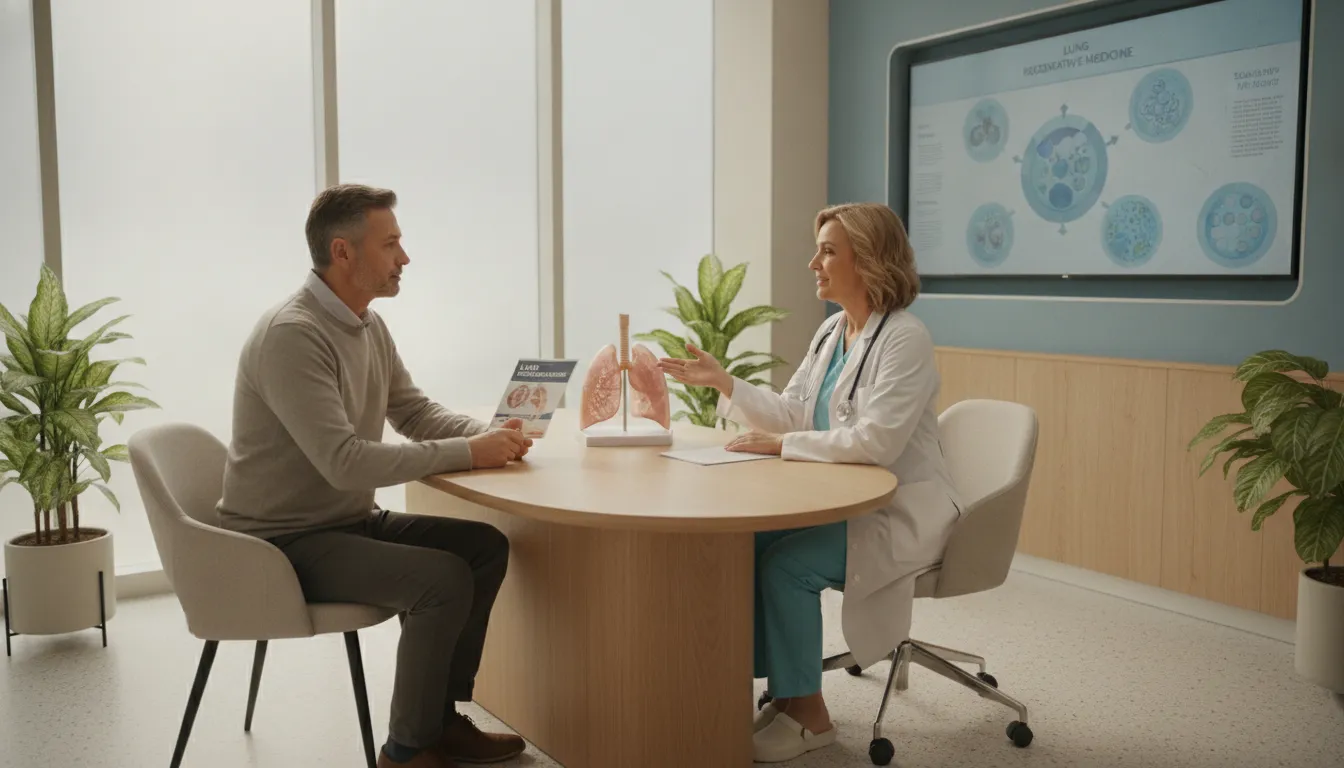
Every person has a unique health status. Because of this, candidacy is always decided on a personal basis after a physical exam. During your first meeting, our medical team checks your health goals, symptoms, and lifestyle needs. We look closely at your daily lung function and how you have responded to standard treatments in the past.
This clinical visit is the best time to learn about our IV stem cell protocols. Our doctors explain how we give the cells and how they work to support your lung tissue. You can ask any questions you have about the process, safety, and what to expect after your therapy. We want to give you all the facts so you can make an informed choice for your health journey.
What to Expect During Stem Cell Therapy for Lung Conditions
Patient screening and review
Before you begin any care, you must go through a full health check. The team at Miami Stem Cell reviews your past medical records to see if you are a fit. They look at your lung tests, blood work, and scans. This step helps make sure you can safely receive care. Each care plan is built to meet your own specific health goals.
This first step is key because stem cells are not a cure-all. The team must look at your heart health, your lung function, and your overall strength. Doing this check makes sure you are safe to start. It also helps the doctor see how the cells may support your body.
Your step-by-step treatment journey
The whole care plan is designed to be smooth and easy for you. While some ways to manage lung disease can be hard, this path is simple. Patients can learn about the IV stem cell therapy experience to see how we give these cells. Our clinic team follows a set of clear steps to support your long-term health.
Our clinic uses umbilical cord cells because they have unique traits. Unlike older cells, these young cells have great strength and do not cause immune issues. When you arrive at our clinic, we make sure you are relaxed and ready. The room is quiet, and you can rest while the IV runs.
- First consultation: You meet with a physician to talk about your symptoms. The doctor will review your past health records and your current treatment plans.
- Candidacy check: The clinic runs safe tests to make sure you are a fit for care. This step includes checking for active health issues and looking at your recent lab tests.
- Treatment day: On the day of your visit, a nurse starts a simple IV line in your arm. The doctor gives you the umbilical cord MSCs into your vein to support your lung health.
- Post-treatment check: You will rest in a comfy chair for a short time after the IV ends. The staff checks your vital signs to make sure you feel well before you leave the clinic.
- Home wellness tips: The clinic team gives you a list of helpful tips for home care. These tips cover proper food choices, light movement, and plenty of water to support your body.
Post-treatment recovery and home support
Healing after the IV session is mostly fast. Most patients can go back to their normal daily life right away. Some research on stem cell therapy for COPD suggests these cells can help lower lung inflammation. To help this process, you should follow all wellness tips from your clinic team. Steady follow-up visits help the doctor track your progress over time.
We also check in with you at set times after your visit. These follow-up calls let us answer any questions you may have about your healing. We want to make sure you feel helped at every point on your path to wellness.
Frequently Asked Questions
Is stem cell therapy FDA approved for COPD?
No, the Food and Drug Administration has not approved stem cell therapy for COPD. These treatments are still being tested in clinical research. According to a study on PubMed Central, researchers are testing adult stem cells to see how they repair tissue. Patients can get this care at clinics that follow strict safety rules.
Can COPD be reversed with stem cell therapy?
No, stem cell therapy cannot reverse or cure COPD. Current medical care can only help with symptoms, but it cannot fix dead lung tissue. A study on PubMed Central shows that COPD causes lasting structural damage. Stem cells may help ease lung inflammation and support remaining tissue. This can make breathing easier and improve your daily life, but it is not a cure.
How successful is stem cell treatment for COPD?
While there is no cure, research shows that stem cells can help manage the condition. A clinical study on PubMed Central shows that these cells can lower lung inflammation. Many patients who get this therapy find it helps them breathe better. They also see a rise in their energy levels. Still, success depends on your health, and results can vary.
What are the risks of stem cell therapy for lung disease?
Mesenchymal stem cells are generally safe because they have a low risk of growing tumors. A study on PubMed Central highlights that these cells have very few safety concerns. The most common side effects are mild pain, fever, or swelling at the injection site. Serious risks are rare. Patients must get a full medical exam first to make sure they are good candidates.
Ready To Explore Your Options for Better Breathing?
Living with COPD can feel like a constant uphill climb. At Miami Stem Cell, we offer a science-backed, non-surgical approach designed to support your lung health from the inside out. Our team takes the time to understand your unique health history and guides you through every step of the process.
If you or a loved one is living with COPD and looking for a new path forward, we invite you to schedule a free consultation. Call us at (305) 598-7777 or visit our contact page to learn more about how regenerative medicine may support your breathing and quality of life.