

An intravenous vitamin infusion delivers a clinician-selected fluid and nutrient formulation through a vein. It may be considered for hydration or a specific medical goal, but suitability depends on your health history, medications, the ingredients used, and the quality of clinical oversight. A careful consultation should come before the infusion itself.
Schedule a consultation about IV therapy in Miami
Miami Stem Cell treatments are out-of-pocket and not covered by insurance. A consultation can help you understand whether an IV service is appropriate for your goals and what questions to ask before scheduling.
What is an intravenous vitamin infusion?
An intravenous vitamin infusion is a treatment in which a prepared solution enters the bloodstream through a small catheter placed in a vein. Depending on the clinical assessment, the solution may contain fluids, vitamins, minerals, electrolytes, amino acids, or other nutrients. The exact formula should be explained before administration, rather than selected from a generic menu without reviewing your history.
The intravenous route bypasses the digestive tract, which can change how quickly nutrients and fluids enter circulation. That does not automatically make an infusion better than food or oral supplements. The right question is whether the route, ingredients, dose, and medical supervision make sense for your individual situation.
How does the intravenous vitamin infusion process work?
The process should be individualized and easy to understand. A reputable clinic should explain who reviews your information, what the formulation contains, how the infusion will be monitored, and what to do if you feel unwell.
- Share your goals. Explain why you are considering an infusion, whether your concern is hydration, fatigue, recovery, or another wellness goal. Also share what you hope the treatment will and will not do.
- Review your medical history. The clinician should ask about diagnoses, allergies, kidney or heart conditions, pregnancy, prior infusion reactions, medications, supplements, and recent symptoms.
- Discuss the formulation. Ask for the names and amounts of each ingredient, the intended purpose of the formulation, the source of the components, and whether any laboratory information is needed first.
- Confirm the safety plan. Before the IV starts, ask who administers it, how the site is kept sterile, how you will be monitored, and what happens if a reaction occurs.
- Receive the infusion and follow instructions. You should be able to report discomfort, dizziness, chest symptoms, shortness of breath, or other unexpected changes immediately. Follow the clinic’s aftercare instructions and know whom to contact later.
The length of an appointment can vary with the formula, the intake, and the clinic’s monitoring process. Ask about the expected visit length before you arrive so you can plan without treating a time estimate as a promise about how you will feel afterward.
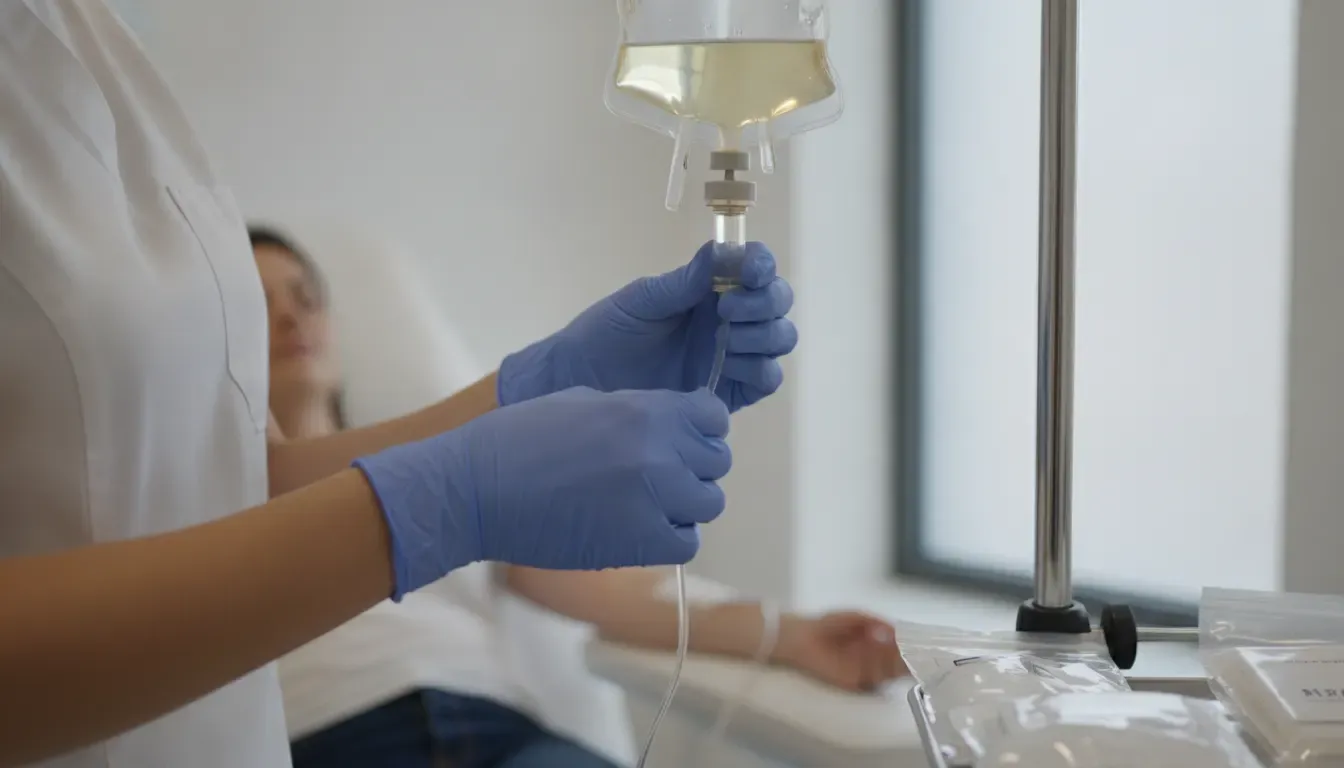
What ingredients may be included in an IV vitamin infusion?
An IV formula can vary widely. Some formulations include fluids and electrolytes. Others may include B vitamins, vitamin C, magnesium, amino acids, or antioxidants such as glutathione. The presence of an ingredient does not prove that it will produce a particular result for every patient, and a longer ingredient list is not necessarily a better formulation.
Before treatment, ask the clinician to review each component in plain language. Important questions include:
- What is the exact name and dose of every ingredient?
- Why is each ingredient being considered for my stated goal?
- Could any ingredient interact with my prescriptions or supplements?
- Where were the ingredients prepared, and what quality controls apply?
- How is the formula stored, labeled, and checked before administration?
- Are there ingredients I should avoid because of allergies, pregnancy, or a medical condition?
A responsible discussion also distinguishes between a treatment that addresses a documented nutritional or fluid need and a wellness service marketed with broad promises. The evidence for routine IV vitamin therapy in otherwise healthy people is limited, and claims about guaranteed energy, immunity, detoxification, or anti-aging benefits deserve careful scrutiny.
Talk with Miami Stem Cell about your IV therapy questions
Bring an up-to-date medication and supplement list to your consultation. Miami Stem Cell can review your goals, answer questions about available services, and explain the next step. Treatment recommendations are individualized and are not a substitute for emergency care or a primary care evaluation.
Why does your medical history matter before an infusion?
Your medical history helps a clinician judge whether an infusion is reasonable, what monitoring may be needed, and whether another form of care should come first. Intravenous fluids and nutrients enter circulation directly, so an ingredient or volume that seems routine may not be appropriate for every person.
Tell the clinician if you have kidney disease, heart failure, liver disease, a history of electrolyte problems, diabetes, high blood pressure, a bleeding concern, an active infection, or a known allergy. Also mention pregnancy or breastfeeding, recent surgery, cancer treatment, and every prescription, over-the-counter medication, and supplement. The clinic may need records, laboratory testing, or clearance from another healthcare professional before recommending an infusion.
Do not hide symptoms because you hope to qualify for treatment. New chest pain, severe weakness, confusion, shortness of breath, fainting, a high fever, or another urgent symptom needs timely medical evaluation, not a wellness infusion. A consultation should identify when a patient needs a different level of care.
What are realistic expectations for intravenous vitamin therapy?
Realistic expectations start with recognizing what an infusion can and cannot establish. A treatment may provide fluids or deliver a selected nutrient through a different route, but it is not a guaranteed solution for fatigue, chronic disease, poor sleep, or an unrecognized medical problem. Your response may differ from another patient’s response, and short-term sensations are not proof of a lasting health change.
For general wellness, a balanced diet, sleep, physical activity, appropriate oral nutrition, and evaluation of persistent symptoms remain important. IV therapy should not be used to postpone an examination for an ongoing health concern. If a clinician recommends an infusion, ask how success will be assessed, how long the intended benefit is expected to last, and when you should follow up.
It is also reasonable to ask what the evidence supports for your specific situation. A 2025 review in Cureus describes potential advantages of intravenous delivery while noting uncertainty about efficacy, safety, and cost-effectiveness for otherwise healthy people. The American College of Clinical Pharmacology position statement emphasizes medical oversight, appropriate preparation, informed consent, and attention to risks.
What should you ask before scheduling an infusion?
Use this checklist during a consultation. Clear answers are more useful than a long list of promised benefits.
- Who evaluates me? Ask which licensed clinician reviews your history and approves the formulation.
- What exactly is in the infusion? Request the ingredient names, amounts, intended purpose, and any relevant quality information.
- What information should I bring? Confirm whether you need medication records, laboratory results, or clearance from your regular healthcare professional.
- What are the known risks for me? Ask about allergies, medication interactions, kidney or heart concerns, and symptoms that should stop the infusion.
- How is sterility maintained? Ask how supplies are prepared, handled, stored, and disposed of.
- How will I be monitored? Confirm who stays available during the infusion and what emergency procedures are in place.
- What outcome is realistic? Ask what the treatment is designed to support, what it cannot promise, and how follow-up will work.
- What is included in the cost? Ask whether the quoted amount includes the consultation, formulation, administration, monitoring, and follow-up. Miami Stem Cell treatments are out-of-pocket and not covered by insurance.
You can also review Miami Stem Cell’s IV therapy service information and frequently asked questions before your appointment. Bring any unanswered questions to the care team rather than relying on a social media post or an online menu.
What are the risks of an intravenous vitamin infusion?
Every IV procedure has risks. These may include pain, bruising, bleeding, irritation or inflammation of the vein, infection at the insertion site, an allergic reaction, or feeling lightheaded. Depending on the ingredients and fluid volume, there may also be concerns about electrolyte changes, fluid overload, or excessive exposure to certain nutrients. The level of risk depends on the patient, product, dose, preparation, and clinical setting.
Tell the clinician immediately if you develop worsening pain at the IV site, swelling, hives, wheezing, chest discomfort, severe dizziness, or any other concerning symptom during an infusion. After leaving, follow the clinic’s instructions and seek urgent medical care for serious or rapidly worsening symptoms. A provider should explain how to report a delayed reaction and when follow-up is needed.
Safety is not only about the needle. It also includes a complete history, a defensible reason for the formulation, accurate dosing, sterile preparation, trained administration, observation, informed consent, and a plan for follow-up. These questions help you evaluate an IV clinic without assuming that a polished treatment menu is the same as medical oversight.
Ask about your intravenous vitamin infusion options in Miami
Frequently Asked Questions
Are intravenous vitamin infusions safe for everyone?
No. An infusion may be inappropriate or require additional review for some people, including those with kidney, heart, or liver conditions, allergies, pregnancy, medication interactions, or symptoms needing urgent evaluation. A licensed clinician should review your history before recommending treatment.
How long does an intravenous vitamin infusion take?
The appointment length depends on the consultation, formulation, administration, and monitoring plan. Ask the clinic for an expected range before scheduling, but treat that estimate as a planning guide rather than a promise about how quickly you will feel different.
Can an IV infusion replace oral vitamins or a healthy diet?
No. An intravenous vitamin infusion does not replace balanced nutrition, sleep, physical activity, or evaluation of persistent symptoms. The route of delivery should be matched to a clear clinical rationale, and a clinician can help you decide whether oral nutrition or another option is more appropriate.
Can I choose the ingredients in my infusion?
You can ask what ingredients are being considered and why, but a safe formulation should be based on a clinical review rather than a self-selected menu. Discuss allergies, medications, supplements, medical conditions, and any available laboratory information before an ingredient is added.
Does insurance cover intravenous vitamin infusions at Miami Stem Cell?
Miami Stem Cell treatments are out-of-pocket and not covered by insurance. Contact the clinic to ask what the consultation and recommended treatment include, and request cost information before making a decision.
What should I do if I feel unwell during or after an infusion?
Tell the administering clinician immediately about symptoms during treatment. For severe or rapidly worsening symptoms after treatment, seek urgent medical care. Before you leave, ask who to contact about delayed reactions and what warning signs require emergency evaluation.
Intravenous vitamin infusion decisions deserve the same thoughtful questions as any other clinical service. Reviewing the ingredients, medical history, evidence, risks, and follow-up plan can help you make an informed choice. To learn more about available IV services, visit the Miami Stem Cell IV therapy page or contact the clinic for a consultation.