What is spinal stenosis? It is narrowing of one or more spaces within the spine, which can put pressure on nearby nerves or, less commonly, the spinal cord. Where the narrowing occurs helps shape the symptoms and care options, so an evaluation looks at more than an imaging result alone.
What Is Spinal Stenosis?
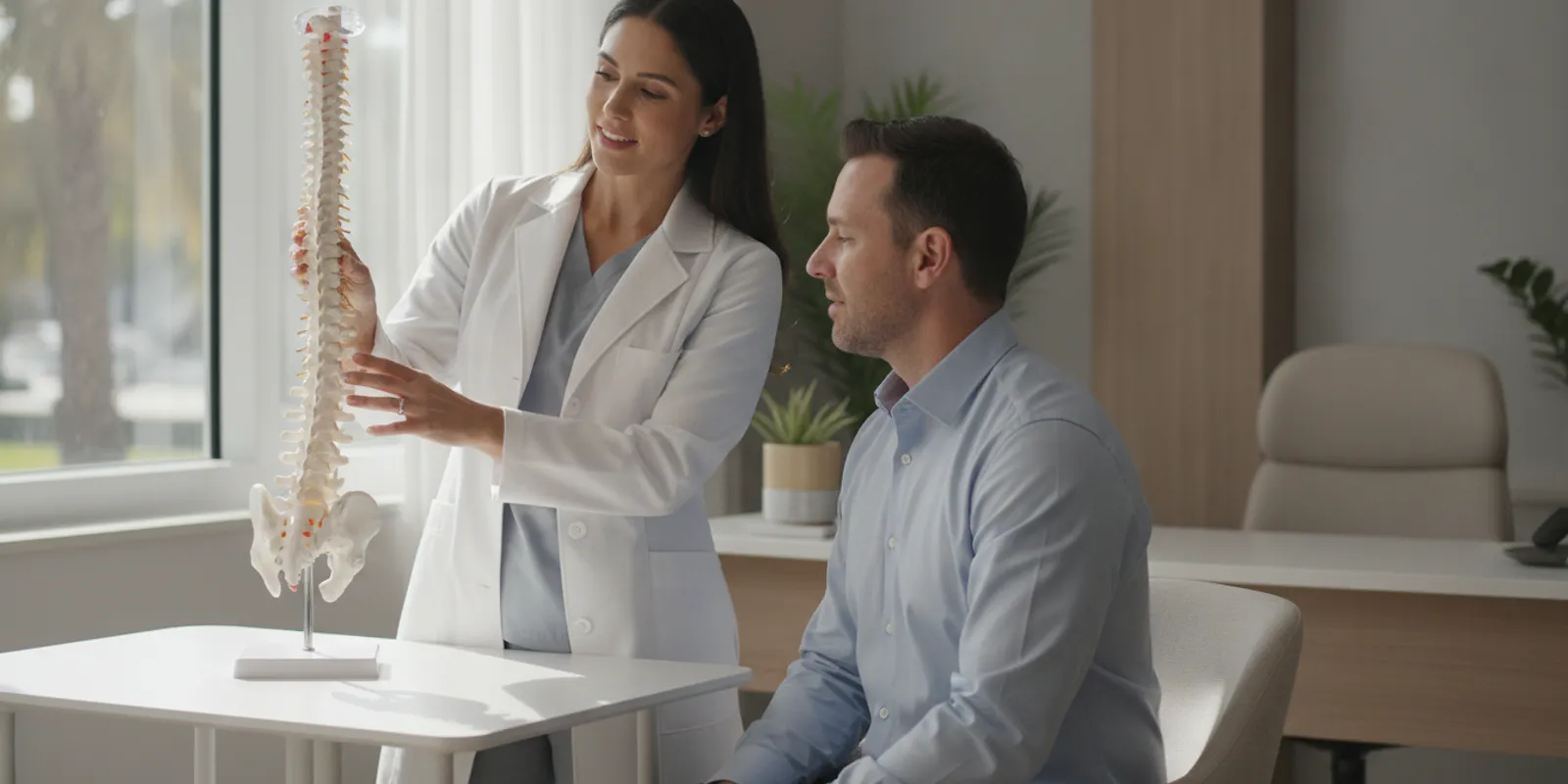
The spine is made of bones called vertebrae. A canal runs through them and protects the spinal cord and nerve roots. Nerves leave the spine through smaller openings between the bones. Spinal stenosis means one or more of these spaces have become narrower than usual.
Narrowing can affect the central spinal canal, the openings where nerves exit, or both. If nearby nerves are crowded or compressed, a person may feel pain, tingling, numbness, weakness, or changes in balance or walking. Some people have narrowing visible on imaging but few or no symptoms. The scan finding alone does not establish how much a person is affected or which treatment is appropriate.
Stenosis is a description of anatomy, not a complete diagnosis. A clinician considers the location and degree of narrowing alongside a person’s symptoms, medical history, physical examination, and daily limitations. The MedlinePlus overview of spinal stenosis also describes narrowing as a source of pressure on spinal nerves and notes symptoms such as pain, numbness, and weakness.
How are cervical and lumbar spinal stenosis different?
The names refer to the part of the spine involved. Cervical stenosis is in the neck. Lumbar stenosis is in the lower back. The possible effects differ because the spinal cord and nerve roots vary by level.
| Feature | Cervical stenosis | Lumbar stenosis |
|---|---|---|
| Location | Neck region | Lower-back region |
| Structures that may be affected | Nerve roots and, in some cases, the spinal cord | Nerve roots traveling through or exiting the lower spine |
| Possible symptoms | Neck pain, arm or hand symptoms; spinal cord involvement can affect hand coordination, balance, or walking | Lower-back or buttock discomfort, leg pain, numbness, weakness, or walking limitation |
| Important evaluation question | Are there signs of spinal cord involvement or changes in coordination? | Do symptoms change with standing or walking, and what improves them? |
These are general patterns, not a way to diagnose yourself. Symptoms may overlap with other spine, joint, or nerve conditions. When a clinician suspects a neck-related cause, the clinic’s information about cervical pain and neck conditions can provide background, but it cannot replace an individual medical assessment.
One practical difference is that cervical stenosis can involve the spinal cord itself, not only an individual nerve root. A clinician may therefore ask about changes in hand dexterity, balance, or walking as well as neck and arm pain. Lumbar stenosis more often raises questions about lower-back, buttock, and leg symptoms and how standing or walking affects them. These patterns can guide evaluation, but only a clinical assessment can determine what is happening.
Stenosis may affect more than one level, and some people have narrowing in both the neck and lower back. If symptoms occur in several areas, describe each separately rather than assuming one finding explains everything. Keep track of where numbness or pain starts and travels, whether one or both sides are affected, and whether the pattern is changing.
What causes spinal stenosis?
Spinal stenosis often develops as structures in and around the spine change over time. Age-related wear can contribute to changes in discs, joints, ligaments, and bone. For example, a disc may lose height or bulge, joints may enlarge, or ligaments may thicken. These changes can reduce the space available for nerves.
Other factors can include a naturally narrow spinal canal, a prior spinal injury, or a condition that affects the structure of the spine. More than one change may contribute in the same person. A scan may show several findings, and the clinician has to determine whether any of them plausibly match the symptoms.
Having a risk factor does not mean a person will develop painful stenosis. Nor does a single imaging phrase explain every symptom. A Columbia Neurosurgery patient guide explains that the condition involves narrowing of the canal or spaces around spinal nerves and discusses its assessment and treatment. The exact implications depend on the level and the person’s clinical picture.
What symptoms can spinal stenosis cause?
Symptoms depend on where the narrowing occurs and whether nerves are affected. Some people have no noticeable symptoms. Others may experience one or several of the following:
- Pain or aching in the neck or lower back.
- Pain, tingling, or numbness that travels into an arm, hand, buttock, or leg.
- Weakness in an arm or leg, or a feeling that a limb is less steady.
- Difficulty with balance, walking, or tasks requiring hand coordination, especially when the spinal cord is affected in the neck.
- Symptoms that become more noticeable during standing or walking and ease with sitting or changing position, which some people with lumbar stenosis report.
Symptoms vary. They may be mild, intermittent, or more limiting, and they can have causes other than spinal stenosis. Tell a clinician when symptoms began, where they travel, what activities change them, and whether they are progressing. It may help to note how far you can walk or which daily tasks have become difficult. A short symptom log can make patterns easier to explain: record the activity, position, duration, and location of symptoms, along with any weakness or numbness. Avoid using a log to delay care if symptoms are sudden, severe, or rapidly worsening.
Sudden or progressive weakness, new difficulty walking, loss of coordination, or changes in bladder or bowel control need prompt medical attention. These symptoms can signal a serious problem and should not wait for a routine treatment consultation.
How Is Spinal Stenosis Evaluated?
An evaluation starts with the story of your symptoms and a physical examination. A clinician may ask when symptoms began, whether there was an injury, which positions or activities affect them, and whether there is numbness, weakness, or a change in coordination.
The examination may assess strength, sensation, reflexes, balance, and movement. A clinician may also observe how you walk or ask you to perform simple movements that help show whether a nerve or spinal cord function could be involved.
Bring up symptoms even if they come and go. A brief appointment snapshot may not capture what happens during a longer walk or a particular daily activity.
It is useful to distinguish pain that stays near the back or neck from symptoms that travel into an arm or leg. Describe whether symptoms affect one side or both, how long they last, and what relieves or aggravates them. This history does not prove stenosis, but it helps the clinician decide what needs examination and whether imaging or referral is appropriate. Evaluation may also consider other possible sources, such as a joint or a separate nerve condition.
Imaging can help show the spine’s structure. Depending on the situation, a clinician may recommend X-rays, magnetic resonance imaging (MRI), or computed tomography (CT). Each test provides different information. An MRI can show soft tissues and nerve structures; other imaging may help assess bones and alignment. The clinician decides what is useful based on the symptoms and examination.
Imaging is one part of the assessment, not a stand-alone verdict. Narrowing seen on a scan may not be the source of a person’s pain, while the location and severity of symptoms may call for further investigation. A useful discussion connects the scan findings to specific symptoms and explains what remains uncertain. The review of research trends on lumbar spinal stenosis describes the condition as a common health issue; it does not mean every person with back or leg symptoms has stenosis.
If you have existing images or reports, bring them to an appointment if available. Ask which level is affected, whether the narrowing matches your symptoms, and whether another condition could explain them. For general information about the clinic, see its stem cell therapy FAQs; a qualified clinician should answer questions about your individual diagnosis.
What treatment options may be considered?
Treatment depends on symptoms, examination findings, imaging, overall health, and personal goals. It may begin with nonsurgical care when appropriate. Options a clinician may discuss include activity adjustments, guided exercise or physical therapy, and medicines for symptom management.
The right plan is individualized, and a treatment that is suitable for one person may not fit another. Conservative care is not one fixed protocol. A clinician may tailor activity changes or physical therapy to the person’s abilities and symptom pattern, then reassess function and comfort over time.
Ask how long to try a recommended approach before follow-up and what change would count as meaningful improvement. Do not push through new or worsening neurological symptoms without medical advice.
Medicines can have side effects or interact with other treatments, so discuss your medical history and current prescriptions before using them for spine symptoms. If an injection or operation is proposed, ask what problem it targets, what benefit is realistic, what risks apply to you, and how recovery or follow-up works. You can also ask whether a second opinion is reasonable when the choice is complex or the expected benefits and risks are unclear.
If symptoms are severe, progressive, or not improving with an initial plan, a clinician may recommend additional evaluation or a spine specialist consultation. Surgery may be considered in selected cases to relieve pressure on nerves. The decision depends on the cause of symptoms, the degree of functional impact, potential benefits and risks, and a patient’s preferences. No single option is right for everyone.
Regenerative treatments are another subject some patients ask about, particularly when they want to understand nonsurgical care. They should not be presented as a proven way to reverse spinal narrowing or as a substitute for a necessary neurological or surgical evaluation. Ask what evidence supports a proposed treatment for your specific diagnosis, what it is intended to address, what is not known, and what other options are available. Miami Stem Cell describes its approach as “Non-Surgical Regenerative Treatments that target the root cause of pain and mobility limitations.” A consultation should still begin with a careful assessment and realistic discussion, not a promised result.
Miami Stem Cell offers a FREE Consultation. Its treatments are out-of-pocket and not covered by insurance. The clinic reports more than 8,500 procedures, more than 17 years of experience, and a 4.8-star Google rating. These points do not predict an individual outcome. Learn more about back pain care and the clinic’s pain management services, then discuss whether an evaluation is appropriate for you.
What should you ask at an appointment?
Clear questions can help you understand the diagnosis and make a considered decision. Consider asking:
- Where exactly is the narrowing, and which nerves or structures could be involved?
- Do my symptoms and examination findings match the imaging?
- What other conditions could be causing these symptoms?
- What are the reasonable first steps, and how will we know whether they are helping?
- What symptoms should lead me to seek urgent care or contact the clinic sooner?
- If a procedure or regenerative treatment is suggested, what is its goal, evidence, risk, cost, and alternative?
Bring a medication list and a brief timeline of your symptoms. Mention prior treatments and whether they helped. If you are considering care in Miami, you can contact the clinic to request a consultation, while keeping any urgent or worsening neurological symptoms in the care of an appropriate medical professional.
Discuss your spine symptoms in a FREE Consultation
Frequently Asked Questions
Is spinal stenosis the same as a herniated disc?
No. Spinal stenosis means a spinal space has narrowed. A bulging or herniated disc is one possible structural change that may contribute to narrowing, but it is not the same diagnosis. A clinician must determine whether either finding relates to your symptoms.
Can spinal stenosis occur without pain?
Yes. Some people have narrowing visible on imaging without noticeable symptoms. The clinical importance depends on the complete picture, including symptoms, examination, and relevant imaging findings.
Does spinal stenosis always get worse?
Not necessarily. Its course varies, and symptoms can remain stable or change over time. If you notice new or worsening weakness, coordination or walking problems, or bladder or bowel changes, seek prompt medical attention.
Can exercise help with spinal stenosis?
Some people may benefit from a clinician-guided exercise or physical therapy plan, but the appropriate activities depend on their condition and symptoms. Ask a qualified clinician what is safe for you rather than starting or stopping a program based only on a scan or online advice.
Make the next step an informed one
Spinal stenosis describes narrowing around the spinal cord or nerves, but symptoms, examination, and imaging must be considered together to understand what it means for you. A clinician can explain the location, discuss appropriate options, and help you weigh benefits, risks, and uncertainties.