Spinal stenosis can make everyday movement difficult when narrowed spaces in the spine irritate or compress nearby nerves. Many people living with the condition experience back pain, numbness, tingling, or weakness that can limit walking and daily activity. Which often leads them to look for options that may ease symptoms without immediately pursuing surgery.
So, can stem cell therapy help spinal stenosis? It may help support the management of pain and inflammation in carefully selected patients. But it cannot physically reverse the bone narrowing or other structural changes causing nerve compression. Miami Stem Cell follows FDA-compliant protocols and uses a conservative approach that recognizes the science is still developing. Treatment is not a guaranteed cure, and results vary from person to person.
A responsible decision begins with understanding what is narrowing the spinal canal, how severe the compression is, and whether inflammation or surrounding tissue changes are contributing to symptoms. Regenerative medicine is only one possible part of a broader care plan, so it helps to compare it with established treatments and realistic expectations for other non-surgical options. We will start by looking at what spinal stenosis is, why it develops, and why those distinctions matter when considering regenerative care.
What Is Spinal Stenosis and Why It Happens
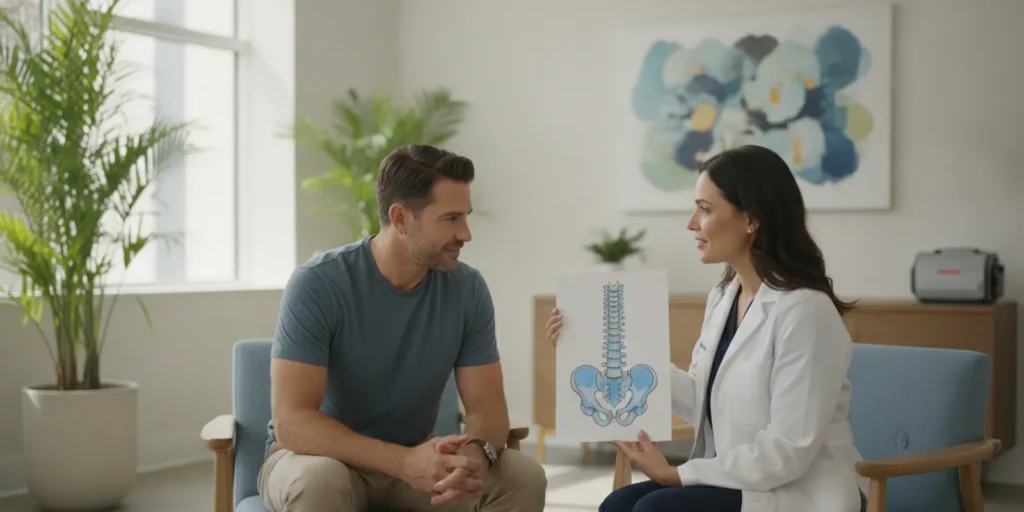
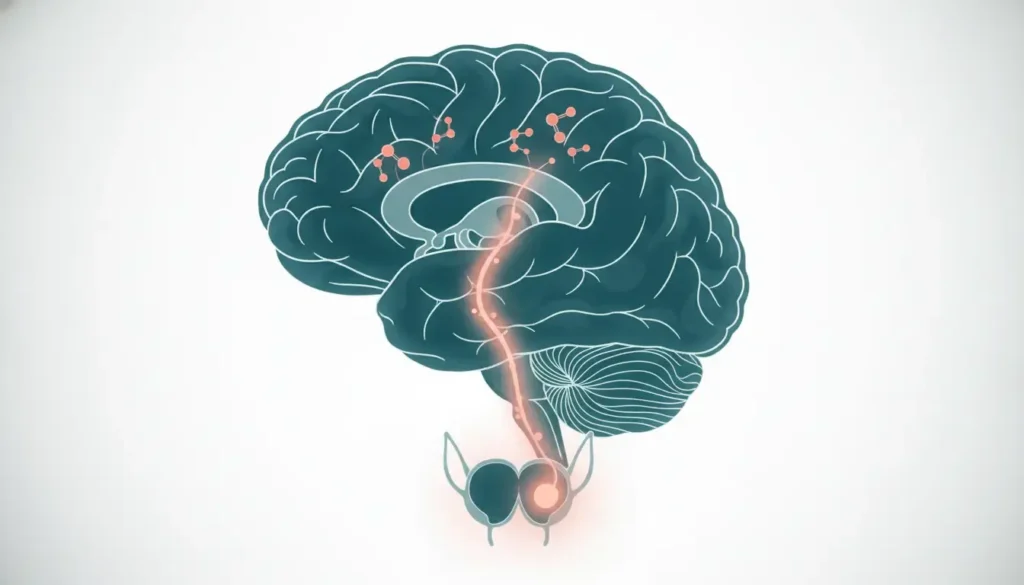
Spinal stenosis develops when the spaces inside the spinal column become narrower than they should be. This narrowing can reduce room for the spinal cord or the nerve roots that branch away from it. When nerves are crowded or compressed, a person may experience back pain, numbness, tingling, weakness, or discomfort that travels into the legs. Symptoms can vary based on where the narrowing occurs and how much pressure it places on nearby nerves.
The condition is often associated with gradual, age-related changes in the structures that support the spine. It is not simply a problem of having back pain. The underlying concern is the loss of space around sensitive nerve tissue. A careful evaluation can help distinguish spinal stenosis from other causes of chronic back or leg symptoms. For additional background, see this guide to stem cell therapy for spinal conditions.
How the spinal spaces become narrower
Several structural changes can contribute to stenosis. A herniated disc may bulge into the spinal canal or toward a nerve root, reducing the available space. Arthritis can affect the small joints of the spine and contribute to the formation of bone spurs, also called osteophytes. These bony growths may extend into areas where nerves pass.
Ligaments also help stabilize the spine, but they can become thicker and less flexible over time. Thickened ligaments may occupy more room within the spinal canal, adding to the pressure created by discs or bone changes. In some people, more than one of these changes occurs at the same time. The combined effect can be more important than any single finding on an imaging study.
Why diagnosis matters
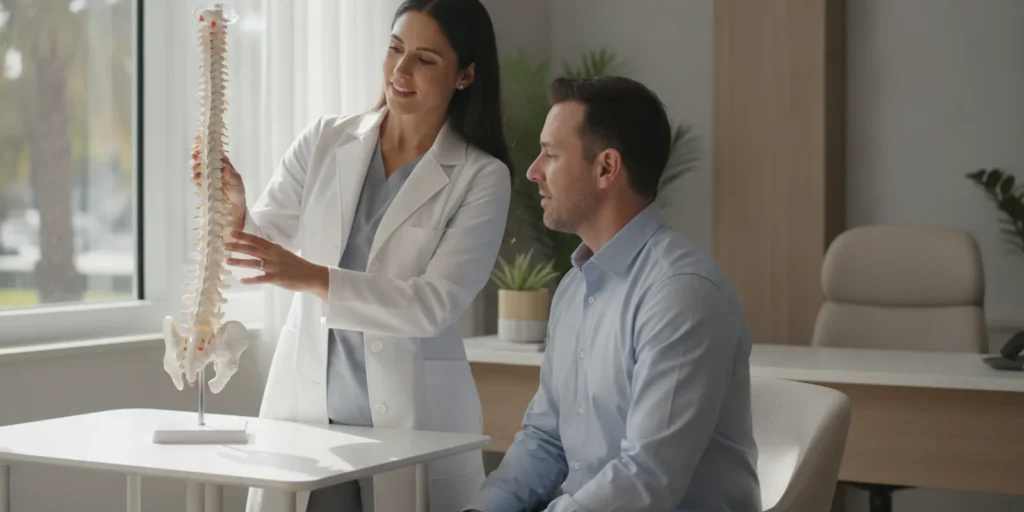
An MRI or other imaging study may show narrowing, but an image alone does not explain every symptom. A clinician considers the location of the narrowing, the pattern of pain or weakness, physical findings, and the person’s overall health. This assessment helps clarify whether symptoms are more likely related to nerve compression, inflammation, muscle tension, or another spinal condition.
That distinction also matters when discussing whether regenerative care is appropriate. Treatment designed to support inflammation control or tissue health cannot be assumed to remove a bone spur or reverse established narrowing. A personalized evaluation is needed to set realistic expectations and identify the safest next steps.
Can Stem Cell Therapy Help Spinal Stenosis Symptoms?
Stem cell therapy may help some people manage symptoms associated with spinal stenosis, particularly when inflammation or irritated soft tissues contribute to pain. It is not designed to remove bone spurs, widen the spinal canal, or reverse the structural narrowing that defines stenosis. That distinction is essential when evaluating regenerative treatment.
Mesenchymal stem cells are being studied for their anti-inflammatory and immunomodulatory properties. In theory, these properties may help create a more supportive environment for irritated tissues and promote tissue repair. The potential benefit is more relevant when symptoms have a soft-tissue or joint-driven component, such as inflammation around degenerating discs or facet joints. It is less likely to address symptoms caused primarily by severe, fixed bony compression of a nerve.
What stem cell therapy may and may not address
A personalized evaluation should separate symptom management from correction of anatomy. Stem cell therapy may be considered as part of a conservative plan designed to support comfort, movement, and tissue health. It cannot physically reverse the bone narrowing associated with spinal stenosis, and it should not be presented as a cure. Treatment results vary among patients.
- May help: inflammation, pain related to irritated soft tissues, and some mobility limitations associated with spinal degeneration.
- Does not reverse: bone spurs, thickened ligaments, or the narrowed spinal canal itself.
- Requires careful assessment: imaging, symptom pattern, neurological findings, overall health, and realistic expectations.
The research is still developing. A review indexed by PubMed describes the anti-inflammatory, immunomodulatory, and regenerative properties of bone marrow-derived mesenchymal stem cells. While noting that controlled evidence for severe chronic low back pain has not yet been established: review the current evidence on PubMed. This means a consultation should focus on whether the treatment is appropriate for the individual, not on a guaranteed outcome.
For patients exploring conservative options, stem cell therapy for spinal conditions may be discussed alongside established approaches and specialist care. Urgent or progressive weakness, loss of bowel or bladder control, or significant difficulty walking requires prompt medical evaluation rather than a regenerative medicine consultation alone.
What the Research Really Shows
The scientific discussion around cell-based approaches for spinal conditions is active, but it is not settled. Mesenchymal stem cells, including bone marrow-derived mesenchymal stem cells (BM-MSCs), are being investigated for properties that may be relevant to chronic low back pain and spinal degeneration. Researchers are particularly interested in their potential anti-inflammatory, immunomodulatory, and regenerative effects. These mechanisms are promising areas of study, but they should not be confused with proof that a treatment can reverse spinal stenosis.
A review published in Stem Cells International examined the rationale for using BM-MSCs in severe chronic low back pain. The authors described the biological properties under investigation while also emphasizing that therapeutic efficacy and safety had not yet been demonstrated in controlled studies. That distinction matters. A proposed mechanism, an early clinical observation, and a proven treatment outcome are different levels of evidence. The available research supports continued study, not a guarantee of symptom relief for every patient.
Read the BM-MSC research review on PubMed.
What clinical trials can and cannot tell us
Other research is examining cell-based treatments in more specific settings. One registered clinical study explored the safety and efficacy of combining bone marrow-derived mesenchymal stem cells with a bioresorbable gel after surgical discectomy for patients with lumbar spinal canal stenosis. The approach was designed to investigate tissue repair in a post-surgical context. It does not establish that the same approach is appropriate for all patients with stenosis. And it should not be interpreted as evidence that stem cells can remove the bony or structural narrowing itself.
Review the clinical trial record on PubMed.
For patients asking whether stem cell therapy may help spinal stenosis, the most accurate answer depends on the source of symptoms, imaging findings, overall health, and treatment goals. Regenerative medicine may be considered for symptom support when inflammation or surrounding tissue involvement contributes to discomfort, but it is not a replacement for a careful diagnosis. A consultation should also address conventional options and whether surgical evaluation is appropriate.
Miami Stem Cell follows FDA-compliant protocols and communicates the limits of current evidence. Treatment plans are personalized, and outcomes can vary. The clinic does not promise a cure or a guaranteed result. A transparent discussion of the research is part of making a responsible decision about care.
Who Is a Good Candidate for Stem Cell Therapy
Candidate selection begins with the source of the symptoms, not simply the presence of a spinal stenosis diagnosis. A patient may be more likely to benefit from a regenerative medicine consultation when pain and limited function are influenced by inflammation. Irritated soft tissue, disc-related changes, or arthritis in the joints around the spine. These problems may be appropriate for a personalized, non-surgical plan designed to support tissue health and help manage discomfort.
Stem cell therapy is less likely to address symptoms caused primarily by severe bony narrowing or direct nerve compression. Regenerative treatment does not physically widen the spinal canal or reverse bone spurs. When structural compression is advanced, a physician may recommend other approaches, including surgical evaluation, rather than presenting regenerative medicine as a replacement for necessary care.
What the evaluation looks for
A physician assessment and appropriate imaging help determine whether a patient is a reasonable candidate. The evaluation may consider the location and pattern of pain, numbness or weakness, walking tolerance, reflexes, prior treatment, and how symptoms affect daily activities. Imaging can help distinguish soft-tissue or joint-driven findings from more serious bony compression and other conditions that require a different treatment pathway.
This step is especially important because similar symptoms can arise from different causes. A consultation should be used to clarify what the imaging shows, whether a non-surgical option is medically appropriate, and what other treatments should be considered. Patients can review the broader approach in this guide to non-surgical stem cell spine treatment.
Realistic expectations matter
Many patients seek regenerative medicine because they want to avoid or delay surgery when clinically appropriate. That goal can be part of the conversation, but it should not replace an honest discussion of limitations. Regenerative medicine aims to reduce inflammation and promote tissue repair, and results vary from person to person. It is not a guaranteed cure, and improvement may depend on the underlying anatomy, symptom severity, overall health, and the treatment plan.
Miami Stem Cell uses a conservative, personalized approach and follows FDA-compliant protocols. A careful assessment can help identify whether stem cell therapy may support symptom management. Whether another non-surgical option is more suitable, or whether a surgical opinion should come first.
Stem Cell Therapy vs. Surgery for Spinal Stenosis
Choosing between regenerative care and surgery depends on what is causing symptoms, how severe the nerve compression is, and whether symptoms are improving with conservative treatment. The comparison is not simply between a quick procedure and an operation. It is a decision about whether the current problem is primarily inflammation and pain around affected tissues, or a structural narrowing that needs physical decompression.
Conventional nonsurgical care may include physical therapy, pain-relieving medications, and epidural steroid injections, depending on the patient’s condition and clinical assessment. These options generally focus on reducing pain and improving function. Regenerative or stem cell approaches may be considered as a complementary, non-surgical option for selected patients. But they do not physically reverse the bone narrowing associated with spinal stenosis.
| Consideration | Regenerative or stem cell approach | Surgical decompression |
|---|---|---|
| What it targets | May be designed to support the body’s response to inflammation and tissue irritation. It does not remove bone spurs, widen a narrowed canal, or correct fixed compression. | Targets structural nerve or spinal cord compression by removing or reshaping tissue that is narrowing the available space. |
| Invasiveness | Non-surgical and typically considered within a personalized care plan after reviewing symptoms, imaging, and medical history. | Invasive and involves an operation, anesthesia, and the risks associated with a surgical procedure. |
| Recovery | Often involves a procedure-specific recovery plan and gradual activity guidance. The timeline and response vary by patient and treatment plan. | Recovery varies according to the operation, the patient’s health, and the extent of decompression. Rehabilitation may be part of recovery. |
| Cost considerations | Stem cell treatment is self-pay and out-of-pocket, not covered by insurance. The clinic should explain costs before treatment. | Coverage, deductibles, facility fees, surgeon fees, and rehabilitation costs depend on the patient’s insurance and care plan. |
A person asking, “Can stem cell therapy help spinal stenosis?” should therefore expect a qualified answer rather than a guarantee. It may help some pain or inflammation patterns. But it is not a substitute for urgent evaluation or emergency surgery when serious neurologic symptoms or other surgical indications are present. Patients should discuss warning signs and treatment timing with an appropriately qualified physician.
For patients considering a non-surgical path, a consultation can clarify whether the symptoms appear compatible with supportive regenerative care and what expectations are medically reasonable. Miami Stem Cell presents regenerative treatment as complementary or alternative to traditional surgery, not as a way to delay necessary emergency care.
What to Expect From Stem Cell Therapy in Miami
At Miami Stem Cell in South Miami, the process begins with a conversation about your symptoms, health history, goals, and previous treatments. A clinician reviews the pattern of pain, stiffness, weakness, or numbness and considers how spinal stenosis may be affecting your daily activities. Evaluation and appropriate imaging help clarify whether symptoms are more likely related to nerve compression, inflammation, surrounding soft tissue, or another spinal condition. This matters because a personalized plan should address the findings rather than assume that the same treatment fits every patient.
If regenerative medicine is considered appropriate, the clinic develops an individualized protocol using FDA-compliant practices. The goal may be to support the body’s response to inflammation and tissue stress. It is important to keep expectations realistic: treatment is not expected to reverse the bony narrowing that defines spinal stenosis, and results vary from person to person. Some patients may experience changes in pain or function, while others may need additional care or a different treatment approach.
A consultation helps define the right next step
A consultation is also an opportunity to discuss whether regenerative care is best used as part of a broader plan. Depending on the assessment, that plan may include conventional conservative care, coordination with another specialist, or consideration of surgical evaluation when structural compression is severe. Miami Stem Cell does not promise a cure or guaranteed results. Instead, the discussion should focus on what the available information suggests, what treatment can and cannot reasonably aim to do, and how progress would be monitored.
Stem cell therapy is self-pay and out-of-pocket, so it is not covered by insurance. Ask about the recommended protocol, expected follow-up, and total costs before deciding. To discuss your symptoms and whether a personalized evaluation makes sense, call Miami Stem Cell at (305) 598-7777 or review the clinic’s information on treating chronic spine pain.
Frequently Asked Questions
Can spinal stenosis be cured with stem cells?
No. Stem cell therapy does not physically reverse the bone narrowing or other structural changes that can compress spinal nerves. It may be considered to support inflammation and pain management in selected patients. But results vary and it should not be presented as a cure or guaranteed alternative to medically indicated surgery.
How much does stem cell therapy for spinal stenosis cost?
Cost depends on the evaluation, treatment plan, and areas being addressed, so a consultation is needed for an individualized estimate. Miami Stem Cell treatments are out-of-pocket and are not covered by insurance. Ask for the full plan and payment expectations before deciding whether treatment fits your goals.
What is the newest treatment for spinal stenosis?
There is no single newest treatment that is right for everyone. Standard nonsurgical care may include physical therapy, medication, and, in some cases, epidural steroid injections, as described by Mayo Clinic. Cell-based approaches remain an evolving area of research, including studies of mesenchymal stem cells for chronic low back pain (PubMed).
Who is not a good candidate for stem cell therapy?
A person may not be a suitable candidate if symptoms require urgent surgical or neurological evaluation. If imaging shows severe structural compression that regenerative treatment cannot address, or if expectations are unrealistic. A qualified clinician should review your symptoms, examination, imaging, medical history, and prior treatments before recommending a personalized plan.
Ready to Explore Your Options?
A consultation can help you understand whether your symptoms, imaging, and treatment goals are appropriate for a personalized regenerative medicine discussion. Miami Stem Cell can review your situation and explain where stem cell therapy may fit alongside other care options, without promising results or reversing spinal narrowing.